Brazilian motorsport is known for more than just the traditional Chevrolet Opala, Vectra, or Mitsubishi Lancer. Some of the most unexpected racing machines have appeared on local circuits and rally stages: from the twin-engined Volkswagen Fusca built by the Fittipaldi brothers to a racing Fiat Marea Weekend, from the military-derived Agrale Marruá to a Ford GT40 replica constructed by the MC Tubarão team.
Some of these cars were developed by factory teams, while others were created by small private workshops and enthusiasts. They competed in road races, endurance marathons, rallies, and national championships. Here are 20 of the most interesting examples from the history of Brazilian racing.

In 2003, two highly unusual Fiat Doblòs took part in the 11th Rally dos Sertões — one of Brazil’s premier off-road competitions. The project was carried out with the participation of Fiat, the Clauset Racing team, and students from several Brazilian universities.
The racing versions differed from a standard Doblò in almost every respect. The engine was mounted in the middle and consisted of a 2.45-liter five-cylinder unit from the Fiat Marea.
The engine produced around 195 horsepower, was mated to a five-speed gearbox, and drove the rear wheels. The cars also featured independent suspension all around, ventilated disc brakes, and a 37-gallon fuel tank.

The Mitsubishi Lancer served as one of the design prototypes used in Stock Car Brasil in the mid-2000s. In the 2006 and 2007 seasons, Lancer V8 cars competed in the championship’s top category, driven by, among others, Cacá Bueno and Antônio Jorge Neto.
These were far from ordinary road-going Lancers: the Stock Car machines were special tube-frame chassis with V8 engines, and the bodywork was merely a silhouette of the production car. In 2006, Cacá Bueno won the Stock Car Brasil championship driving a Lancer.

One of the most unusual cars in the history of Brazilian motorsport is the twin-engined Volkswagen Fusca built by brothers Wilson and Emerson Fittipaldi together with engineer Ricardo Divila in the late 1960s.
Instead of trying to extract big power from a single small flat-four, the engineers installed two Volkswagen engines, effectively combining them into one power unit. The result was an eight-cylinder flat engine producing roughly 250–260 horsepower in a car weighing about 1,102 pounds.
The Fusca competed in endurance races and managed to impress even against far more powerful European prototypes. At the qualifying for the 1,000 km of Jacarepaguá, it took second place, beating the Ford GT40 and Lola T70 and trailing only the Alfa Romeo T33. The car retired from the race itself due to a gearbox failure.

The Copa Chevrolet Montana was created in 2010 following the merger of Stock Car Light and Pick-up Racing. It served as a support category for Stock Car and was effectively one of the stepping stones toward the main championship.
Despite bodywork resembling the production Chevrolet Montana, the racing cars featured a JL Racing tube-frame chassis, fiberglass body panels, and 5.7-liter Chevrolet V8 engines. The engines produced approximately 350 horsepower, with power sent through a sequential gearbox.
The championship lasted only three seasons — from 2010 to 2012.

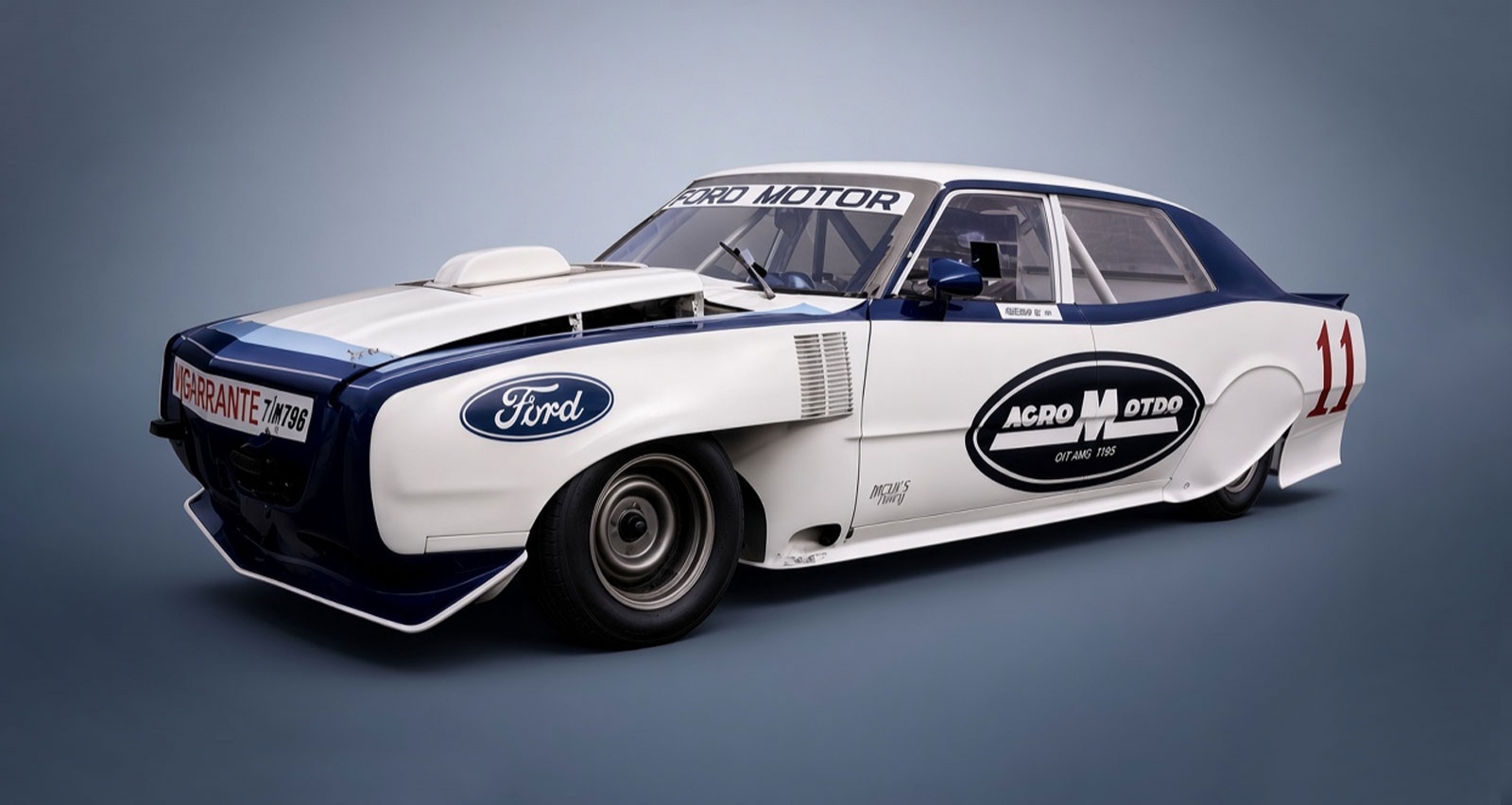
The Ford Maverick Berta-Hollywood was one of the most famous racing Mavericks in 1970s Brazil. The car was prepared by the renowned Argentine engineer Oreste Berta for the Hollywood team competing in Divisão 3.
The standard Ford 302 V8 underwent major modifications and produced more than 450 horsepower. During the 1974 and 1975 seasons, it was one of the fastest cars in its class.
In 1974, Tite Catapani won the famous 500 km of Interlagos in it. In the 1975 championship, the Maverick Berta-Hollywood finished the season third in Divisão 3.

The Puma AM4 Nechi was the racing version of the Brazilian Puma AM4 sports car, developed specifically for endurance events. The car made its racing debut in 1991 and continued competing until 1994.
It used a fiberglass monocoque weighing approximately 1,675 pounds. The car was powered by a rear-mounted 1.8-liter Volkswagen AP engine running on ethanol. The racing version featured two Weber 45 carburetors, a special Berta-designed intake manifold, and other competition-oriented components. The AM4 Nechi competed in long-distance races, including the Mil Milhas Brasileiras, and scored victories.

The Fiat Marea Weekend Turbo was one of the most unusual factory racing projects undertaken by Fiat in Brazil in the early 2000s. The car was prepared by the Fiat works team and competed in the Mil Milhas Brasileiras and other endurance events.
The Marea Weekend became the first station wagon to compete in the Mil Milhas. The racing version used the standard 2.0-liter five-cylinder turbo engine, but recalibrated fuel injection increased output from 182 to 240 horsepower.
In 2001, the wagon finished fourth in its class, ahead of many more specialized sports cars. In 2004, the Marea Weekend Turbo won its category in the 1,000 km of Brasília.

The Fiat Linea proved to be a surprisingly successful base for a racing car in southern Brazil. These machines competed in the Campeonato Gaúcho de Super Turismo — a regional championship featuring a wide variety of different vehicles.
Today, cars developed from the former Trofeo Fiat Linea are also eligible to compete in the GT category of this championship. The series itself mixes modern racing cars with vehicles from older classes.
In 2018, a Fiat Linea won the famous six-hour race at Guaporé: Matteus Stumpf and Julio Martini completed 227 laps, covering approximately 435 miles.

The Fúria GT belongs to the group of lesser-known Brazilian sports cars built on the local Bianco S model. The racing version received appropriate modifications for competition and was used in endurance races.
The Bianco S itself was a small Brazilian sports car with a fiberglass body, so the racing Fúria GT was an extremely lightweight racing machine. It became one of many examples of how small Brazilian manufacturers and teams converted road-going sports cars into competition machines.

In the 1980s, Brazil had an unusual Turismo 5000 category that raced on the outer oval of the old Interlagos circuit. Among the competitors was the famous Ford Maverick of Ney Faustino.
Turismo 5000 existed for only a short time, but its cars were genuine high-powered racing machines with V8 engines.
Faustino himself became one of the category’s most prominent drivers: according to Automotor Batista, the company that prepared the cars for Turismo 5000, his team won two championships in three years of participation.

MC Tubarão is one of Brazil’s well-known racing teams, particularly prominent in endurance racing and Super Turismo. Among its cars were the Aldee prototypes used in both regional and national events.
The Aldee is a classic example of a Brazilian sports prototype. Cars from this family regularly appeared in endurance races, including the 12 Hours of Tarumã.
In the 1990s, the Aldee RTT with Volkswagen engines repeatedly competed in and won major endurance events. In later years, Aldee cars continued to race under the modern Super Turismo program.

This refers specifically to the Volkswagen Gol, not the Golf. MC Tubarão has used the Gol in the modern Super Turismo series, where it competes against far more exotic machinery.
The current Super Turismo Gaúcho allows the Gol in several categories, and the cars can differ significantly from their production counterparts.
In 2026, one of MC Tubarão’s Gol cars continues to compete in the championship: at the Santa Cruz 200, it started from pole in its class and finished fourth in the TS category after a drivetrain repair.

This is not an original historic Ford GT40, but a modern MC Tubarão racing car styled after the legendary Ford. The project was created after the team sold its previous Aldee in early 2022.
The car was initially intended for Super Turismo, although the team also considered it for endurance racing.

The Chevrolet S10 Rally was one of GM’s official factory racing vehicles in Brazil. In particular, the S10 competed in the Rally dos Sertões for several years.
Today, one of the original 2004 S10 Rally cars has been preserved and restored as part of the Vintage Chevrolet program.
GM states that these vehicles represented the brand’s official team in rallies from the late 1990s to the early 2000s and achieved victories in the Rally dos Sertões. The racing S10 received a roll cage, body reinforcements, and special mechanical modifications for harsh off-road conditions.

Another unusual Maverick can be found in the Campeonato Gaúcho de Super Turismo. The car belongs to driver Leovaldo Petry and is equipped with a V8 engine.
In today’s Super Turismo, this No. 302 Maverick races alongside a very diverse field — from ordinary Brazilian models to prototypes and GT cars.
For example, in one race at Guaporé, Petry continued after an incident at the start and managed to fight his way back into the leading group despite losing laps during repairs.

“Chapellet” is one of the most unusual names in Brazilian motorsport. This racing car combined elements of the Chevrolet Chevette and the Chevrolet Kadett — a model known in other markets as the Opel Kadett or Vauxhall Astra.
The car was built to compete in the Mil Milhas Brasileiras in the 1990s and was linked to General Motors’ official racing program.
Projects like this perfectly illustrate the character of Brazilian motorsport during that era, when local versions of familiar models could be turned into completely unique racing machines.

The Agrale Marruá is perhaps one of the most unexpected vehicles in the history of Brazilian racing. Originally developed as a military off-roader, Agrale brought it to the racetrack in 2007.
The project was run by the Gramacho Racing team, with one of the drivers being Franco Stedile, who has ties to Agrale. In accordance with Pick-up Racing regulations, the original Marruá frame was retained, although it was reinforced.
The cab remained from the production vehicle but was fitted with a roll cage and other racing modifications.
In its debut race, guest driver Wagner Ebrahim qualified third and Stedile seventh. Ebrahim finished fourth in the race itself.
After a change in the technical regulations for Pick-up Racing, the older vehicles became outdated, but some Marruás continued to compete in endurance events.

The Chevrolet Omega was one of the main cars in Stock Car Brasil during the 1990s. Particularly famous was the Castrol team car driven by Ingo Hoffmann — the most successful driver in Stock Car history.
Hoffmann won the championship 12 times, with his titles in 1994, 1996, 1997, and 1998 all secured behind the wheel of a Chevrolet Omega.
In the 1994 season, he competed with a Chevrolet Omega powered by a 4.1-liter V6 engine.

The Ford Escort “Flecha de Prata” is one of the most famous Brazilian racing Escorts. The car was built on the basis of an Escort XR3 and competed in the Campeonato Brasileiro de Marcas in the early 1990s.
The racing car featured a stripped interior, a full roll cage, and a 1.8-liter Volkswagen AP engine producing around 190 horsepower in a car weighing just 1,587 pounds.
Driving this Escort, Andreas Mattheis won the 1992 and 1993 championships. In 2009, driver Nene Finotti rediscovered the car, after which it was restored and returned to the track.

The Chevrolet S10 was one of the main vehicles in Pick-up Racing — a Brazilian championship that ran from 2001 to 2009. The category served as a racing alternative to conventional touring car series and used mid-size pickup trucks.
In the early 2000s, the S10, Ford Ranger, and Dodge Dakota competed in Pick-up Racing. The trucks were equipped with twin-turbo V6 engines producing around 310 horsepower; later, after switching to ethanol, power increased to approximately 400 horsepower.
Pick-up Racing was connected to the Stock Car program and was effectively replaced in 2010 by the new Copa Chevrolet Montana.