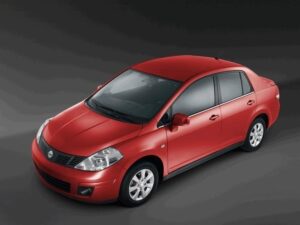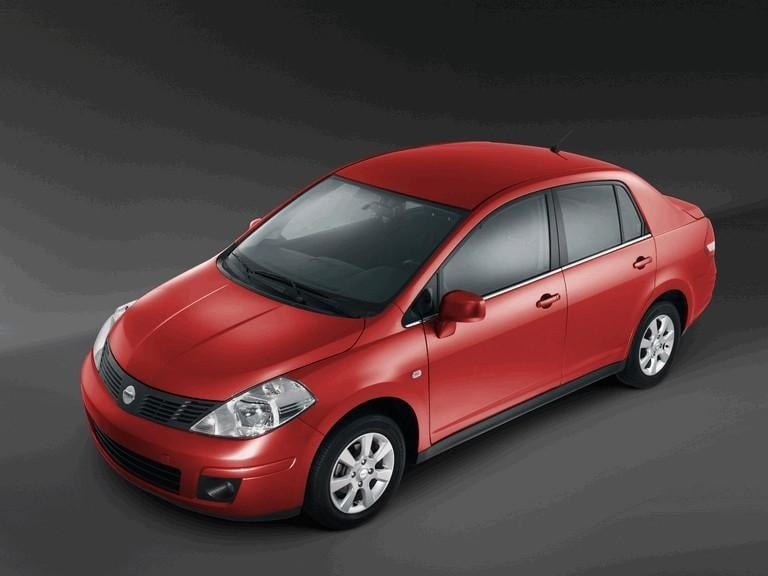
In 2008, Chrysler LLC introduced a vehicle named the Dodge Trazo C1.8. It was a compact four-door sedan that was nothing more than a rebadged first-generation Nissan Tiida.
The Dodge Trazo C1.8 became the first fruit of the joint venture signed between Nissan and Chrysler in January 2008. The car was unveiled at the 2008 São Paulo Motor Show and became Dodge’s first sedan for key Latin American markets.
The vehicle was specifically developed for Brazil and Mexico to give the Dodge brand immediate access to the rapidly growing segment of affordable compact cars. The idea was to introduce smaller, more fuel-efficient vehicles into the lucrative American markets to combat the escalating fuel crisis.
The Trazo C1.8 was powered by a 1.8-liter 16-valve DOHC four-cylinder engine. This engine was capable of running on E100 ethanol, which was critically important for the Brazilian market, where drivers prefer domestically produced fuel.
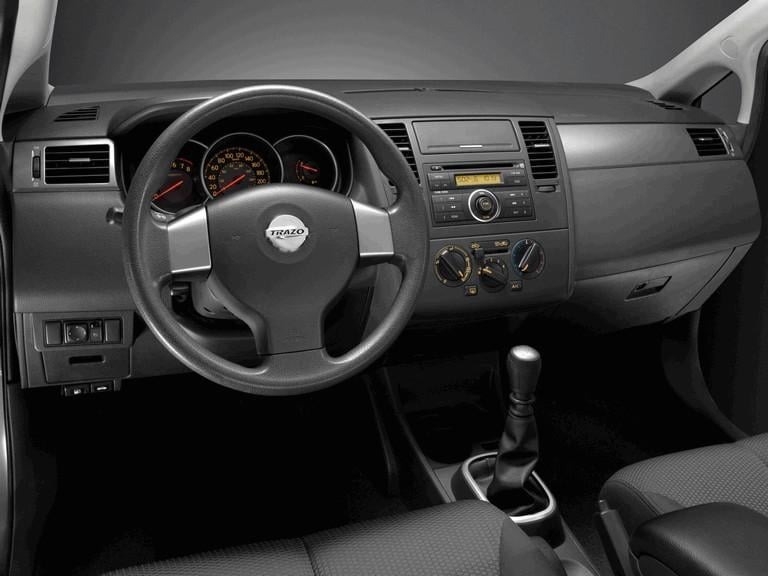
The MR18DE engine produced up to 126 horsepower. The car was offered with a relatively basic equipment package that included air conditioning, power steering, a radio, and the choice between a five-speed manual or a six-speed automatic transmission.
The dimensions of the Dodge Trazo were identical to those of the Nissan Tiida sedan sold in other countries: length was 176.1 inches, width — 66.3 inches, and the wheelbase — 102.4 inches. Trunk volume was 13.8 cubic feet.
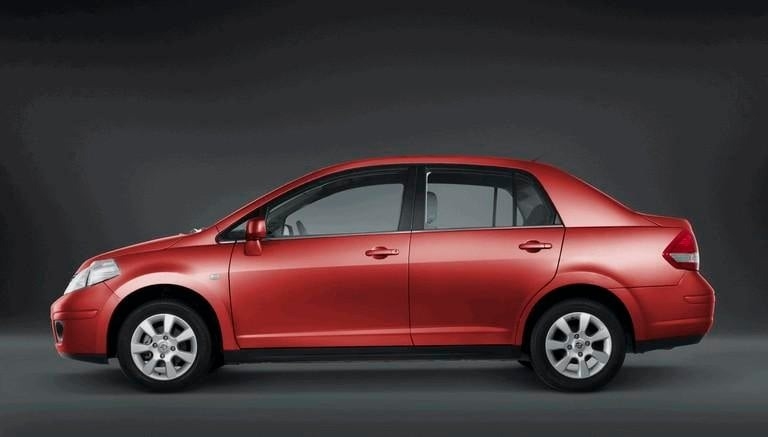
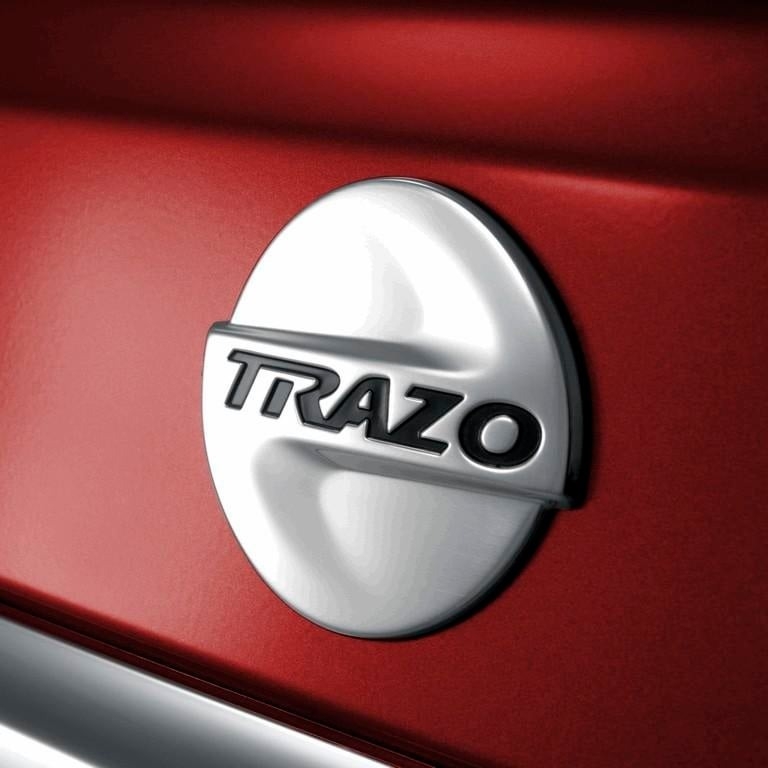
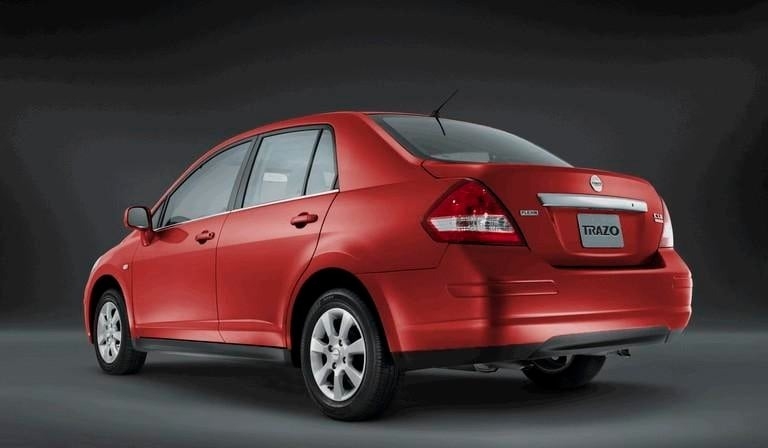
Visually, the Dodge Trazo was almost identical to the Nissan Tiida sedan. The only real difference from the original model was the TRAZO badges.
After its debut at the 2008 São Paulo Motor Show, the project was cancelled.
The Dodge Trazo C1.8 was part of a larger product-sharing agreement between Chrysler and Nissan that was suspended and later completely collapsed due to unfavorable economic conditions and financial difficulties faced by both companies in the late 2000s.
A few months after the presentation, both companies announced the end of their cooperation with little explanation.
Chrysler was going through a difficult economic period at the time but still had sufficient logistical support to introduce future models to the market.
The partnership with Nissan seemed like the most obvious and fastest way to overcome the crisis.