Being ahead of your time sounds great — but only until you realize the market isn’t ready for what you’re offering.
Twenty-five years ago, Audi experimented with a radical vision of what a smart compact car could be: lightweight, aerodynamic, incredibly efficient, and feeling more premium than its price suggested. Now that concept — and the name it carried, A2 — is returning in the form of a far more marketable electric crossover that may have arrived at exactly the right moment.
This is the new Audi A2 e-tron. And while yet another electric crossover might not seem like a reason to cancel your evening plans, this one is genuinely worth paying attention to.
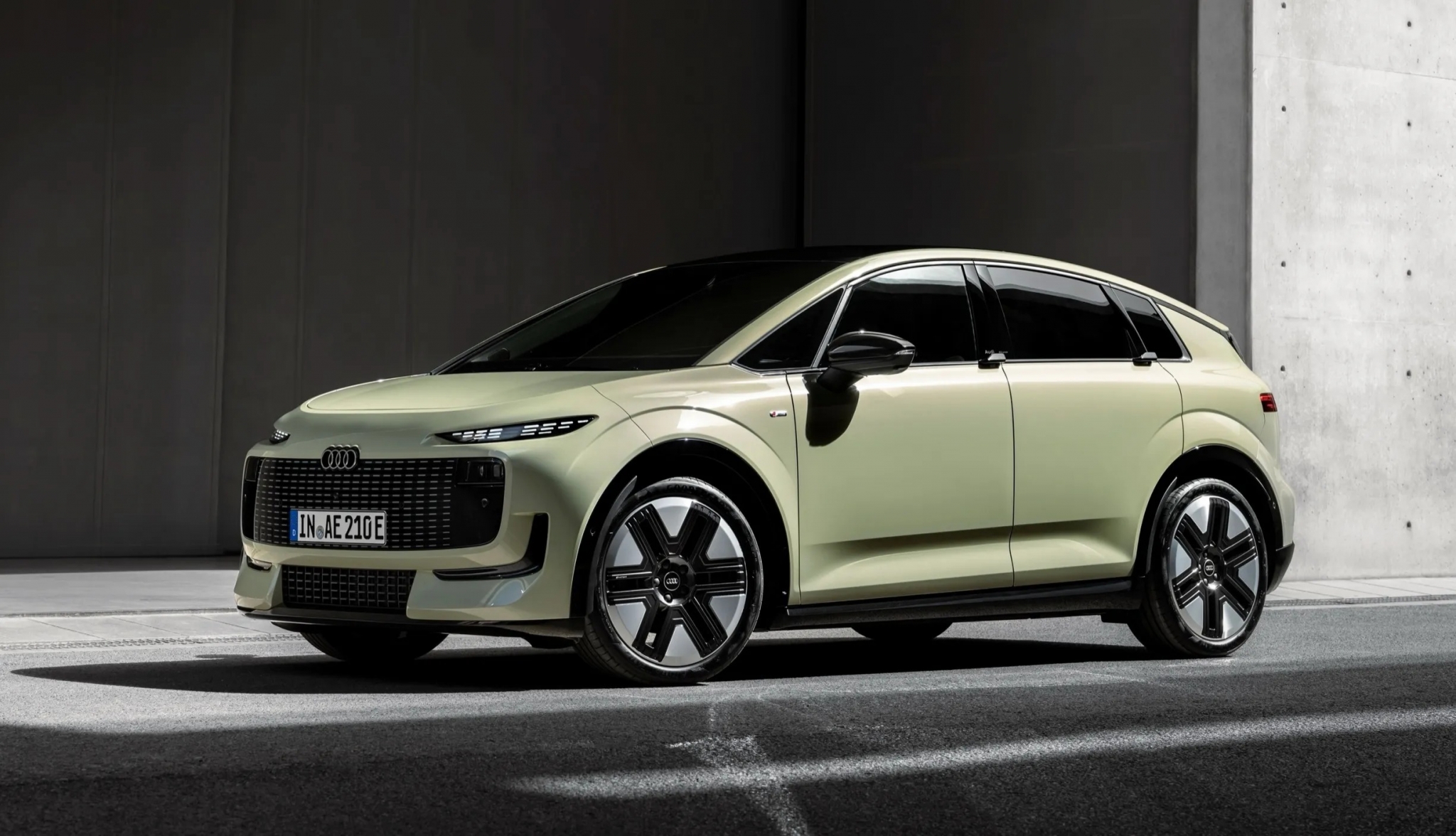
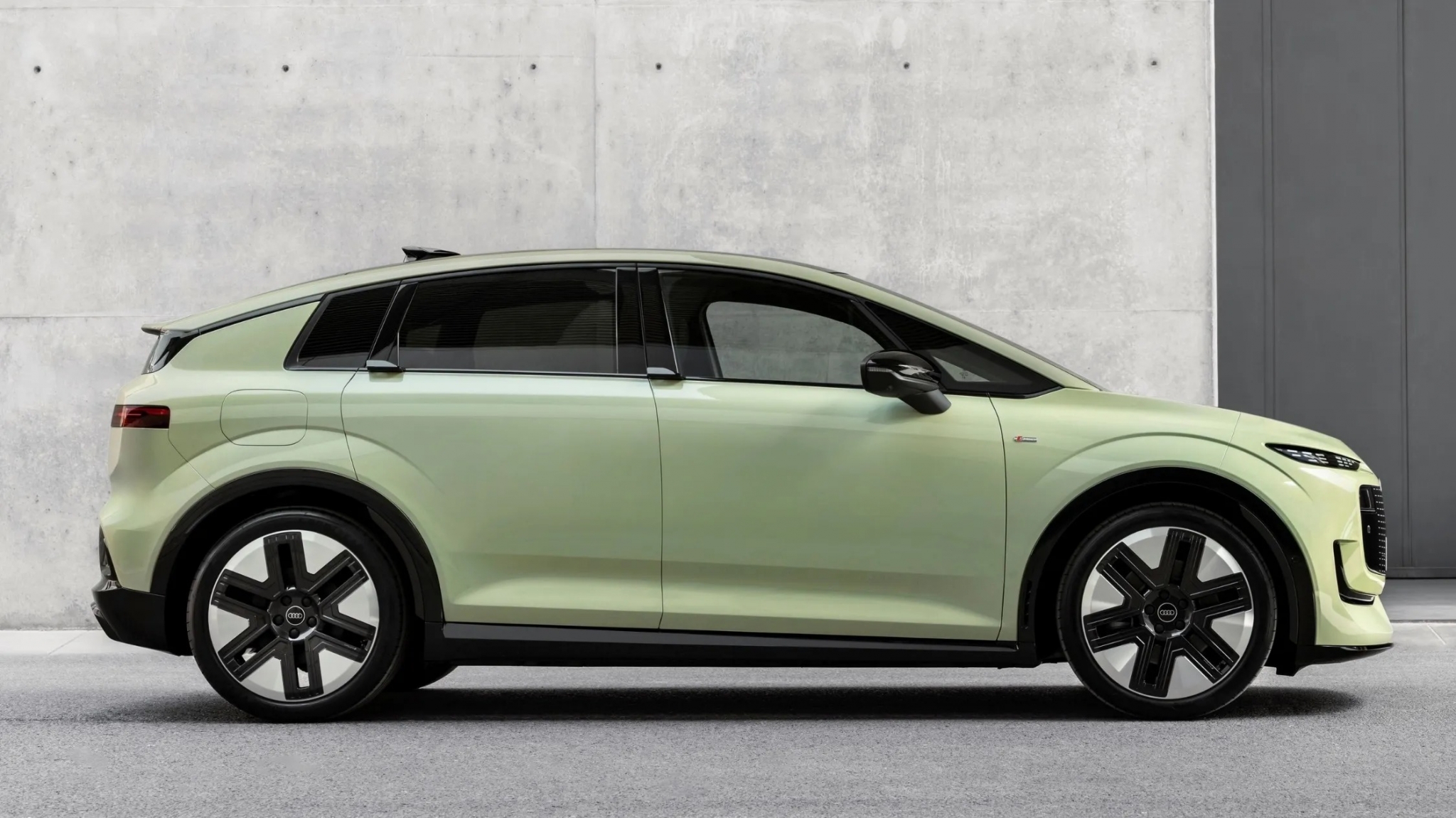
For starters, it inherits some traits from the original A2: an angular, almost minivan-like body and a two-part rear window. However, all of this has now been transferred to a significantly wider vehicle with a solid, planted stance and arguably the cheekiest “smile” an Audi has ever worn.
The second reason to pay attention to the A2 e-tron is Audi’s claim that it is the most efficient production model in the brand’s history. Yes, even more efficient than the ultra-frugal diesel A2 3L. Exactly how Audi calculated this figure isn’t entirely clear. In its most efficient configuration, the A2 consumes just 12.8 kWh per 100 km, while the longest-range version is capable of traveling up to 401 miles on the WLTP cycle.
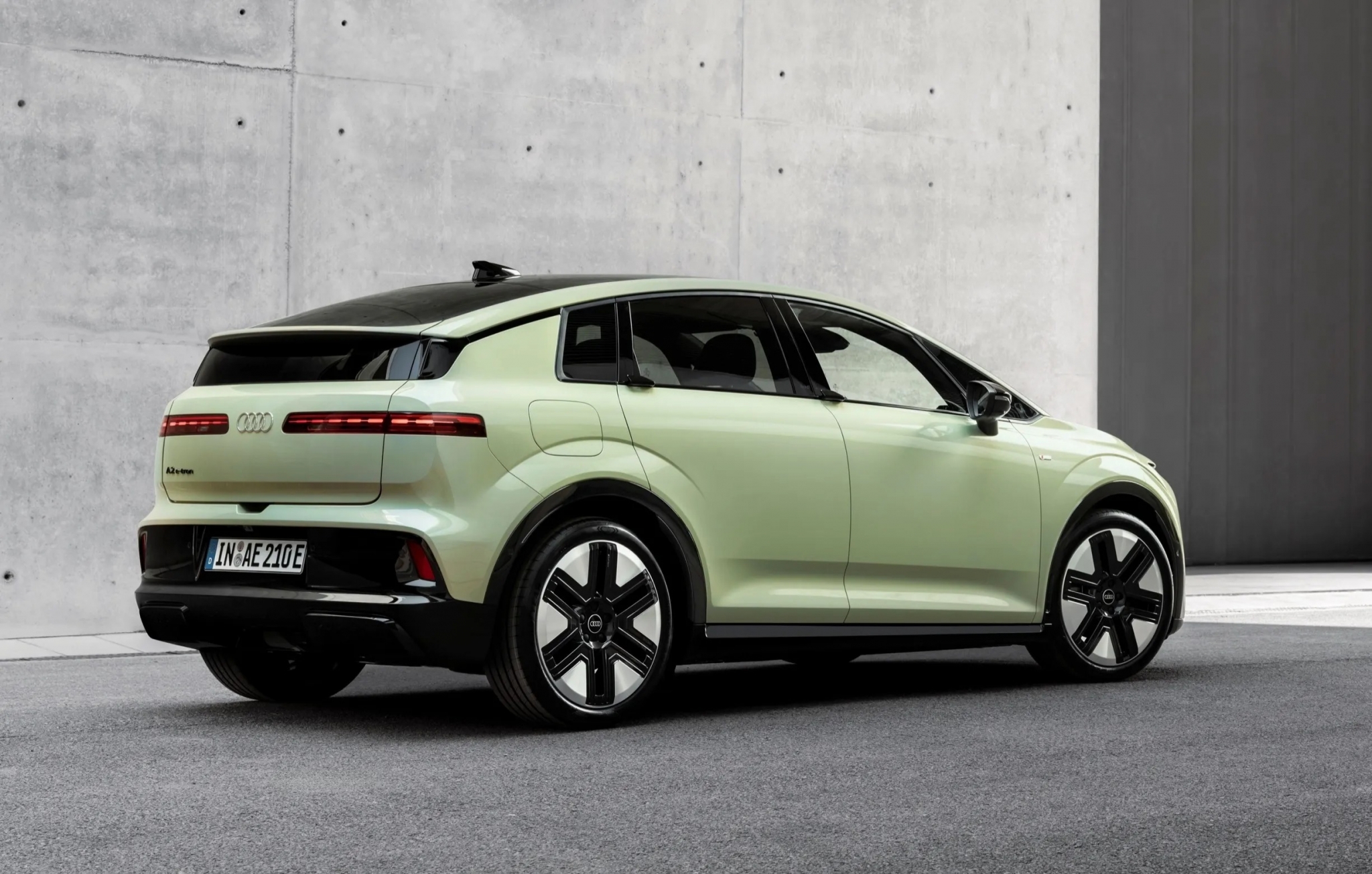
The engineers in Ingolstadt didn’t achieve this simply by installing a massive battery. Audi worked to eliminate energy losses literally everywhere. The A2’s drag coefficient is just 0.24 thanks to a fully enclosed underbody, active cooling air intakes, aerodynamic wheels, and small elements around the wheel arches that help reduce turbulence.
Even the door handles became part of this efficiency battle. They are distinctive “winglets” at the base of the door pillars that use sensors instead of a conventional mechanical mechanism. Audi abandoned them in favor of traditional handles on the new luxury crossover Q9 but promised to use this design on future European models. A light pull on the handle is all it takes for the door to open via an electric motor. A backup power source is even provided in case of electrical system failure.
Three battery options are available for the A2: 52, 61, and 84 kWh. The base version with the 52 kWh battery gets a single electric motor producing 170 hp, accelerates to 60 mph in 8.8 seconds, and has a range of 262 miles.
The optional 61 kWh battery is paired with a 190-hp (140 kW) electric motor. The 0-60 mph sprint takes 7.9 seconds, while range increases to 320 miles. The 231-hp (170 kW) version cuts the 0-60 mph time to 7.0 seconds and, thanks to the 84 kWh battery, delivers the full 401-mile range.
If range can be partially sacrificed for performance, the flagship 326-hp (240 kW) version sprints to 60 mph in 5.7 seconds and travels up to 391 miles. It is also the only variant capable of reaching 124 mph instead of being limited to 99 mph.
In all versions, power is sent to the rear wheels. The A2 is built on the MEB platform used by models including the Volkswagen ID.3 and Audi Q4 e-tron, rather than the newer front-wheel-drive MEB+ architecture that underpins the Volkswagen ID. Polo, Cupra Raval, and Skoda Epiq. As a result, there is neither all-wheel drive nor a quattro badge.
Maximum DC fast-charging power for the large-battery versions is 183 kW. Charging from 10 to 80 percent takes 29 minutes — a figure that’s hard to call impressive. The two smaller batteries are limited to 100 kW, but thanks to their lower capacity they require just 24 minutes to recharge. Like other Volkswagen MEB-platform electric vehicles, the A2 supports bidirectional charging.
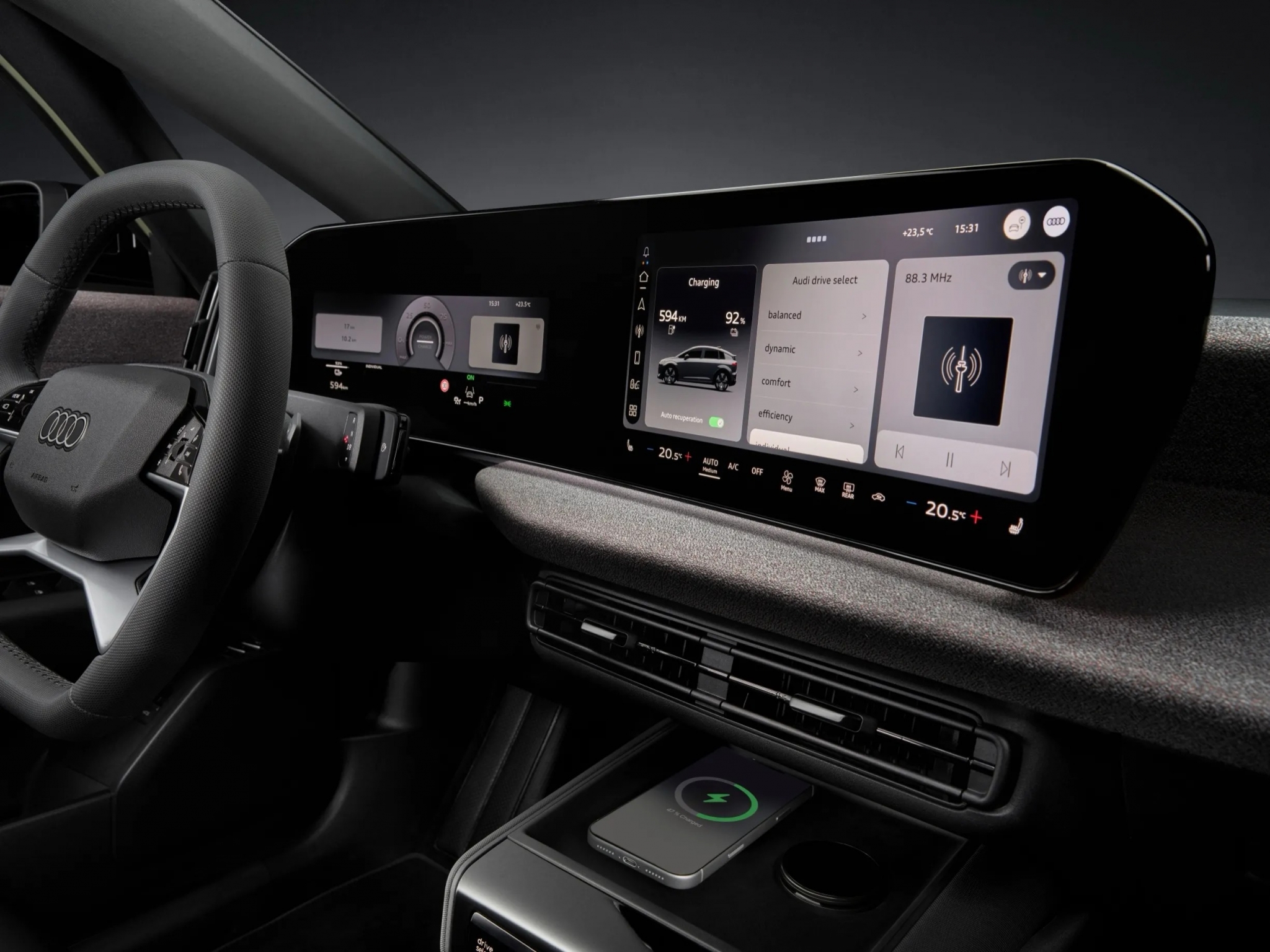
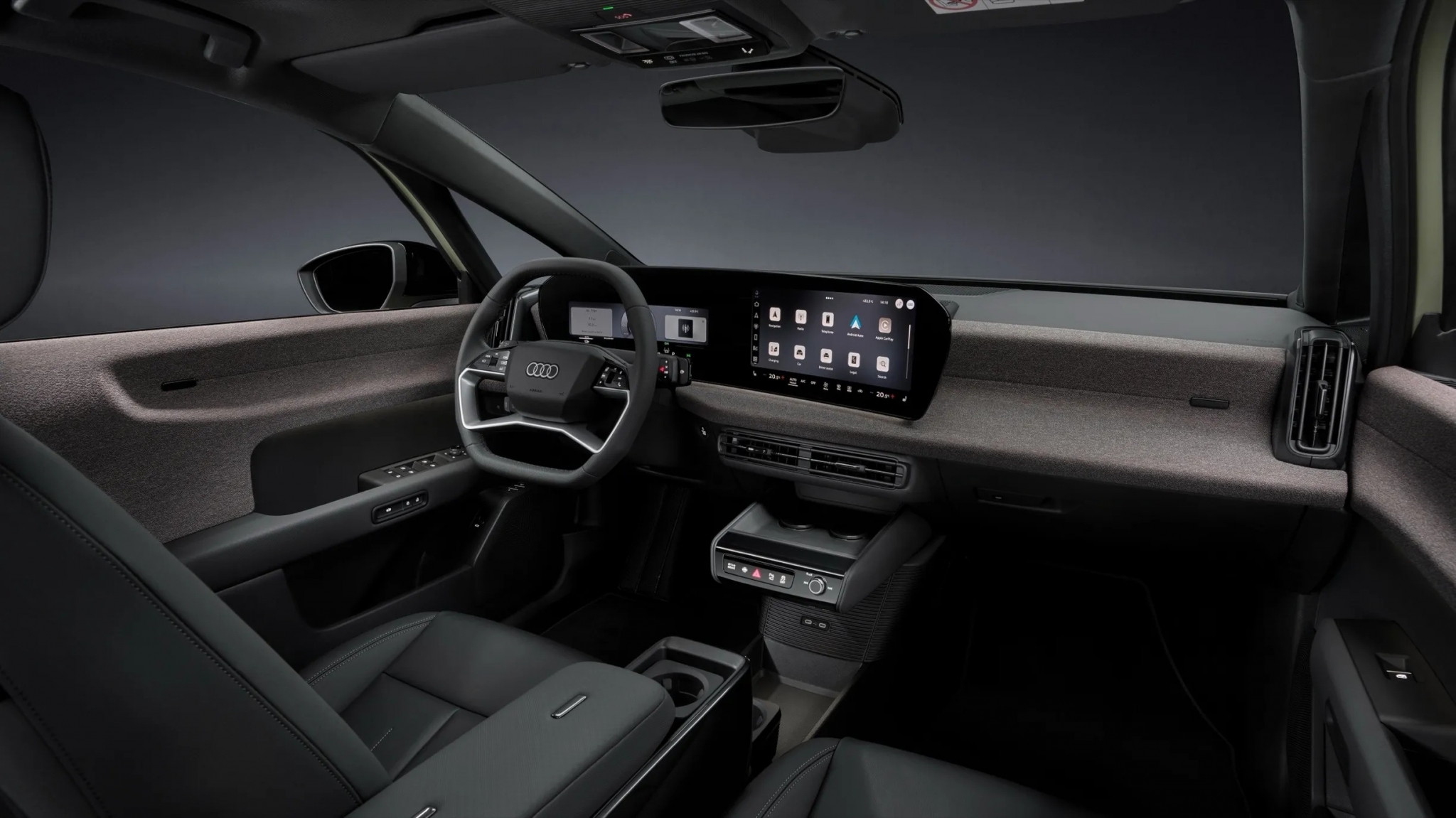
Inside, there’s an 11.9-inch digital instrument cluster and a 12.8-inch curved touchscreen, while the transmission selector has moved to the steering column. This frees up space in the center console for a Qi 2.2 wireless charging pad capable of charging two smartphones simultaneously at up to 25 watts each. Useful, but hardly revolutionary. The Fidlock system, however, is genuinely interesting.
Fidlock is a magnetic mounting system with a mechanical lock. It allows various accessories — such as cupholders and charging cable bags — to be attached in designated spots throughout the cabin and trunk. Avid cyclists are likely already familiar with the system, but Audi claims it is making its production-car debut on the A2.
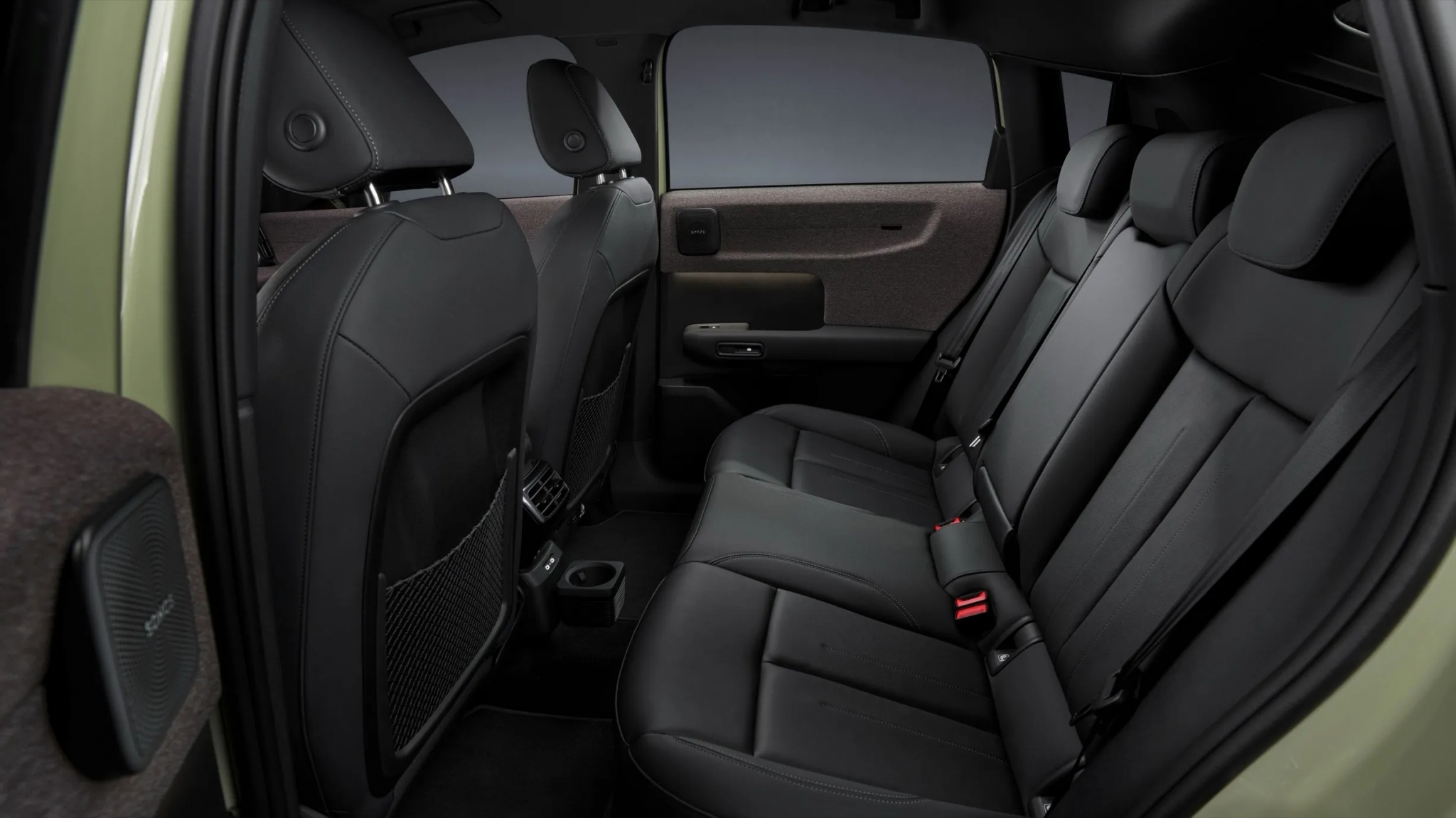
What about practicality? It’s perfectly respectable, but the A2 isn’t class-leading. The wheelbase is the same 109.1 inches as its relative the Q4 e-tron, so legroom should be adequate. However, while the Q4 offers 18.4 cubic feet of cargo space, the A2 provides just 14.0 cubic feet. It falls short of the Renault Megane E-Tech’s 15.5 cubic feet but beats the Volkswagen ID.3 (13.6 cu ft) and the cramped Volvo EX30 (11.2 cu ft).
One of the most innovative features of the original A2 was its aluminum body, but that very construction made the car expensive and contributed to its poor sales. Consequently, the new A2 e-tron is built primarily from steel, with aluminum used only in selected components.
What is impressive is the development speed. After the last A2 ended production, it took Audi 20 years to revive the nameplate, yet the journey from first sketches to the new car’s premiere took just 21 months.
The original A2 was ahead of its time. But now, with striking design, clever interior solutions, impressive efficiency, a genuinely accessible starting price, and rapidly growing electric vehicle sales in Europe, the right moment for the A2 may have finally arrived.