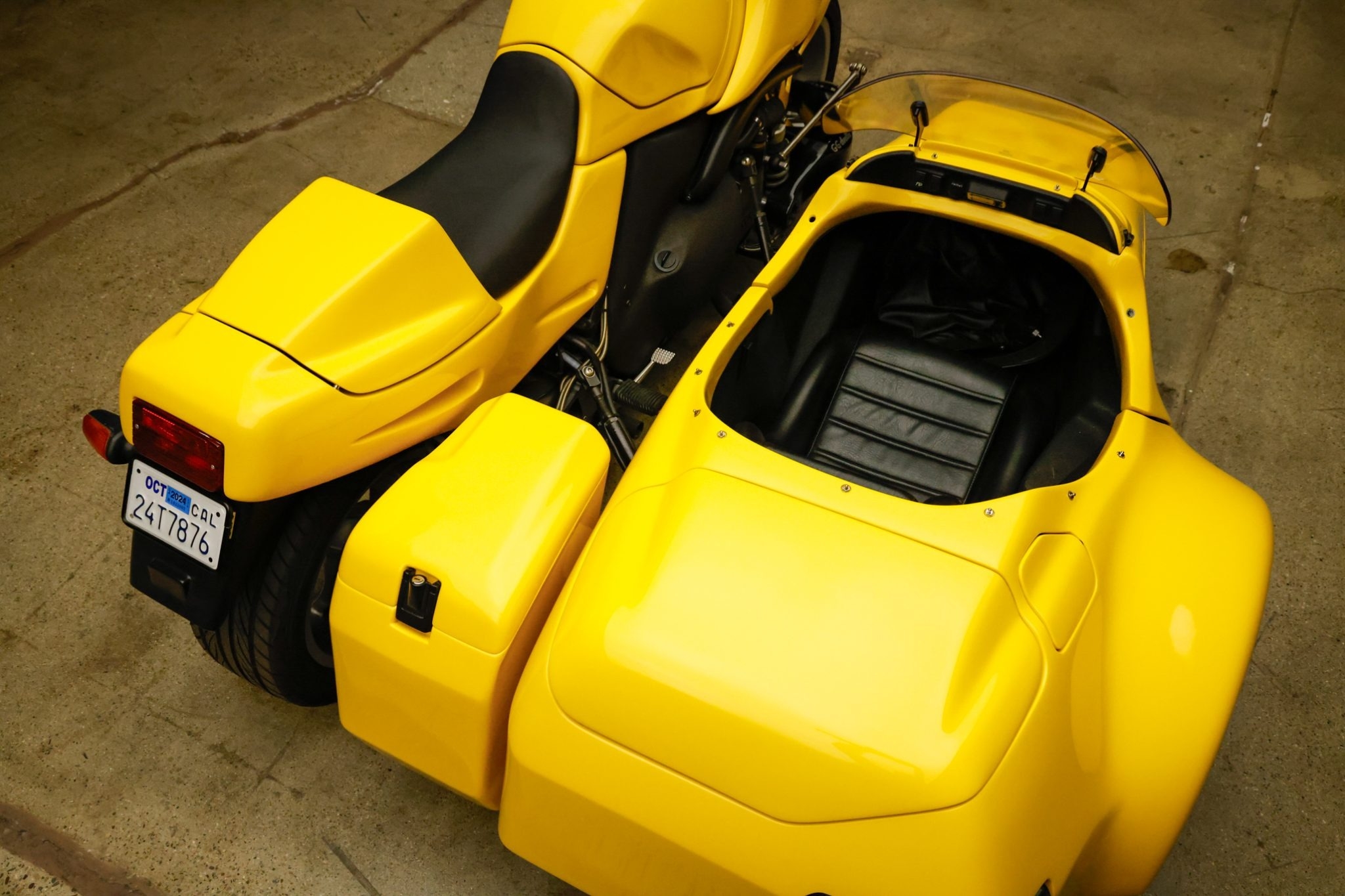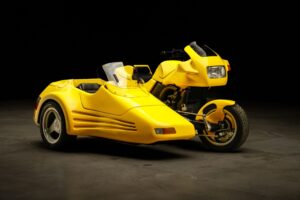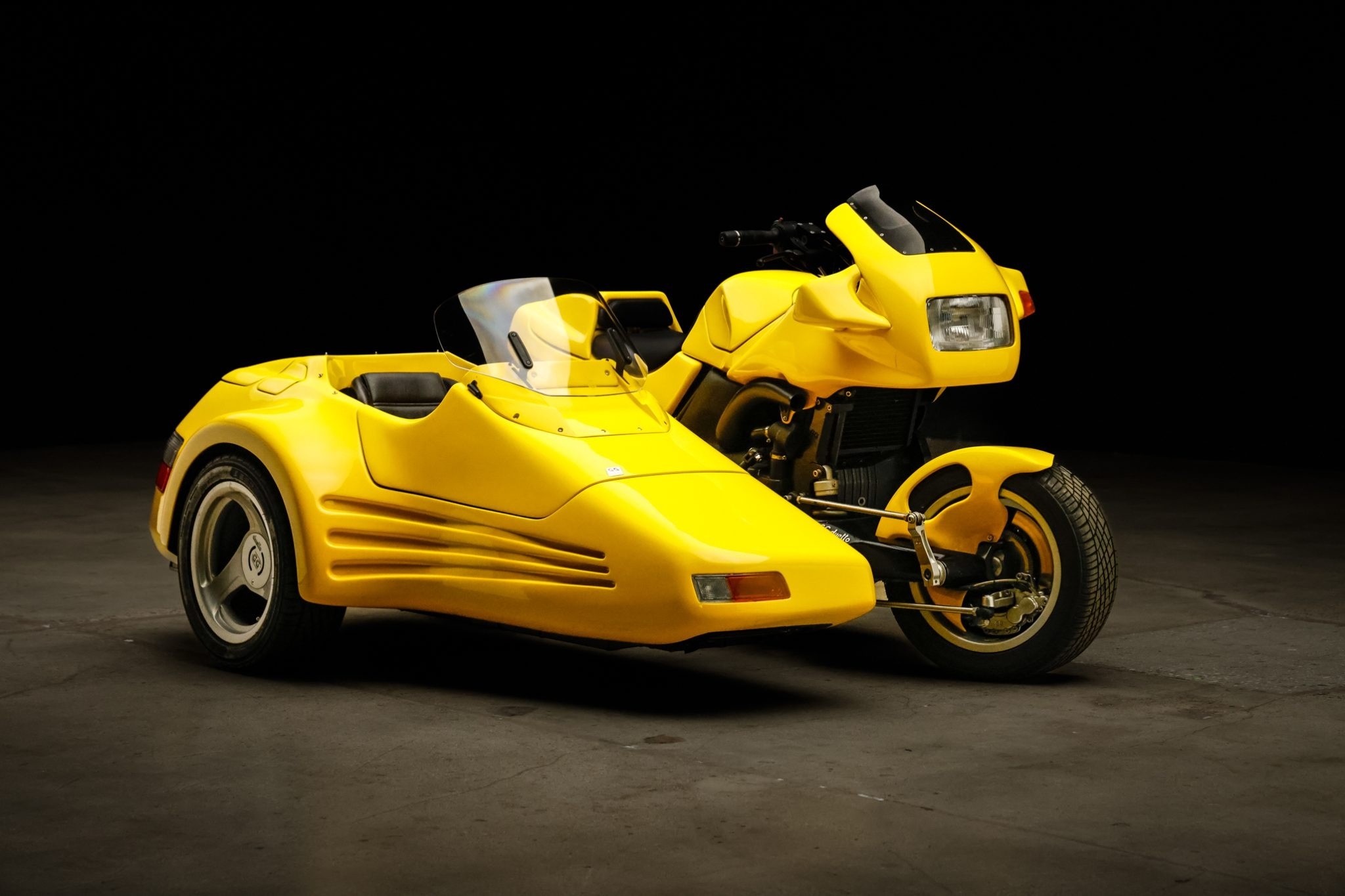
In 1999, the GG Duetto appeared — an extremely rare motorcycle with a non-removable sidecar, built in Switzerland. Only 30 examples were ever produced. In the mid-1990s, this machine cost around $50,000, which equates to more than $109,000 in today’s money.
When the model was new, it was sold exclusively in Europe and Japan. Production lasted just five years — from 1994 to 1999. These machines rarely appear on the market, and the example shown here is considered one of the best-preserved surviving specimens.
The GG Duetto is one of those machines that defies easy categorization. It was created by a small Swiss engineering company that essentially rethought the very concept of a motorcycle with a sidecar, applying the meticulous precision for which Swiss engineering is renowned.
The company Grüter + Gut Motorradtechnik GmbH was founded on May 1, 1983, in the canton of Lucerne by Walter Grüter and Daniel Gut. Both were passionate motorcyclists. The firm initially sold and serviced Moto Guzzi and Ducati motorcycles, adding BMW to the lineup in 1985.
In 1986, tragedy struck the company when Daniel Gut was killed in a sidecar motorcycle accident. Grüter, a trained mechanical engineer, decided to continue the business alone, keeping his partner’s name in the company title as a mark of respect. Over time, the enterprise evolved from a dealership into a full-fledged workshop with its own manufacturing capabilities. The company became particularly well known for its high-quality parts for Moto Guzzi motorcycles.
However, Grüter did not want to limit himself to modifying other manufacturers’ designs. As early as 1986, he began work on an entirely new type of sidecar motorcycle. After many years of development, testing, and refinement, the production GG Duetto debuted in 1994.
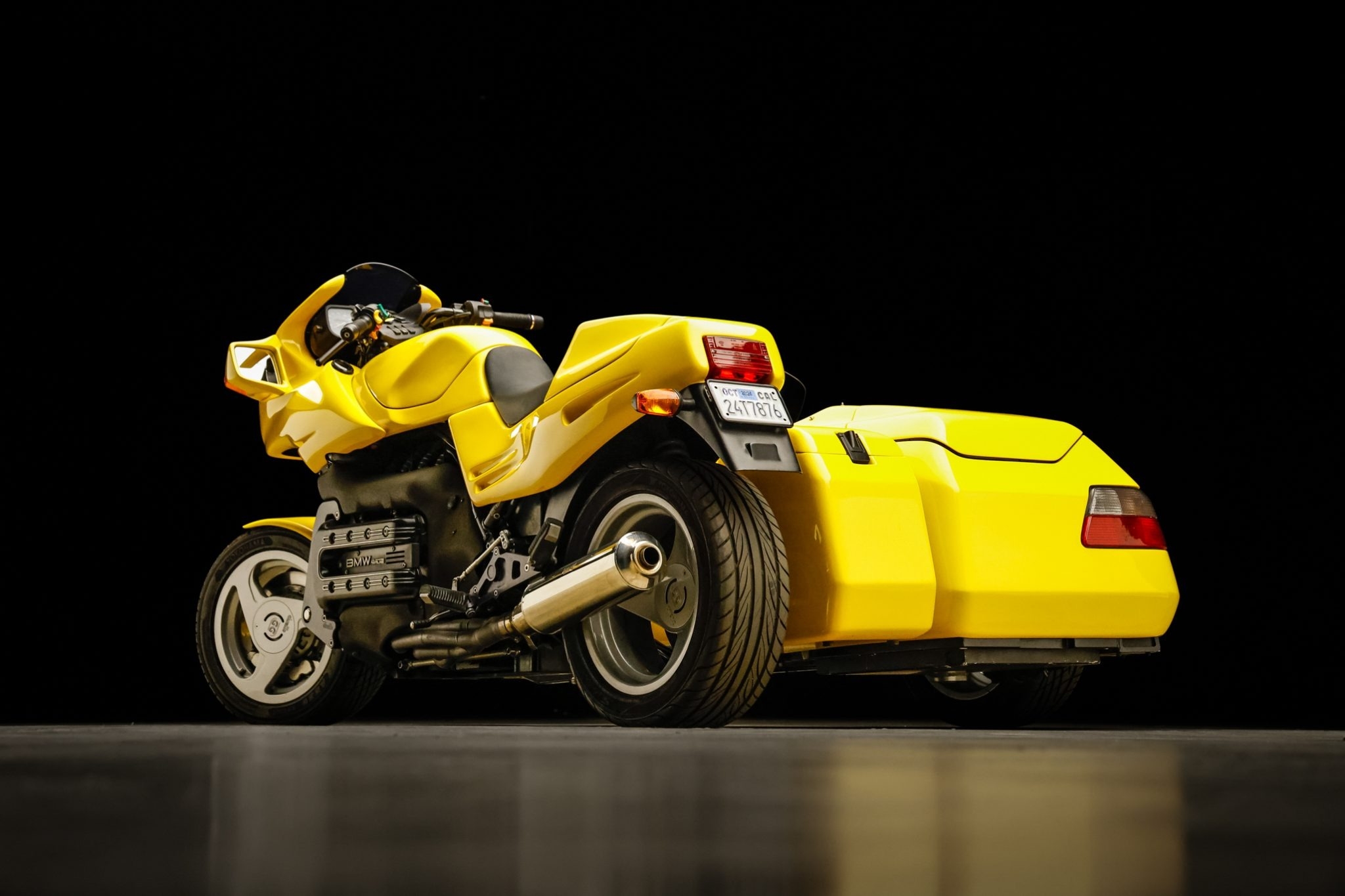
The GG Duetto was a purpose-built three-wheeler in which the motorcycle and sidecar formed a single, inseparable unit. The machine was sold only fully assembled and, despite heavy use of BMW components, was never officially considered a BMW model.
After studying the market, Grüter chose the BMW K1100LT as a basis. Its inline-four engine displaced 1,092 cc, featured liquid cooling, dual overhead camshafts, and electronic fuel injection. It produced 100 horsepower at 7,500 rpm and approximately 79 lb-ft of torque at 5,500 rpm.
The engine was paired with a five-speed transmission, dry clutch, and shaft drive. For an additional charge, buyers could order a four-speed gearbox with reverse — a very useful feature on a machine that weighed 904 pounds dry.
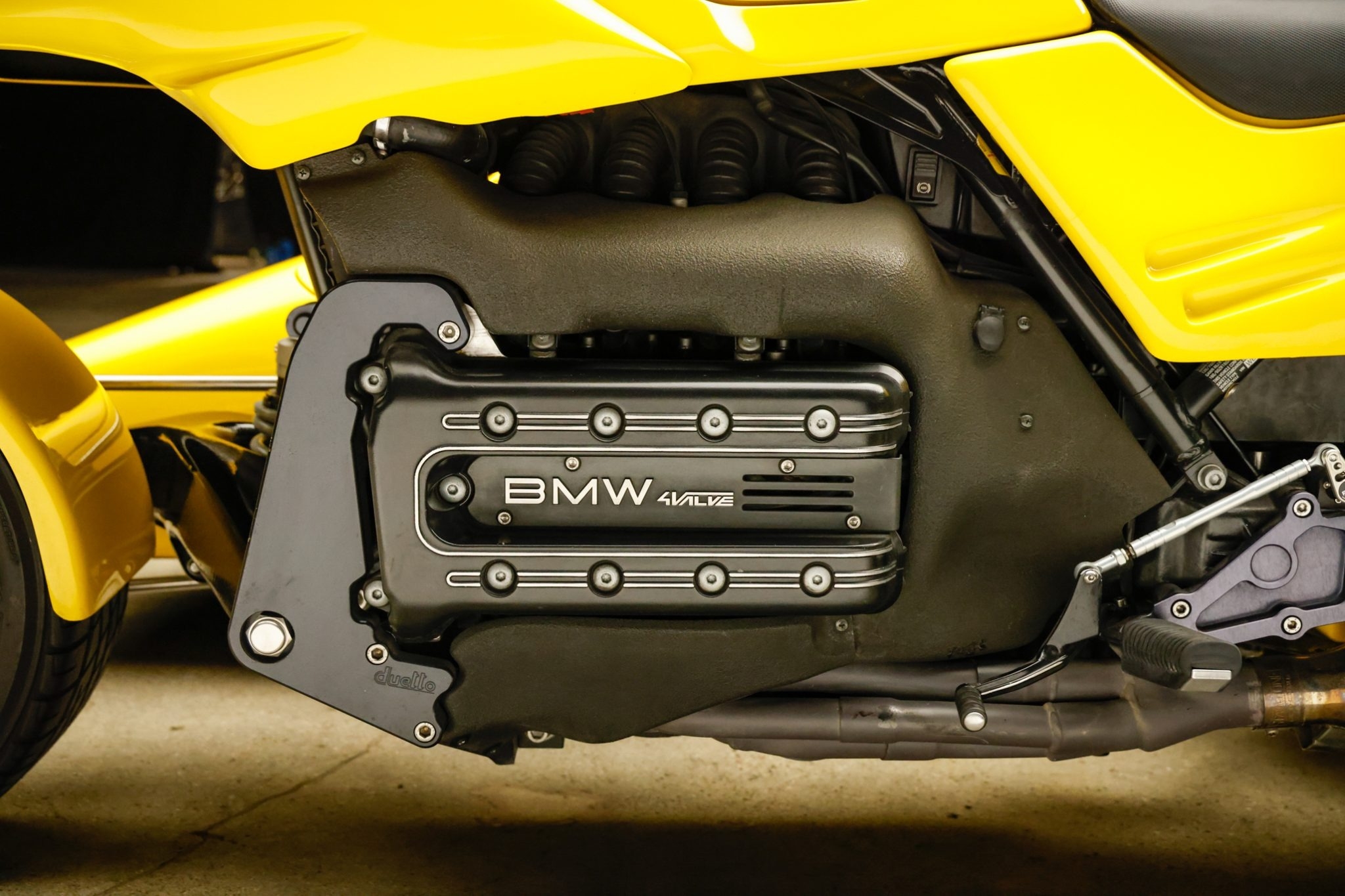
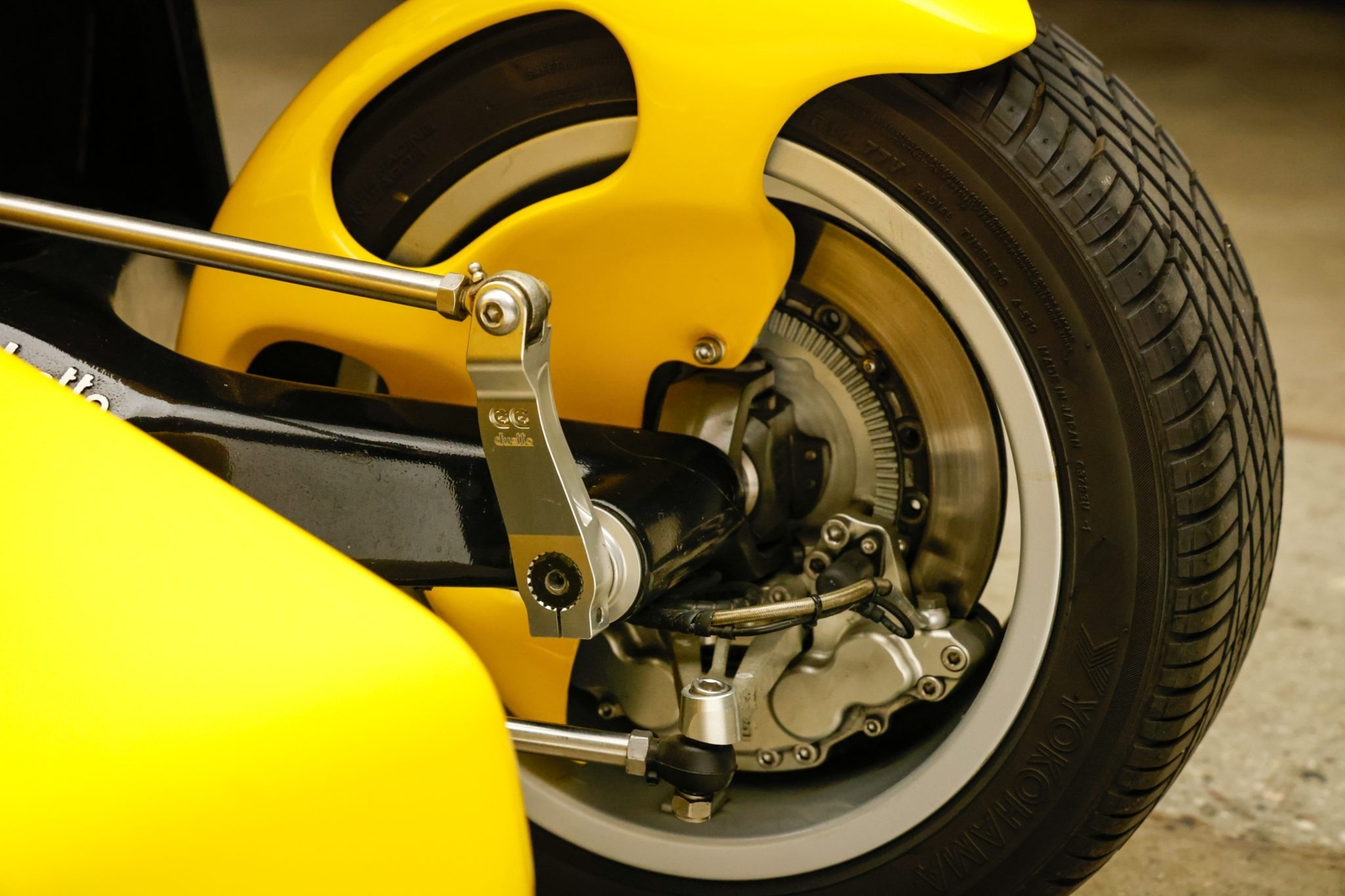
The engine and drivetrain were retained from the standard K1100LT. The forks, wheels, and bodywork were removed. In their place, Grüter developed a hub-center steering system with a single-sided aluminum swingarm at the front.
In this layout, the steering axis is located inside the wheel hub rather than above the wheel as on a conventional motorcycle. For a sidecar vehicle that constantly experiences asymmetrical loads, this was an exceptionally clever solution. Suspension was handled by a fully adjustable WP shock with remote reservoir.
The front brake deserves special mention. It was an eight-piston caliper machined by GG from a solid aluminum billet, working with a large ventilated disc. All three wheels were equipped with ABS — a genuine rarity on a sidecar motorcycle in the mid-1990s.
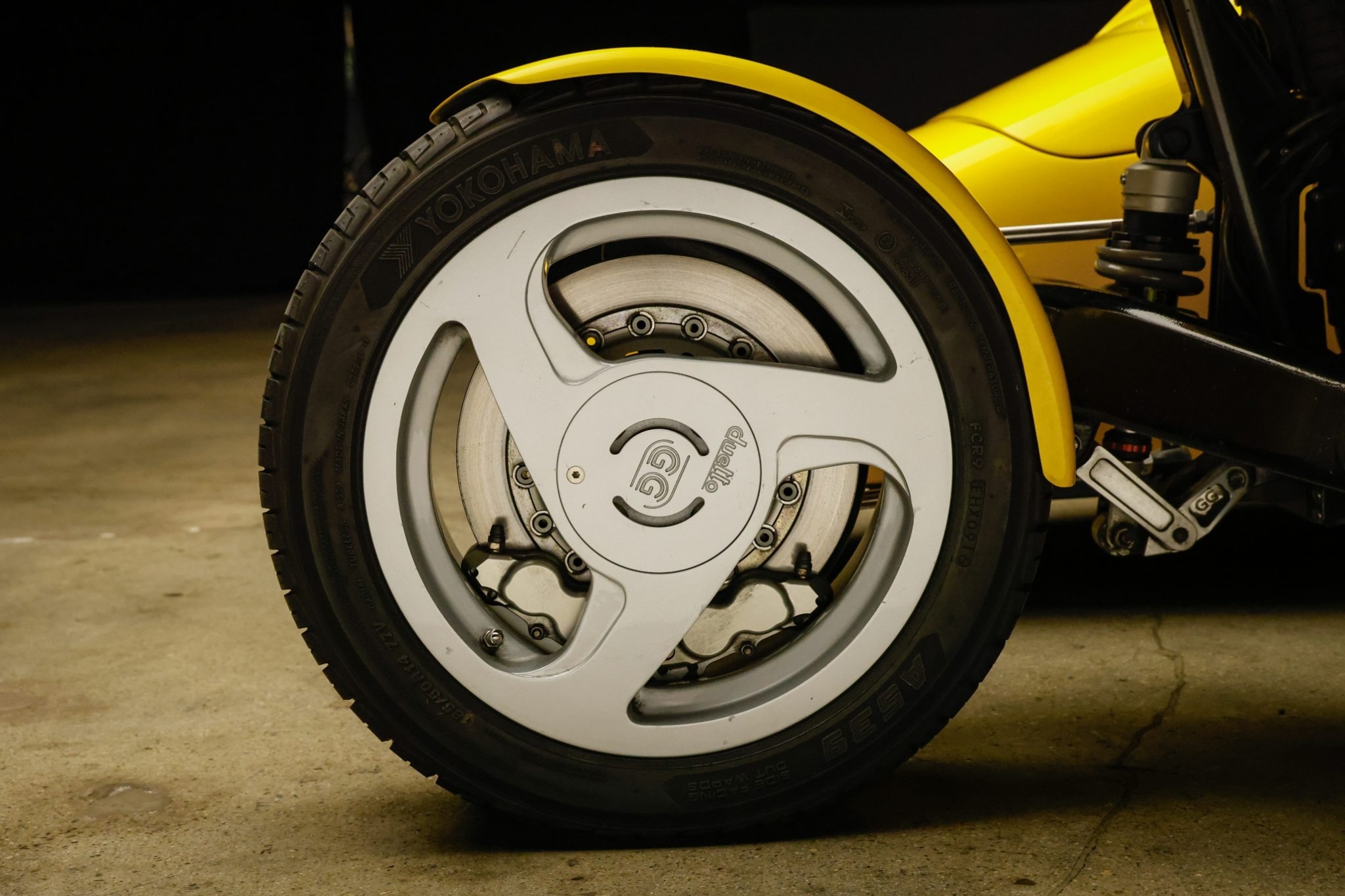
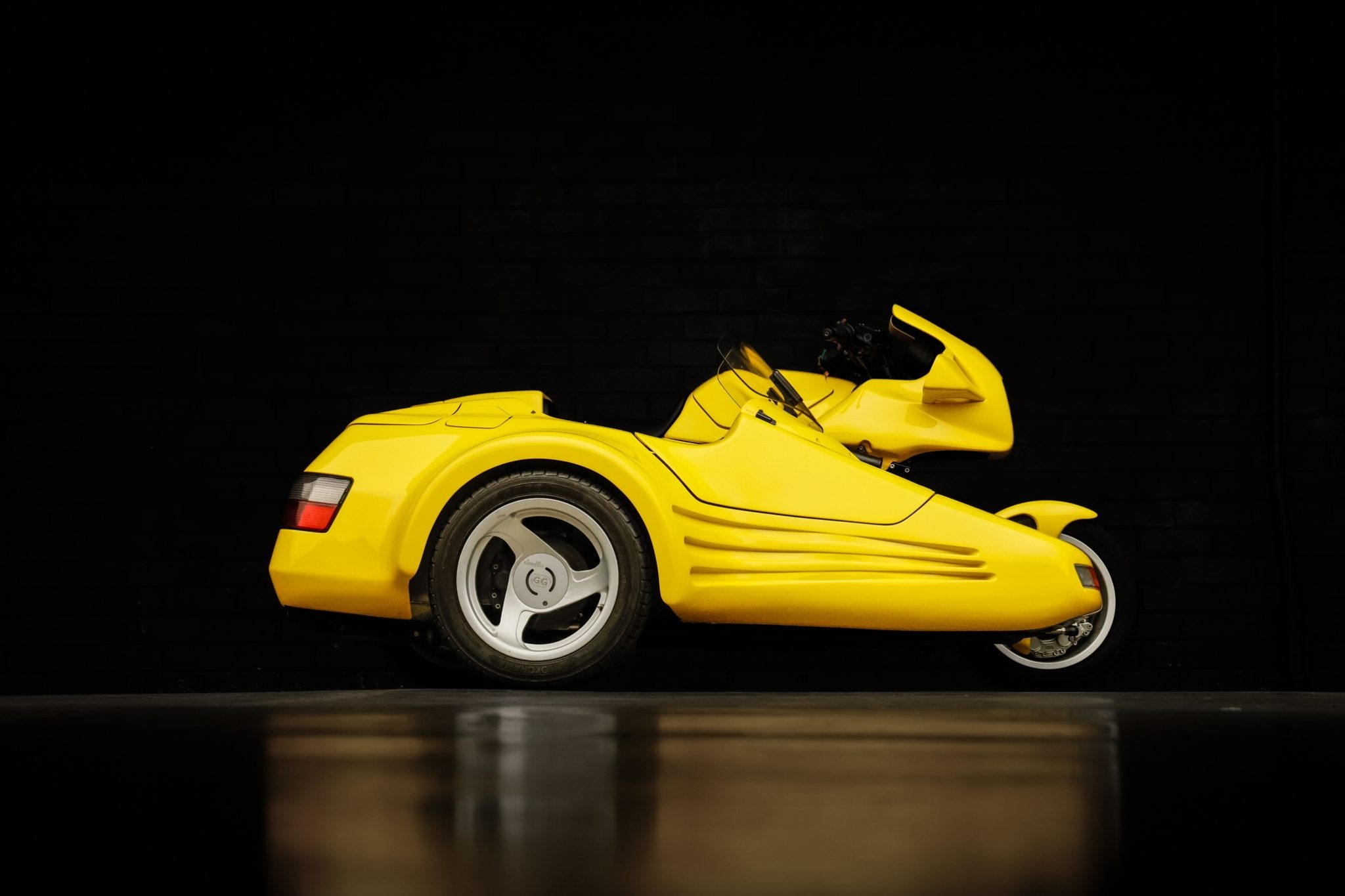
The wheels were custom-made by Marchesini to GG’s specifications. The front and sidecar wheels measured 6×14 inches, while the rear was 6×15 inches. Because the Duetto does not lean in corners, automotive tires with a flat profile were used: 185/50R14 front and sidecar, and 195/50R15 at the rear.
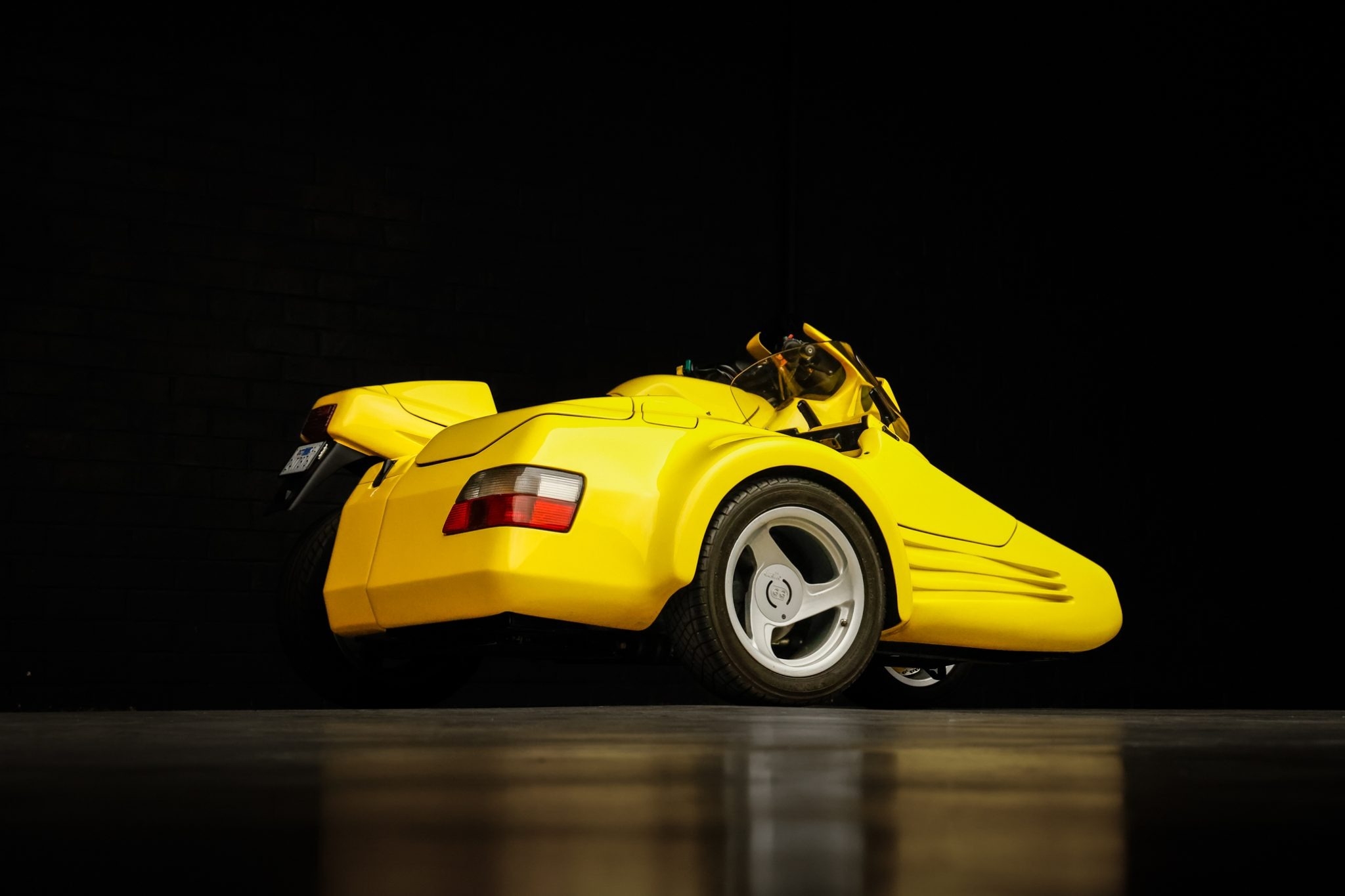
Great attention was paid to weight distribution. The fuel tank was relocated behind the sidecar wheel, along with the battery. This helped lower the center of gravity and improve balance.
The bodywork was made of fiberglass. All fasteners were hidden beneath the panels. The motorcycle section received a half-fairing and a decorative fuel tank with a lockable storage compartment. The sidecar body, with its distinctive horizontal vents in the flanks, was reminiscent of a Ferrari Testarossa.
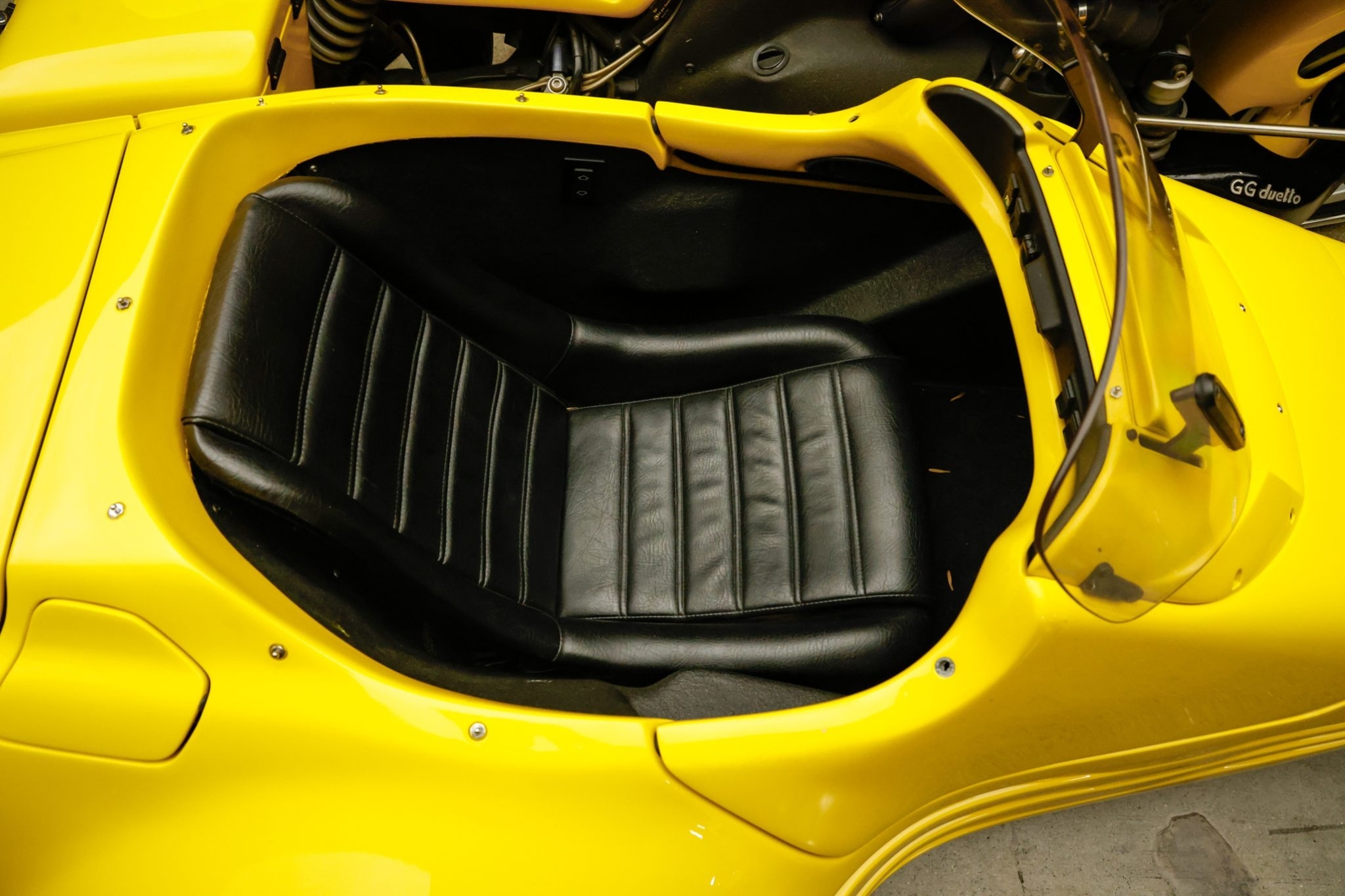
The sidecar interior looked more like the cabin of a luxury car than a typical passenger pod. Entry was through a large electrically operated hatch. Inside was a comfortable BMW car seat, carpeted flooring, and an electrically adjustable windshield borrowed from the K1100LT. A radio or CD player could be ordered as an option.
Between 1994 and 1999, only 30 examples of the GG Duetto were built, all sold in Europe and Japan. The price was 59,650 Swiss francs — approximately $50,000 at the time. This placed the Duetto in the same price bracket as exotic cars.
When Cycle World tested the only example to reach North America in August 1996, the journalists described it as possibly the most technically sophisticated and exclusive three-wheeled vehicle in the world. The motorcycle was temporarily at the Ride West BMW dealership in Seattle before returning to Europe.
The success of the Duetto made GG Motorradtechnik known far beyond Switzerland. It later led to a contract with BMW Switzerland to convert 600 motorcycles for the Swiss army between 2001 and 2003. Additionally, GG became the only independent vehicle manufacturer in the world to receive engines directly from the BMW factory.
Later, Grüter created the GG Spartaco, GG Cruso, and the four-wheeled GG Quad. However, the Duetto remains the company’s most famous project — a testament to what happens when a talented Swiss engineer decides that conventional sidecars simply aren’t good enough and starts a project from a clean sheet of paper.
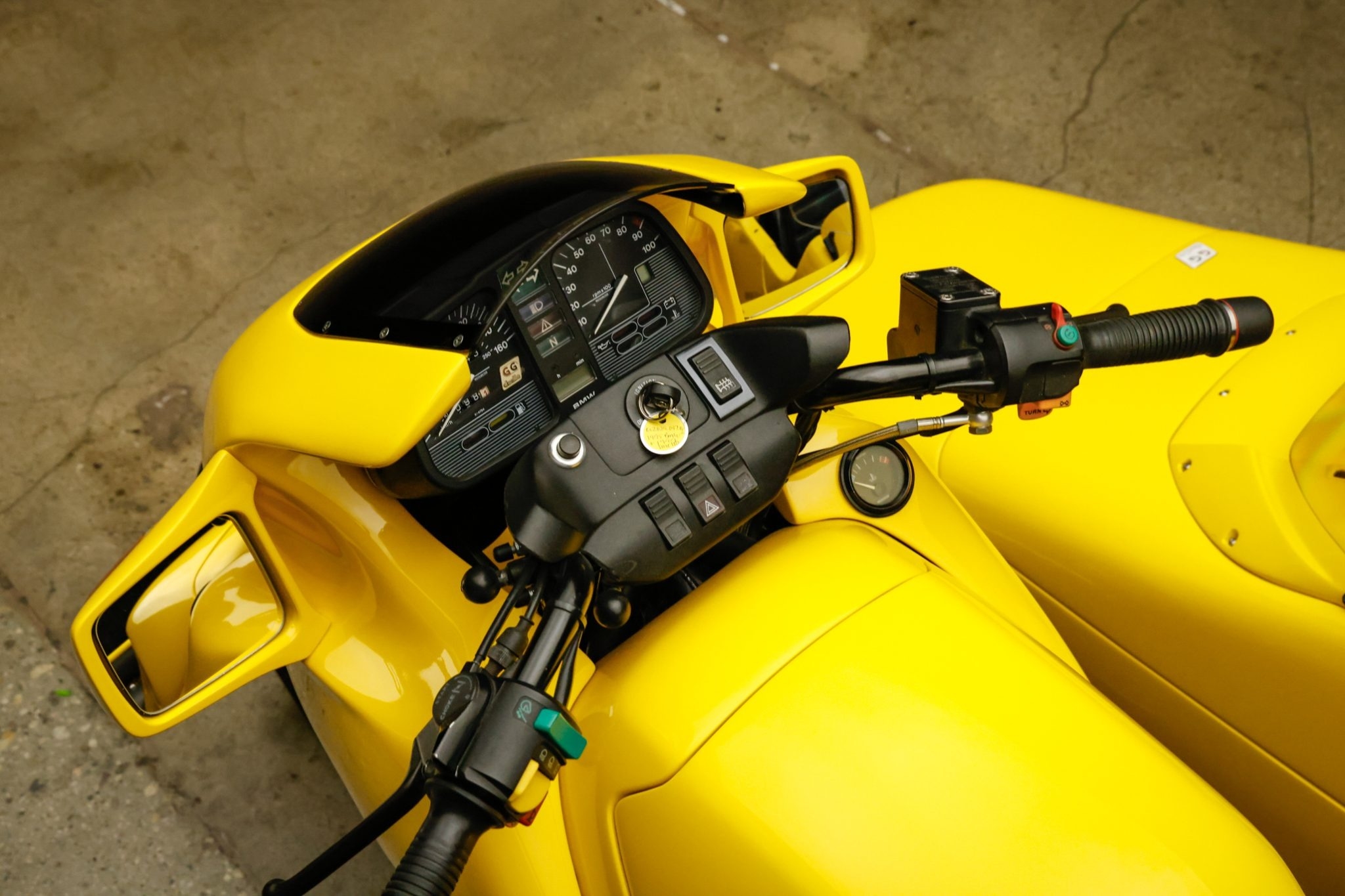
The 1999 example shown here is finished in yellow and is one of the 30 built. It features an integrated half-fairing with a rectangular headlight, a tinted windshield, mirrors with integrated turn signals, a decorative fuel tank with a lockable storage compartment, an additional storage box between the motorcycle and sidecar, a two-up seat, and folding passenger footrests.
The front suspension is built around a single-sided cast aluminum swingarm with hub-center steering and a fully adjustable WP shock. At the rear, the trademark BMW Paralever system is retained. Brakes consist of a bespoke eight-piston GG front caliper and Brembo two-piston calipers on the rear wheel and sidecar. All three wheels are equipped with ABS.
The forged three-spoke Marchesini wheels are currently fitted with Yokohama A539 tires bearing 2016 date codes.