John Dunscombe, who passed away in 2005, was a wiry motorcycle racing enthusiast from East Maitland. He lived alone in an old house crammed with newspapers, magazines, and objects he had collected throughout his life. After a devastating flood, many of his belongings had to be stored on the second floor, including his collection of firearms — John was an excellent marksman.
From a young age, he was passionate about Short Circuit racing on Australia’s roughly one-mile-long dirt tracks. In 1957, he made his debut at the Aberdeen circuit on a homemade motorcycle powered by a Triumph engine and fitted with a Norton frame. He later competed in the Bathurst road races on an AJS 7R and a tuned BSA Bantam.
In 1959, Dunscombe purchased the legendary Vincent Black Lightning — one of the fastest motorcycles of its era. On the dirt track at Muswellbrook, the Vincent exceeded 100 mph, literally shredding the rear tire. Over time, John realized the Vincent was better suited to sidecar racing. He built his own sidecar and began competing with passenger Gordon Heller.
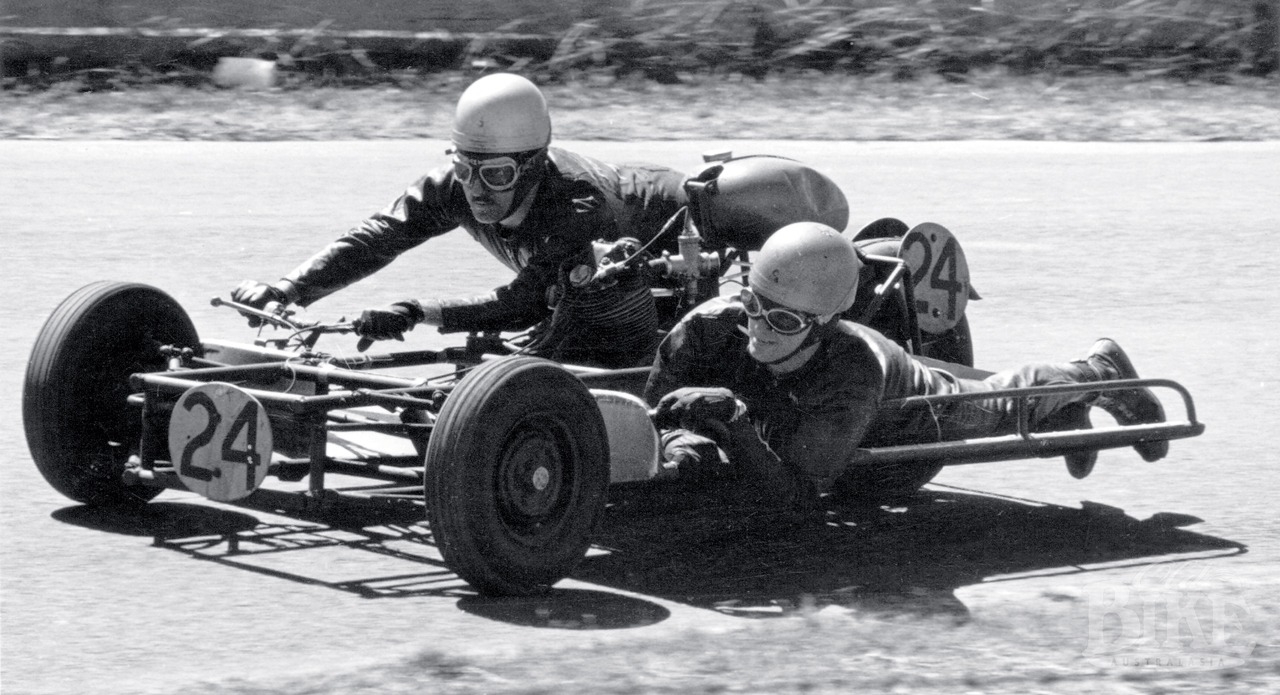
In the early 1960s, new permanent road circuits appeared in Australia. Dunscombe heavily modified his Vincent, creating his own front suspension, a new frame, fairings, and smaller wheels. The effort paid off — he took second place in the 1961 New South Wales Grand Prix and scored several podiums at Bathurst and Lakeside.
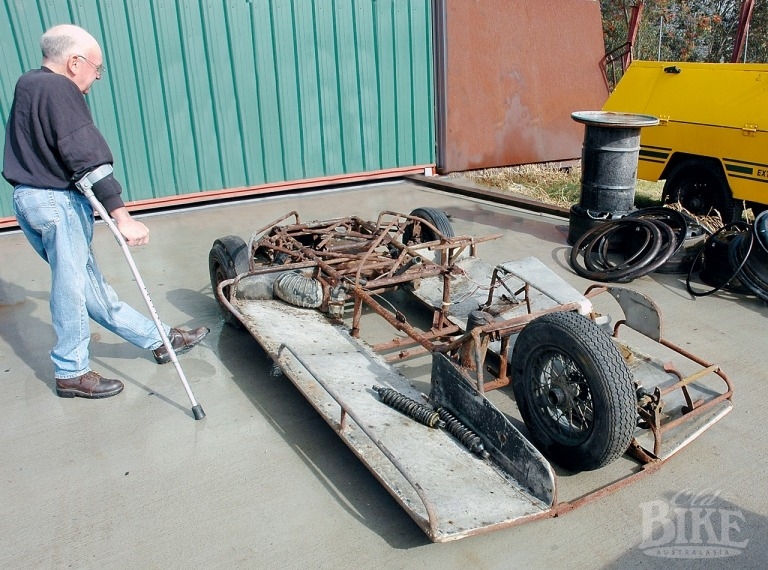
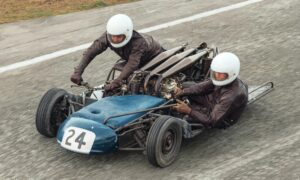
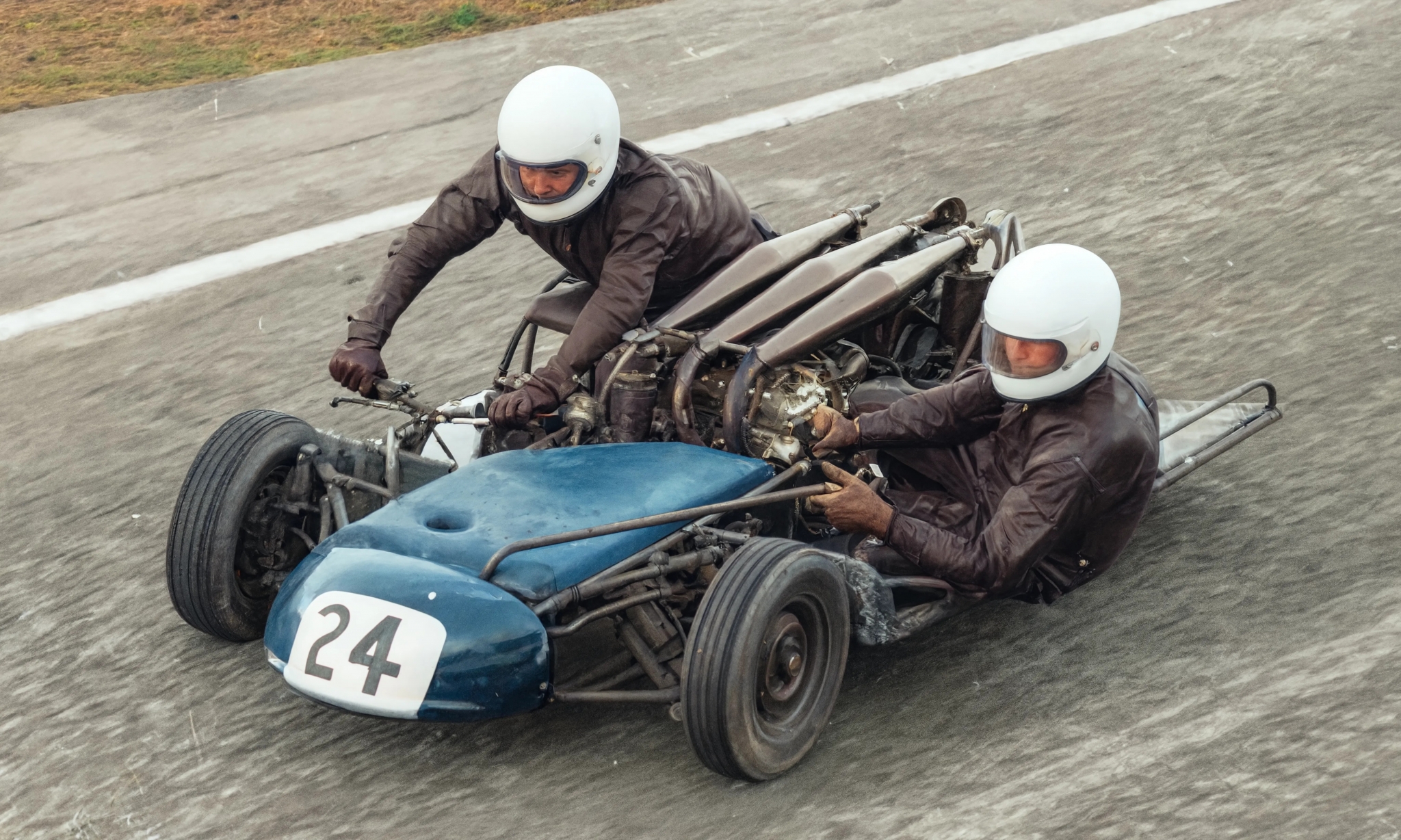
However, his craziest project was the three-wheeled “Cyclecar,” later nicknamed the Flying Bedstead. Inspired by wild British experimental racing sidecars, John built the bizarre machine almost entirely from scratch. It featured car-style suspension, wheels from a Mini, and a Vincent Black Lightning motorcycle engine mounted centrally on the platform.
Its first test runs at Bathurst in 1966 were a disaster — the suspension geometry was wrong, and the machine was thrown violently around the track. After modifications, it handled brilliantly, although organizers and competitors were shocked by its appearance.
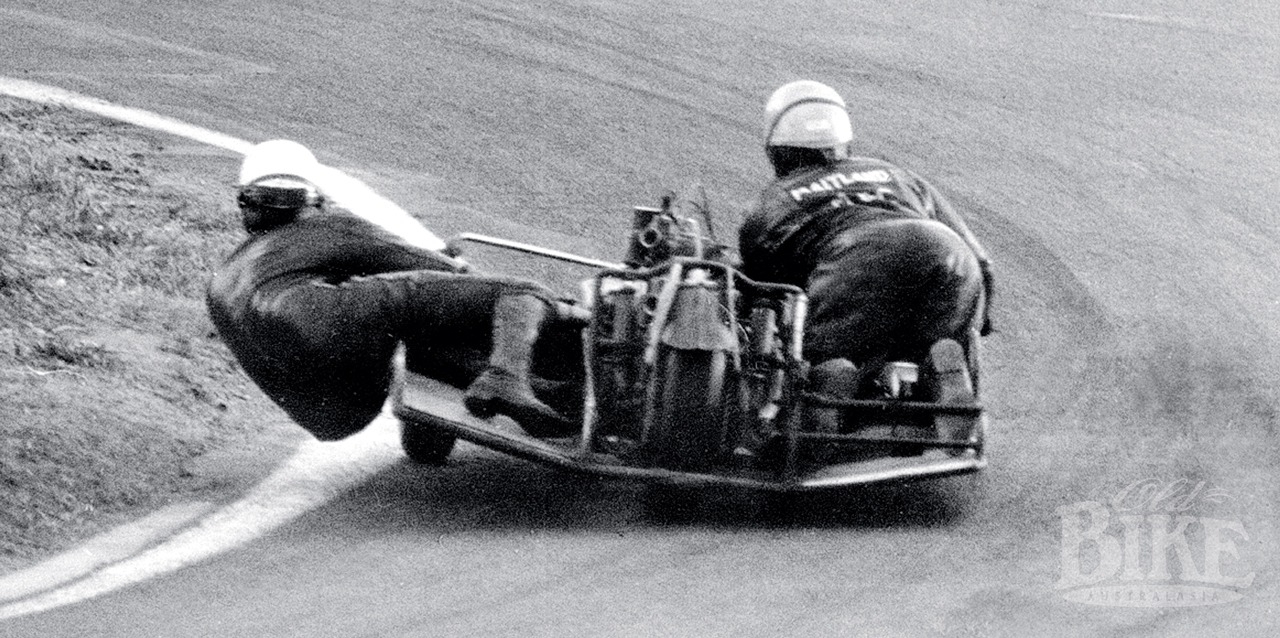
Later, Dunscombe replaced the Vincent engine with a water-cooled three-cylinder Suzuki GT750. The new powerplant made the machine even faster but introduced fresh problems — on one occasion a stuck throttle nearly resulted in a crash at 130 mph after the Conrod Straight.
By the early 1970s, competitors were using powerful Japanese four-cylinder engines, and the Flying Bedstead began to lose out on the straights. After another race at Bathurst, Dunscombe decided to retire. The machine was dismantled and left to rust in the yard of his house.
After John’s death in 2005, friends discovered the remains of the Flying Bedstead — a tree had literally grown through the frame. The chassis was later moved to renowned Australian engineer Peter Campbell in the hope that one day the unique machine could be restored.