Earlier this week I wrote about one of the few production diesel motorcycles — the Royal Enfield Diesel. It had classic Royal Enfield styling and an incredibly fuel-efficient diesel engine.
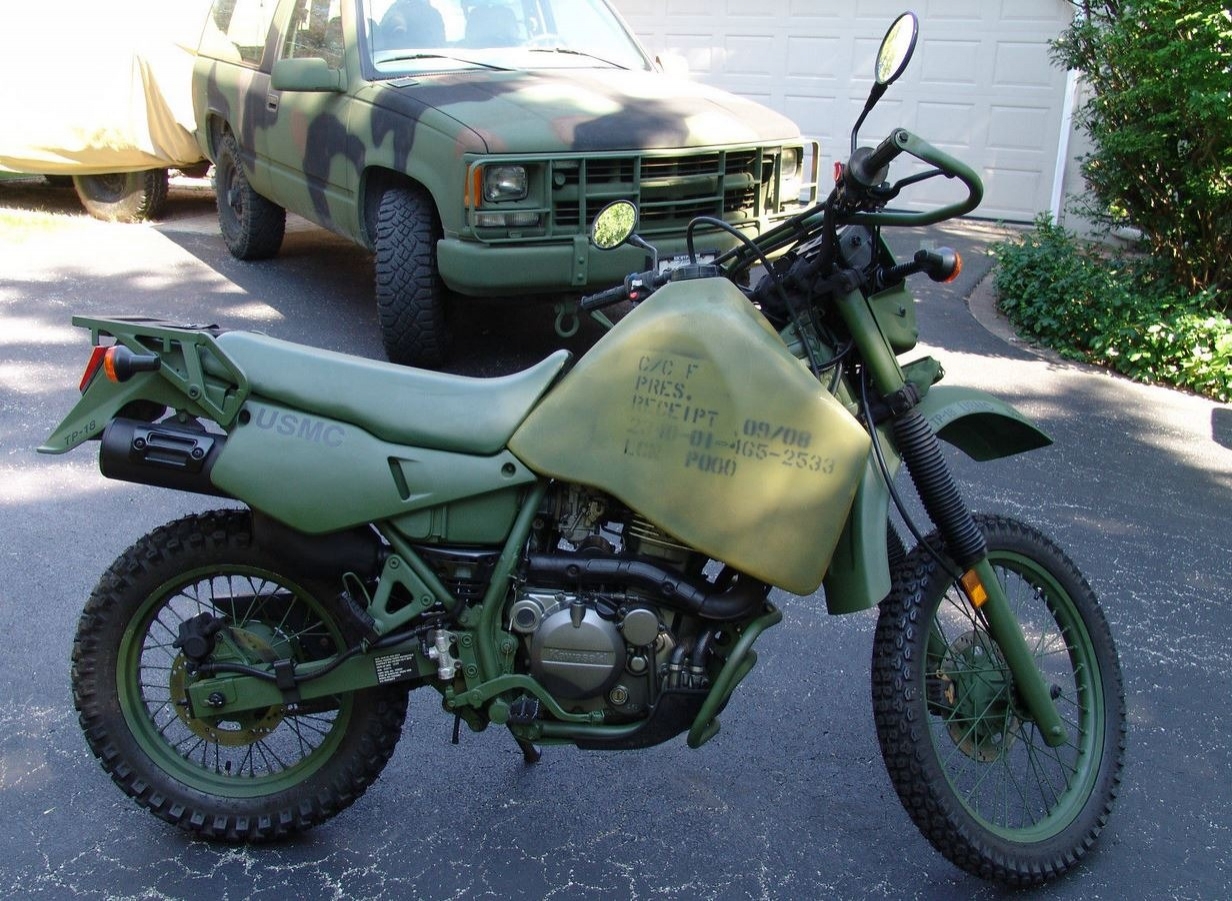
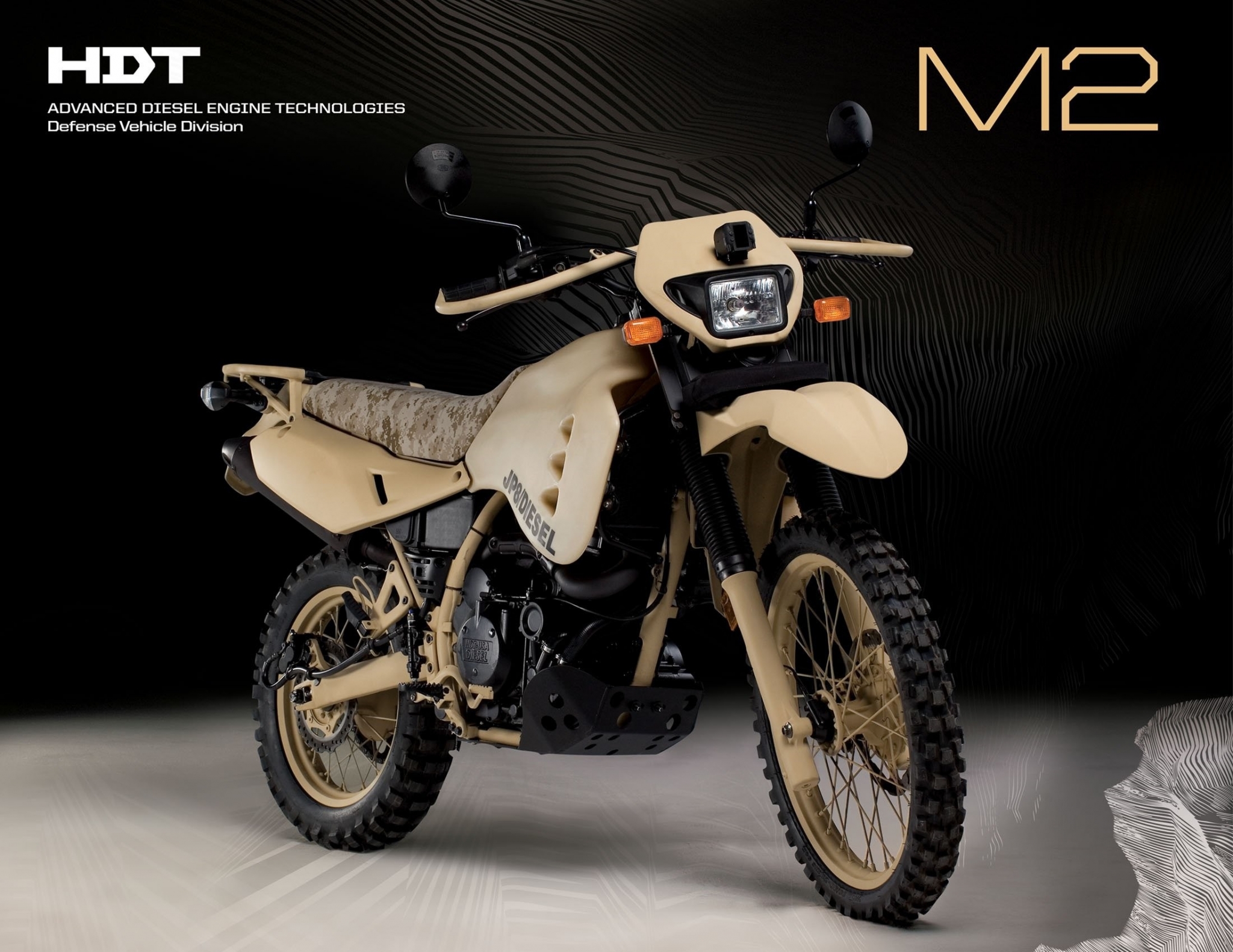
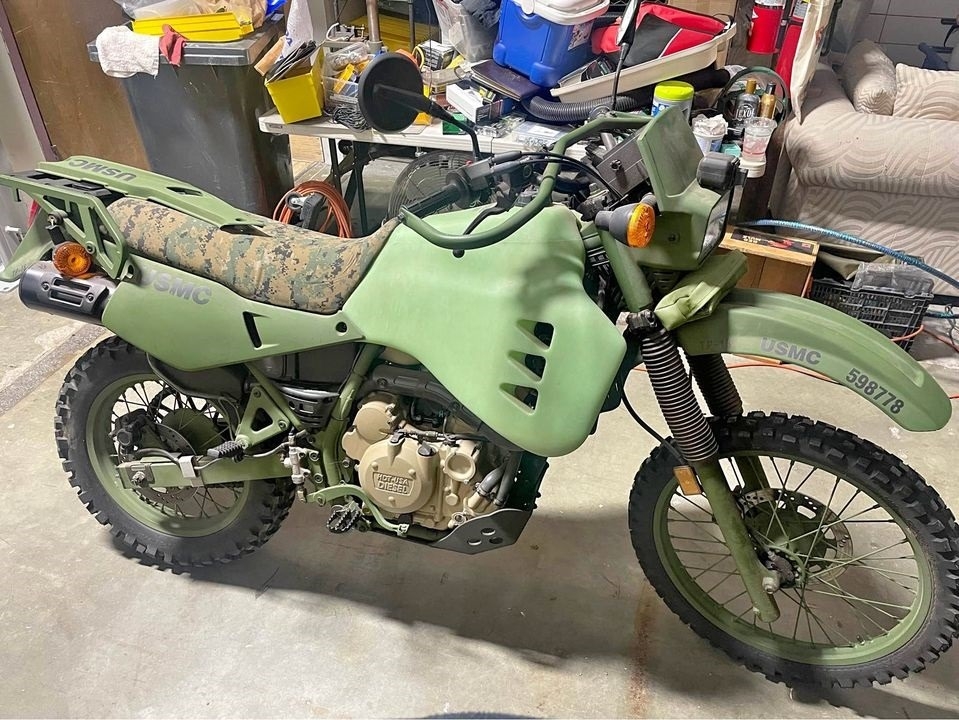
But if military aesthetics are more your thing, then today’s machine should appeal to you even more. The Hayes Diversified Technologies M1030M1 is an exceptionally cool military off-road motorcycle capable of consuming roughly 2.7 mpg (US) and running on jet fuel straight from the nearest airbase.
As you’ve probably already guessed, I’ve fallen down the rabbit hole of diesel motorcycles once again. There are very few of them compared to gasoline and electric bikes, but the ones that exist are genuinely extraordinary.
Of course, the world never got to see a diesel Hayabusa, which would have been magnificent. Instead, we have ultra-economical machines like the Royal Enfield Diesel, custom bikes with car diesel engines, and military motorcycles built to solve NATO logistics problems.
The HDT M1030M1 was exactly that.
This motorcycle was born from an effort to simplify the military fuel supply chain. As the Modern War Institute at West Point explains, even during the Vietnam War, U.S. forces faced a logistical nightmare.
Different vehicles required different types of fuel, and diesel blends themselves varied by region and season. The gasoline-powered M48 tanks were a particular headache — they consumed enormous amounts of fuel that also evaporated quickly in hot climates.
In the late 1980s, NATO countries decided to standardize fuel across all equipment. This gave rise to the Single Fuel Concept. The chosen standard was JP-8 aviation fuel, similar to civilian Jet A-1 but with additional additives for corrosion protection, anti-icing, and improved lubricity.
The advantage was obvious: the same fuel could be used for aircraft, trucks, and, as it turned out, even motorcycles.
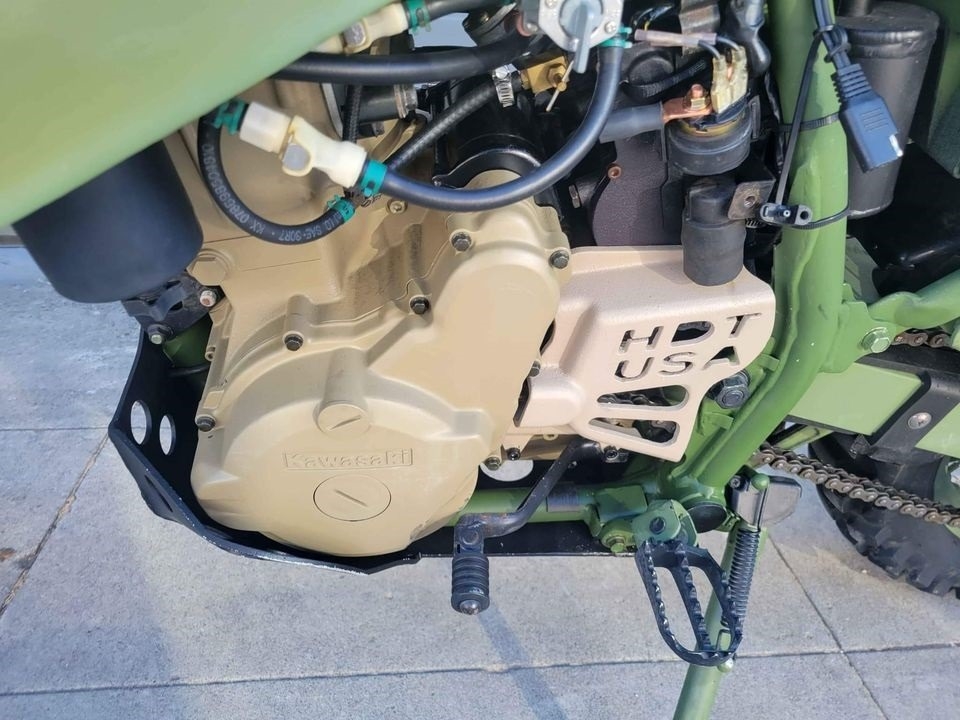
The HDT M1030M1 was a joint development between California-based Hayes Diversified Technologies and Britain’s Cranfield University. Founded in 1961, Hayes already had experience building military motorcycles. The company had previously produced the M1030 based on the Kawasaki KR250 and later the M1030B1, a military version of the Kawasaki KLR650.
Later, Hayes and Cranfield University decided to adapt the bike to the single-fuel concept. In 2004, the scientific publication EurekAlert! reported the appearance of the first diesel KLRs. They were called the world’s first production military diesel motorcycles and the first motorcycles with a diesel engine originally designed specifically for such vehicles.
The engineers faced a difficult challenge: the motorcycle had to remain light, reliable, fast enough for tactical use, and capable of running on both conventional diesel and JP-8 jet fuel.
Developers from Cranfield University, John Crocker and Dr. Stuart McGuigan, working with HDT, created a truly remarkable machine. Moreover, in September 2004, the motorcycle set a world speed record for diesel motorcycles on the famous Bonneville Salt Flats.
HDT founder Fred Hayes accelerated the bike to an officially recorded 85.5 mph. The conditions were far from ideal due to rain and wet salt.
Following the appearance of the M1030M1, the U.S. Marine Corps ordered 522 units. The U.S. Army and other NATO countries also showed interest. Hayes won the contract against several major competitors, including a joint Harley-Davidson and Lockheed team.
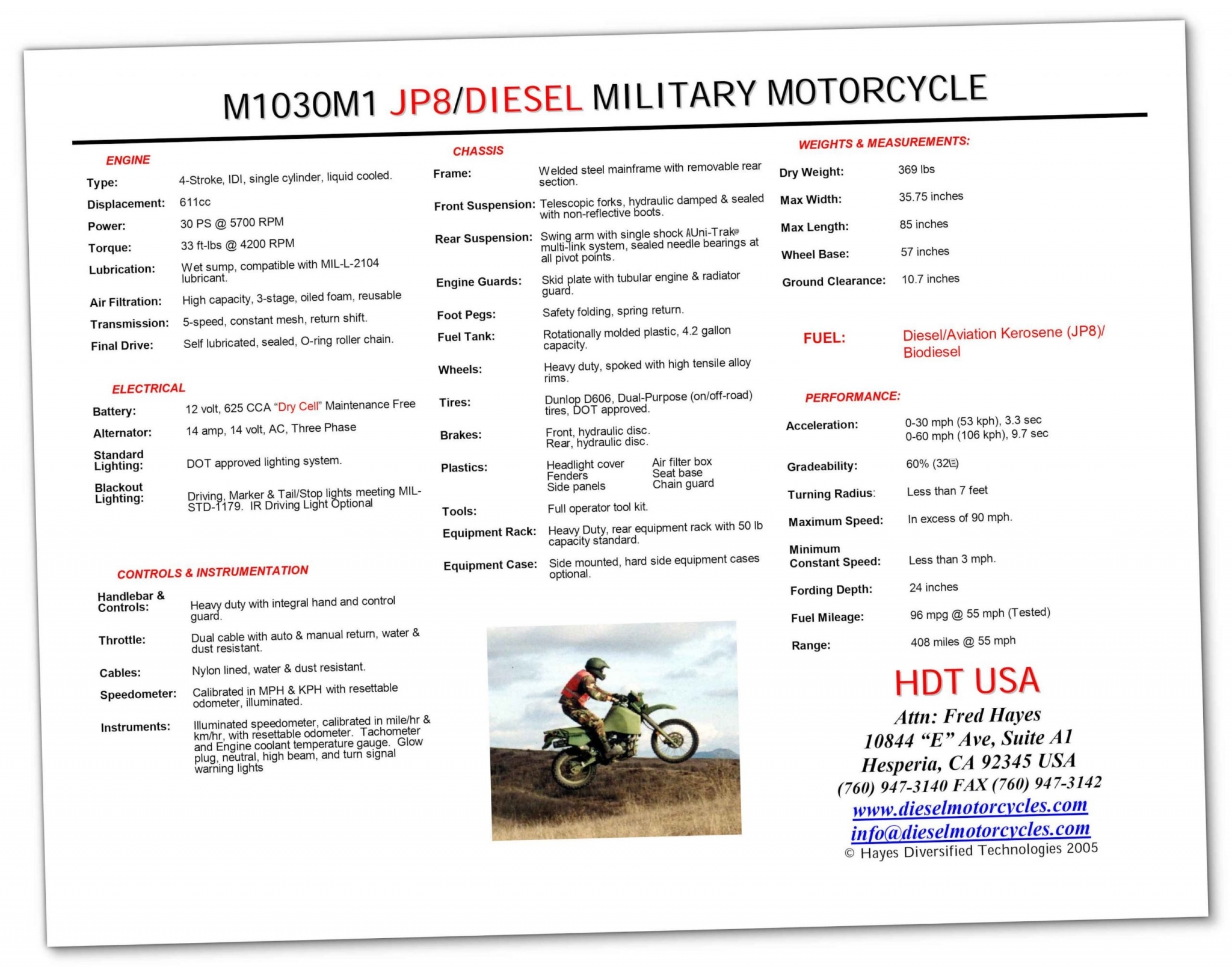
Under the “hood” — if one can say that about a motorcycle — was a 611 cc single-cylinder indirect-injection diesel engine producing 30 hp and 33 lb-ft of torque. That’s less than the standard gasoline-powered KLR650, but fuel consumption was phenomenal: approximately 2.7 mpg (US) at around 55 mph.
The motorcycle could climb gradients up to 60 percent, carry up to 50 lb of cargo on the luggage rack, and ford water up to 24 inches deep. With a 4.2-gallon fuel tank, its range reached approximately 400 miles on a single fill-up.
The most interesting part is that this bike shattered the popular myth that diesel engines are too heavy for motorcycles. While the Royal Enfield Diesel was indeed rather heavy, the M1030M1 weighed just 368 lb dry — only 31 lb more than a standard gasoline KLR650.
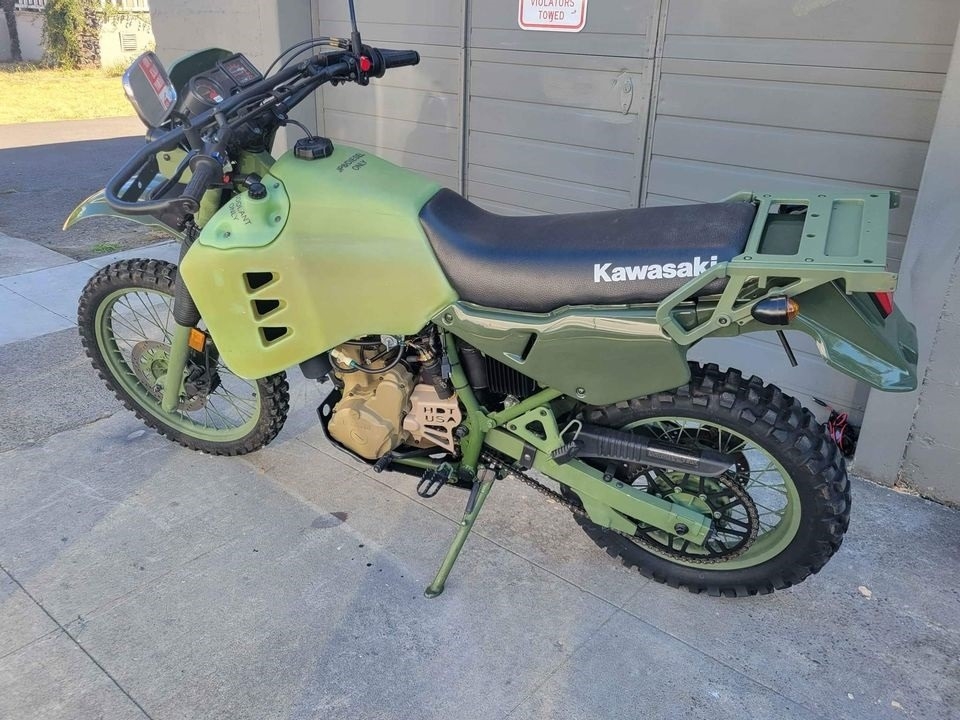
At the time, it was reported that Hayes was considering a civilian version. However, as the company founder later told Cycle World magazine, military demand was so high that the small firm simply lacked the production capacity and staff to launch a civilian model.
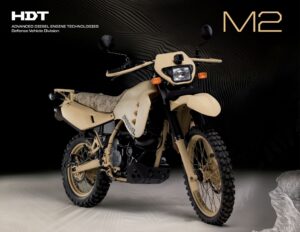
The M1030M2 later appeared — an updated version with a larger 670 cc engine producing 33 hp.
The M1030M2 reportedly reached 121.2 mph at Bonneville — approximately 195 km/h — which sounds almost insane for a single-cylinder military diesel motorcycle.
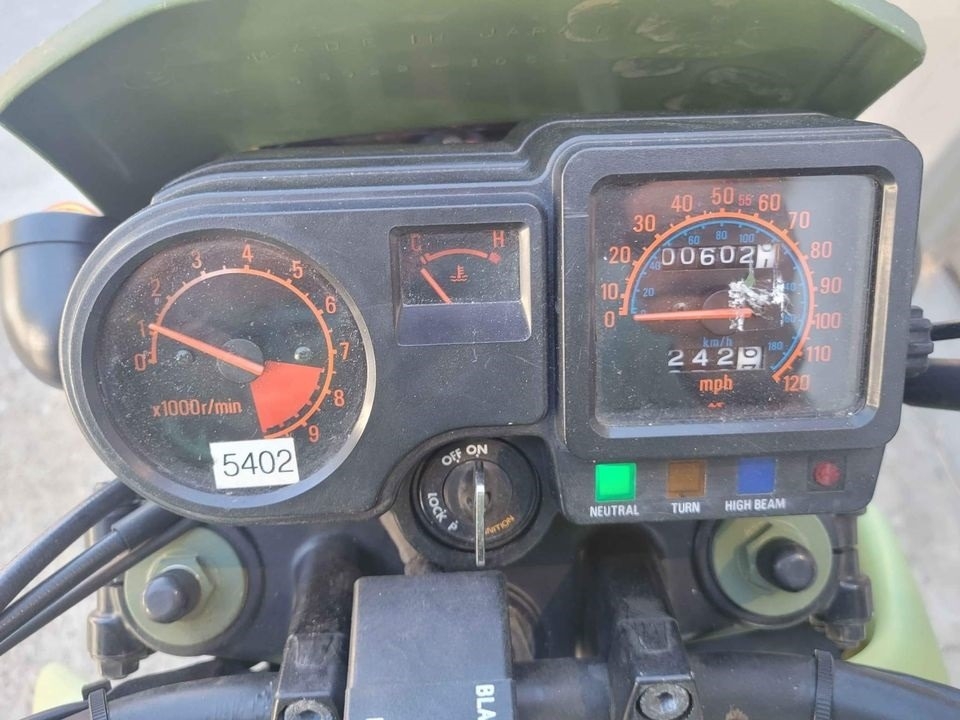
Although the military ordered 522 units, some sources claim only about 440 were actually delivered. It also remains unclear exactly how many of the later M1030M2 models were produced.
In recent years these motorcycles have begun to be retired from military service and sent to government auctions, where they are quickly bought by civilian enthusiasts. In 2018, auction prices hovered around $5,000.
Today the situation is very different. These motorcycles now sell at government auctions for $9,000–$15,000.