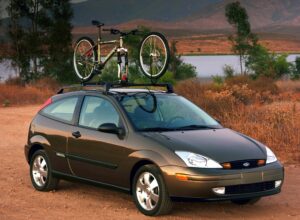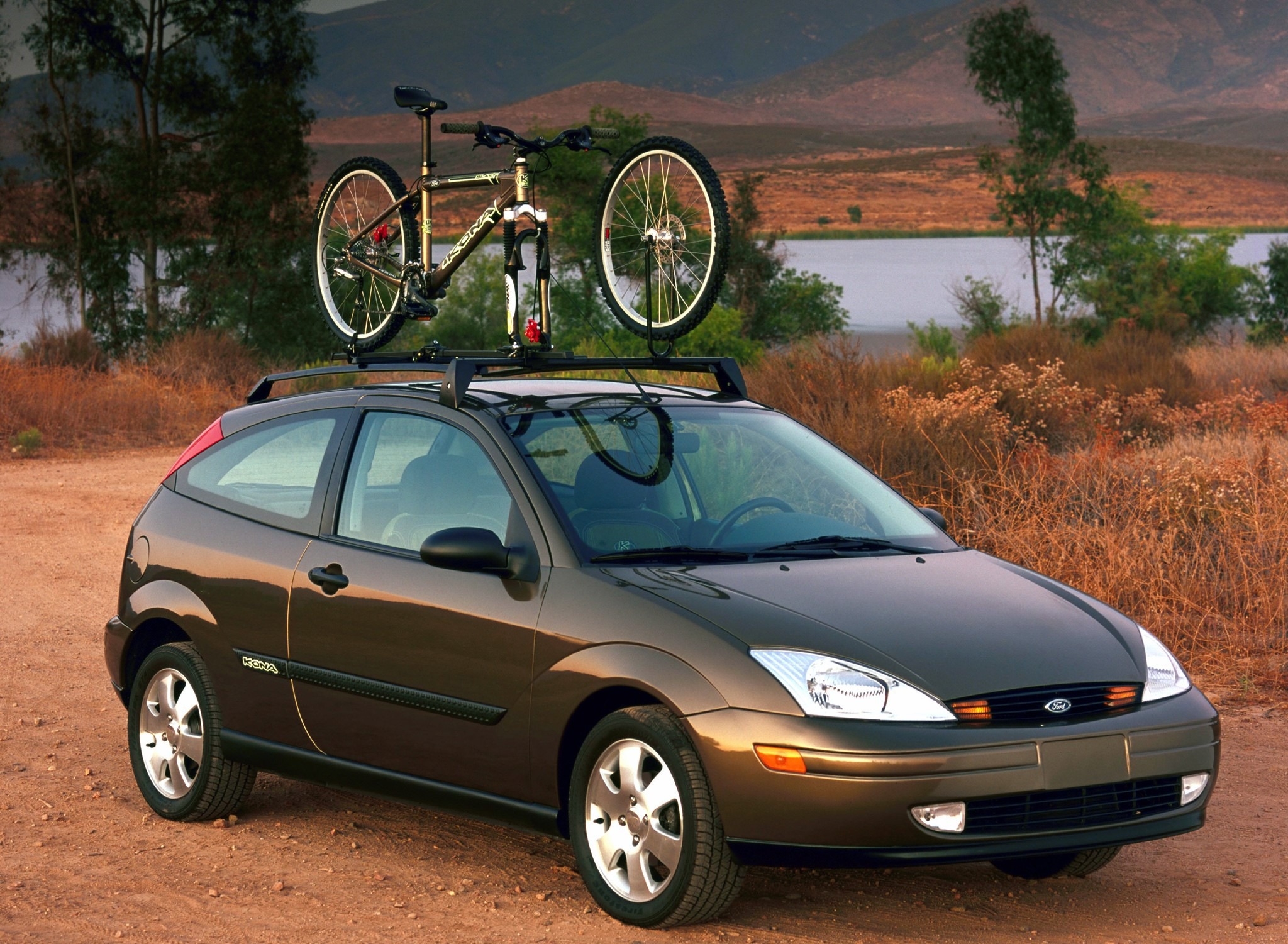
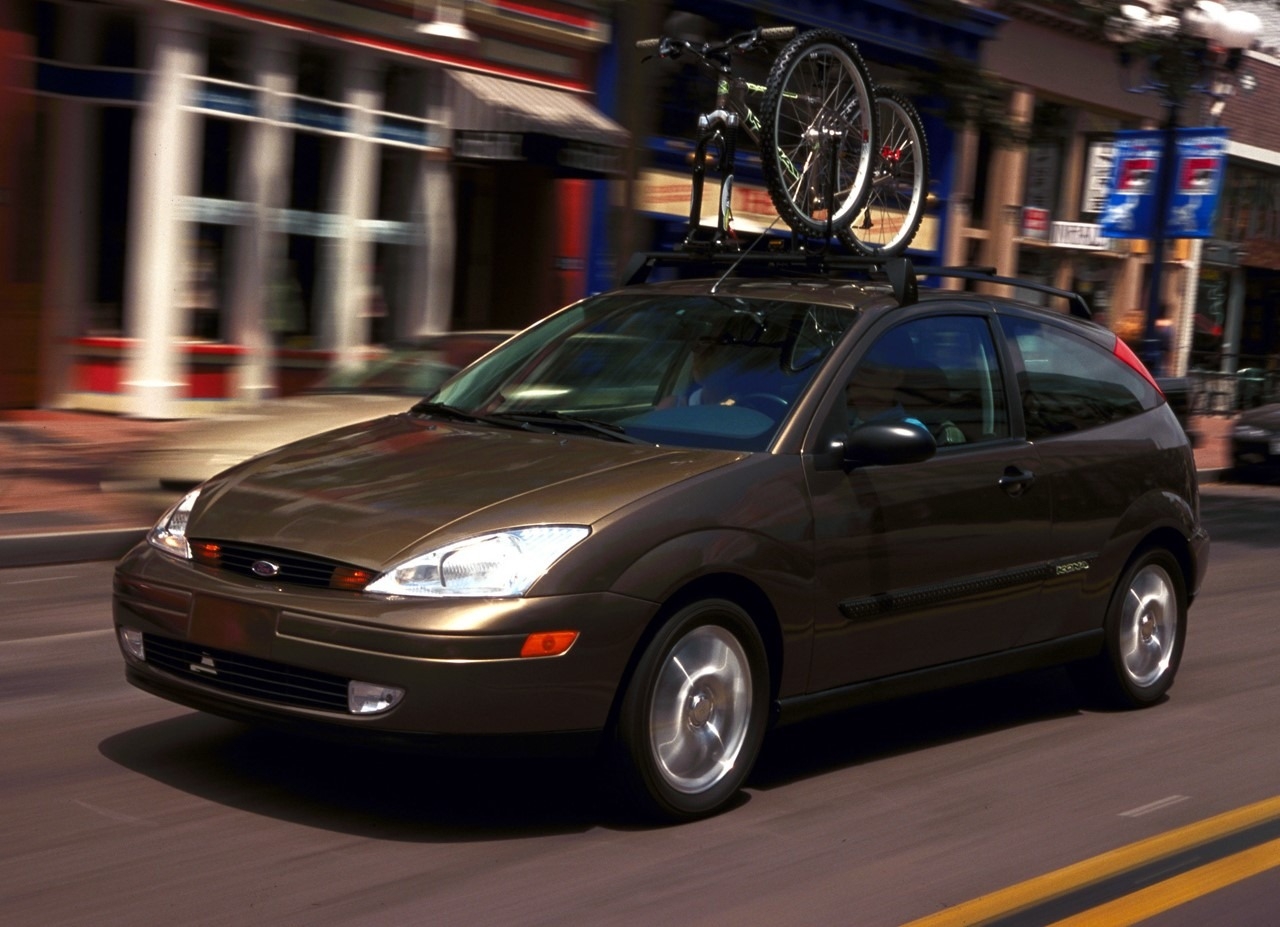
In the early 2000s, Ford came up with an unusual way to attract a younger audience to its affordable Focus. The company partnered with mountain bike manufacturer Kona USA and released a special version called the Focus Kona Mountain Bike Edition.
A total of 5,000 of these cars were built. Each came with a branded bicycle mounted on the roof and a package of accessories that gave the compact Focus a more rugged, off-road appearance. Remarkably, it may be one of the few vehicles ever subject to a recall campaign not because of any issue with the car itself, but because of the bicycle.
The story of the Ford Focus began with the Ford Escort. At the time, Ford was developing a replacement for the Escort under the codename CW170. It was intended to be a global car that would replace the Escort in both Europe and the United States. The model debuted in Europe as a 1998 model year vehicle, followed by its American launch as a 1999 model. While the Escort continued to be sold for a while, the new Focus was positioned as Ford’s main compact car for the new millennium.
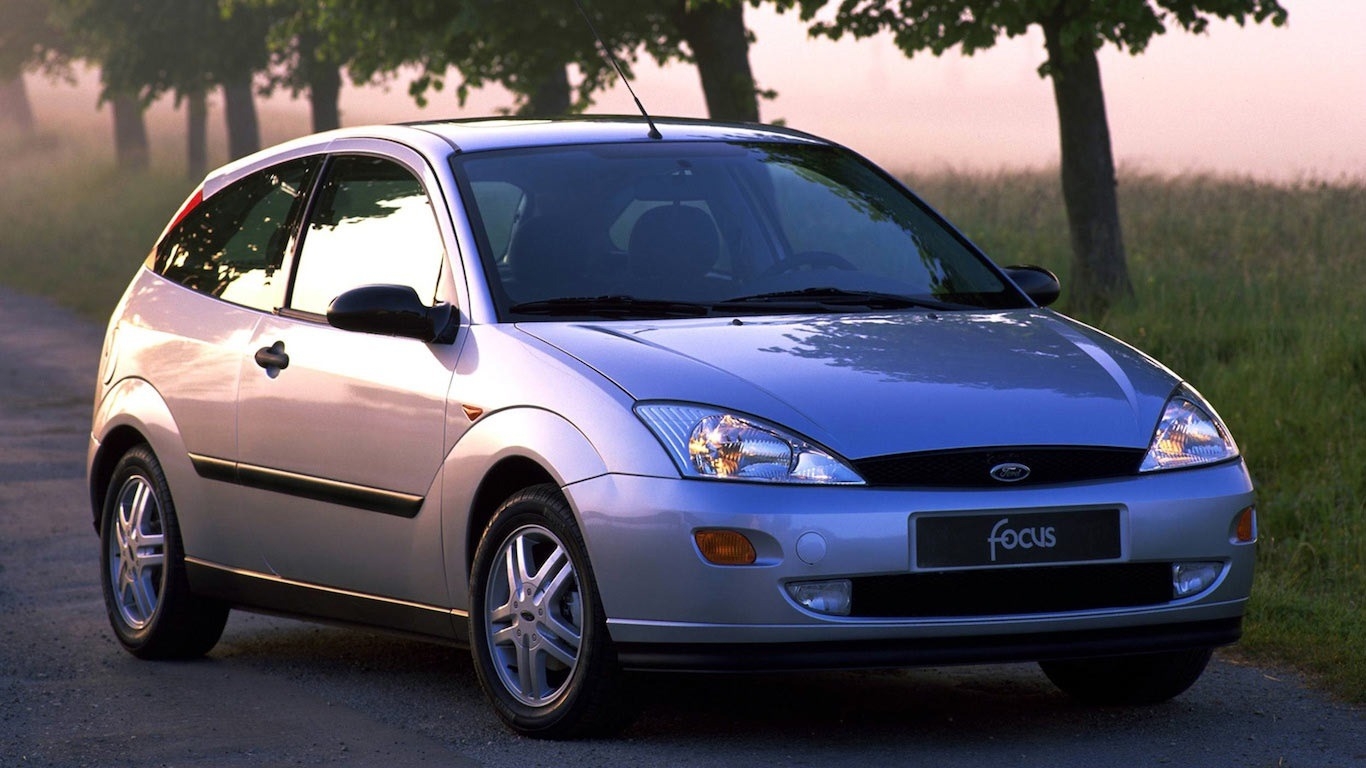
The Focus was first shown at the 1998 Geneva Motor Show. For many visitors, it was a genuine shock — it looked nothing like the Fords they were used to. The car carried over design cues from early concepts, including high-mounted rear lights, and designer John Doughty wrapped it all in the New Edge styling language created by Jack Telnack. The same design language had previously appeared on the Ford Ka and Cougar.
The unconventional approach continued inside the cabin. At the time, the Focus sharply divided automotive journalists into two camps: those who loved it and those who couldn’t stand it.
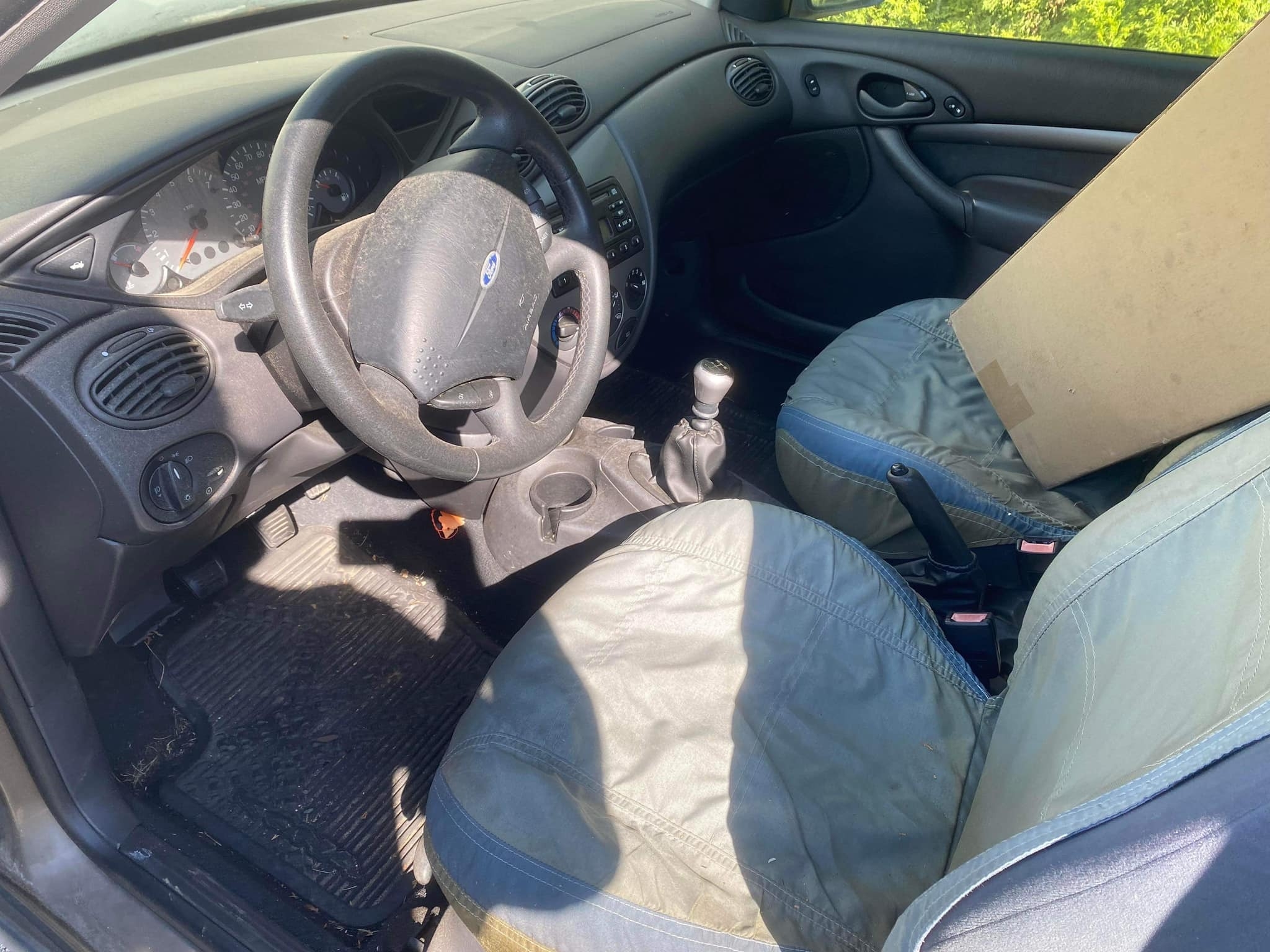
Soft-touch materials were everywhere — on the dashboard, seats, headliner, and door panels. The instruments were large and easy to read, the audio and climate controls were conveniently placed, and the center console featured massive cupholders capable of holding one-liter bottles.
Ford even used rubberized coatings in the storage bins to prevent items from rattling while driving. It was this attention to detail that impressed journalists, even though both the exterior design and interior styling remained polarizing.
Engineers at Machine Design wrote that Ford wanted to “kick its own image” in the compact car segment. The Focus was built on an all-new platform and offered in three body styles: three-door hatchback, sedan, and wagon. Its design combined rounded forms, unusual geometry, and sharp lines — and somehow, it all worked together.
Despite its controversial looks, the Focus was a massive success. In 1999 it was named European Car of the Year by a wide margin, scoring 444 points compared to 272 for the second-place Opel Astra, 249 for the Peugeot 206 in third, and 235 for the Audi TT in fourth.
This is especially interesting because the first-generation Audi TT is today regarded as a model of restrained and elegant design — precisely the kind of styling many feel is missing from modern cars with their aggressive lines and sharp creases.
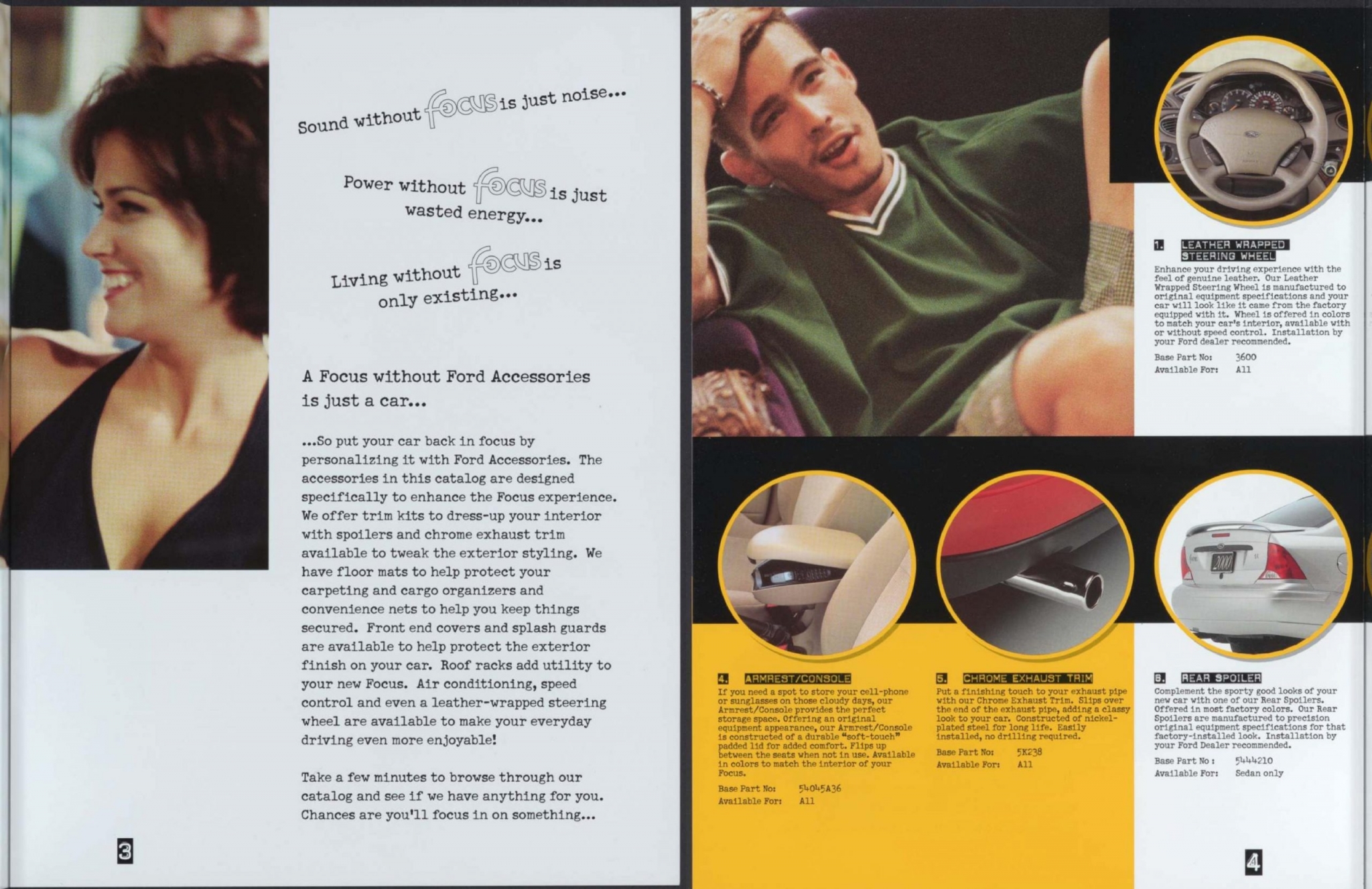
Ford’s focus on young buyers was obvious regardless of market. The company was very eager to sell the Focus to younger customers, particularly Generation X. Period brochures were filled with bright photography, trendy fonts, and images of “cool” young people who, according to Ford, were supposed to dream of owning one. Today, an automaker would likely be mocked for such desperate attempts to appeal to youth.
Yet those old brochures now look pretty cool — they capture the vibe of classic racing video games. While I couldn’t find exact buyer demographics for the first-generation Focus, Ford reported that in 2017 the average age of a regular Focus buyer was 46, while Focus ST owners averaged 36.
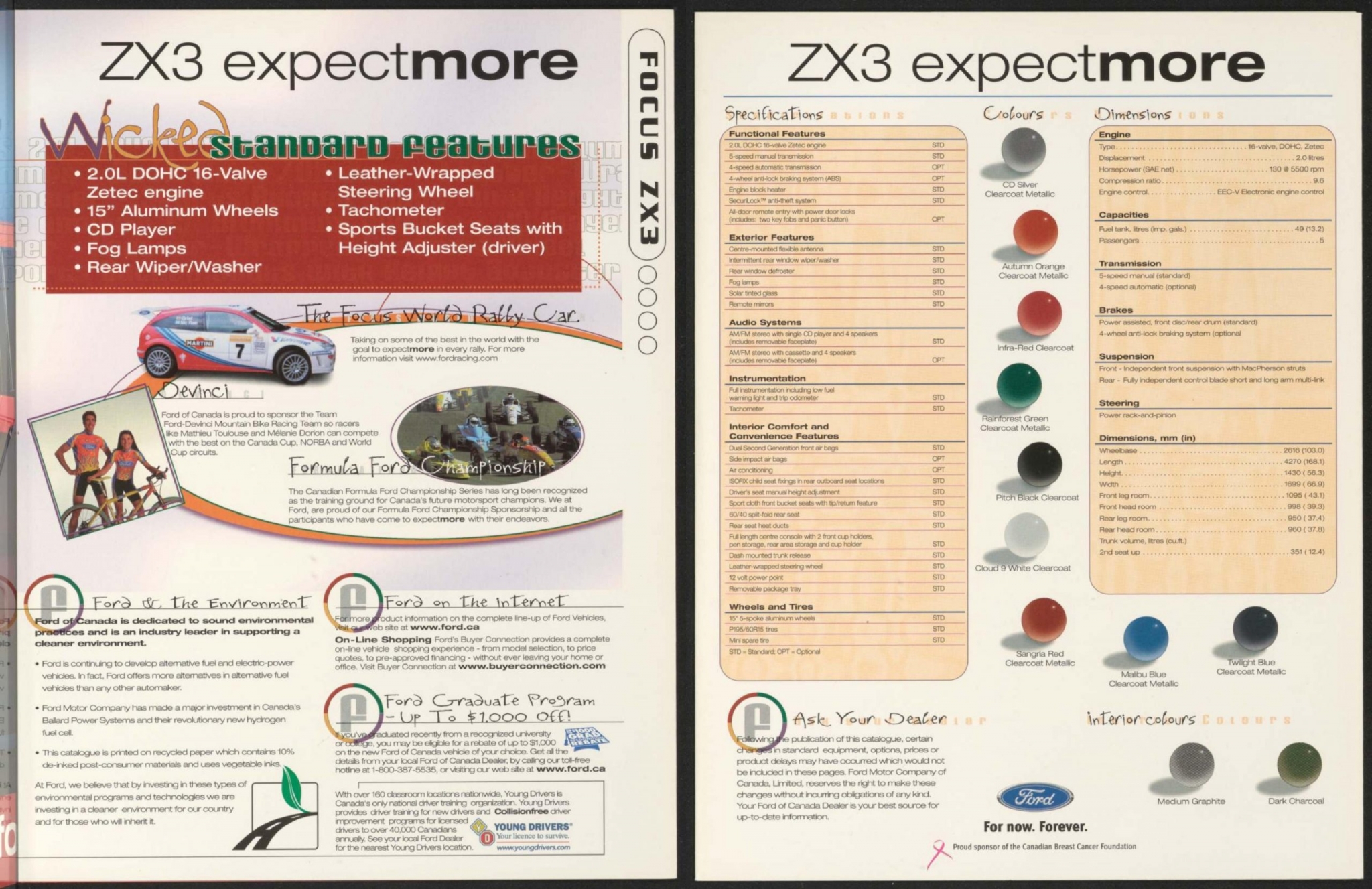
To further cement the Focus’s image as a car for active young people, Ford joined a short list of manufacturers that sold vehicles with a bicycle on the roof.
As early as 1996, Volkswagen released the Jetta Trek — a special edition developed with bicycle maker Trek. It featured themed graphics and a roof rack. A year later, even more Trek branding appeared. Volkswagen was clearly targeting young, budget-conscious bicycle enthusiasts.
In 2000, both Ford and Saab introduced their own “bicycle” special editions. At the Chicago Auto Show, Saab unveiled the 9-5 Gary Fisher Edition wagon with aerodynamic body kit, three-spoke wheels, and a mountain bike. Ford arrived at the Los Angeles Auto Show with the Focus Wagon Kona concept.
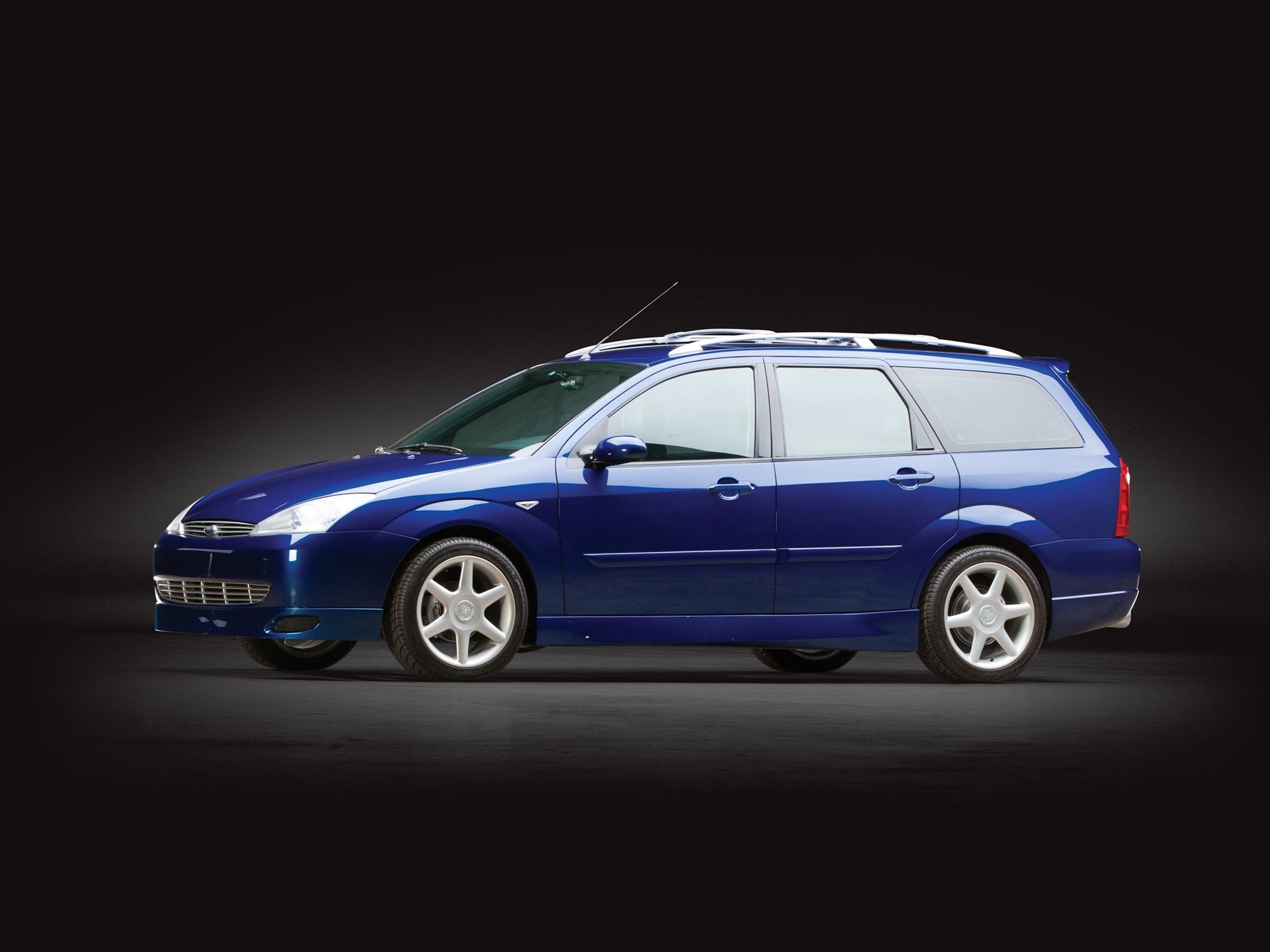
Like its competitors, Ford partnered with a respected bicycle brand — in this case, Kona USA. Kona was founded in 1988 in Vancouver by cyclists Dan Gerhard and Jacob Heilbron. Together with mountain bike legend Joe Murray, they developed a line of hardtail bikes.
Kona was the first brand to produce an entire series of frames with a sloping top tube. The bikes quickly earned an excellent reputation; dealer Bow Cycle recalled that the 1993 Kilauea model was named “Bike of the Year” by Mountain Biking magazine. Ford had clearly chosen a brand with real credibility.
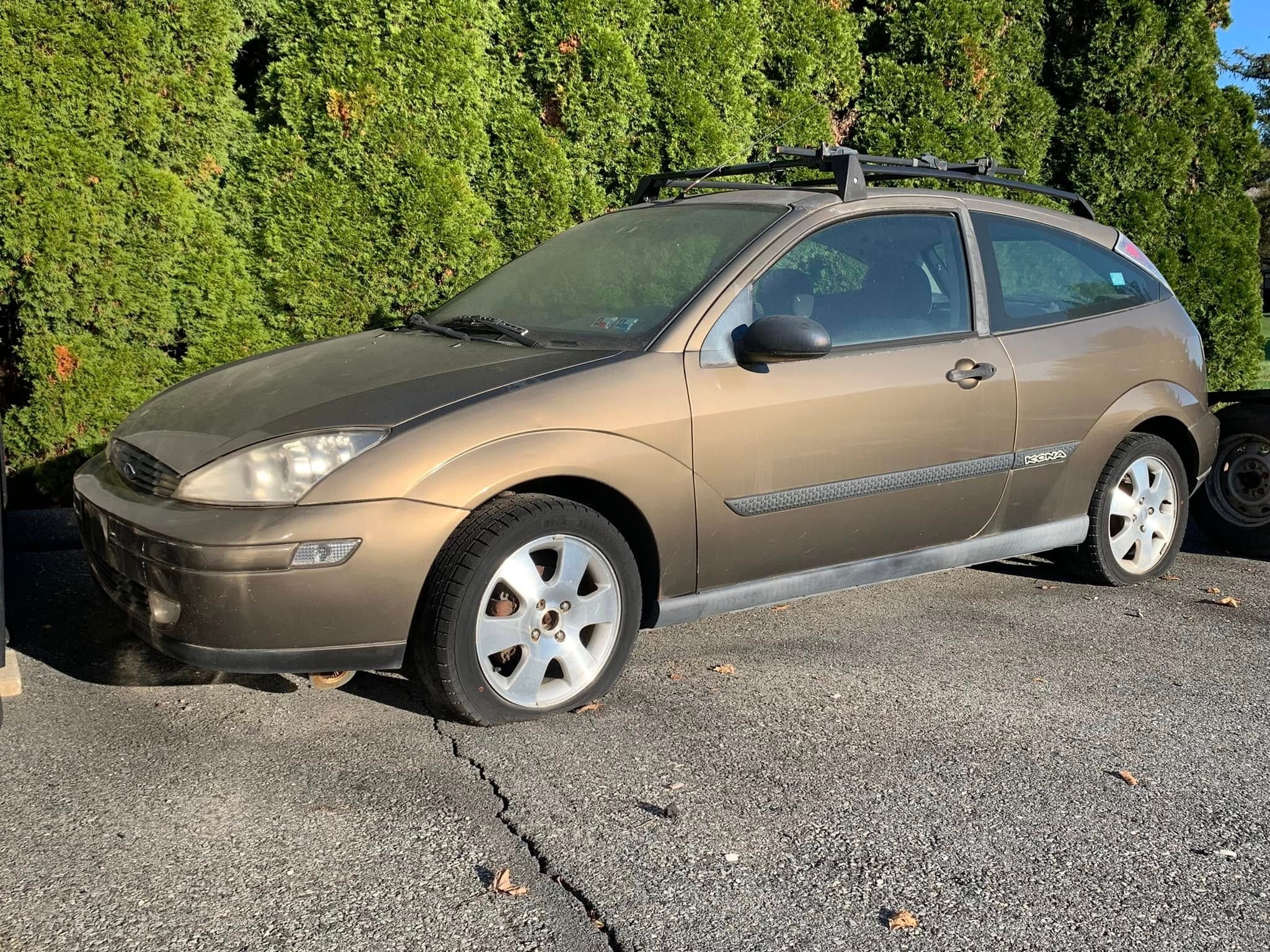
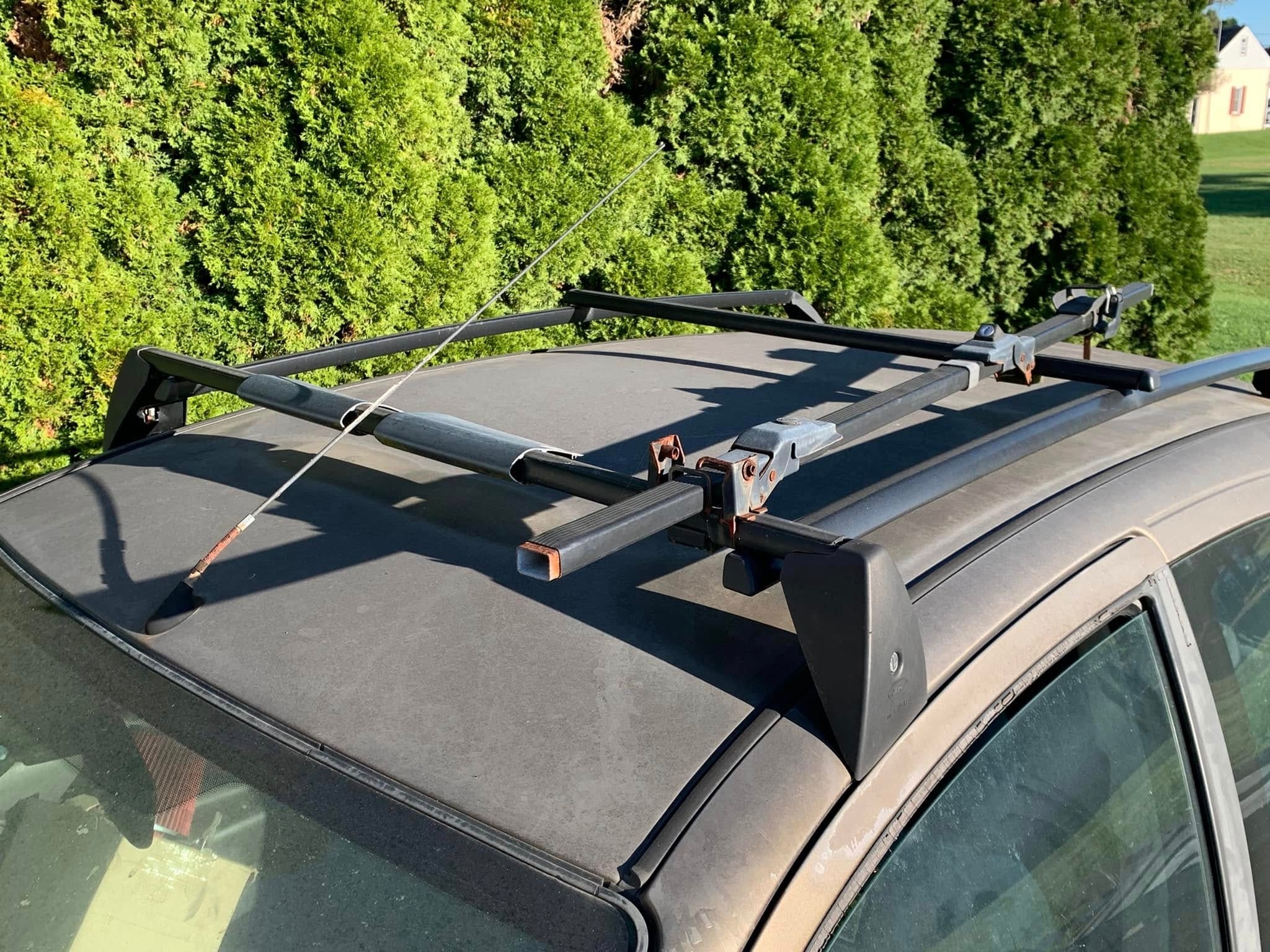
The Kona Mountain Bike Edition began life as a concept based on the Focus wagon. The production version, however, was built on the three-door Focus ZX3 hatchback. Its standout feature was a permanently mounted roof rack carrying a Kona Blast 2001 model year mountain bike — a bicycle that at the time was only available when purchased with the car.
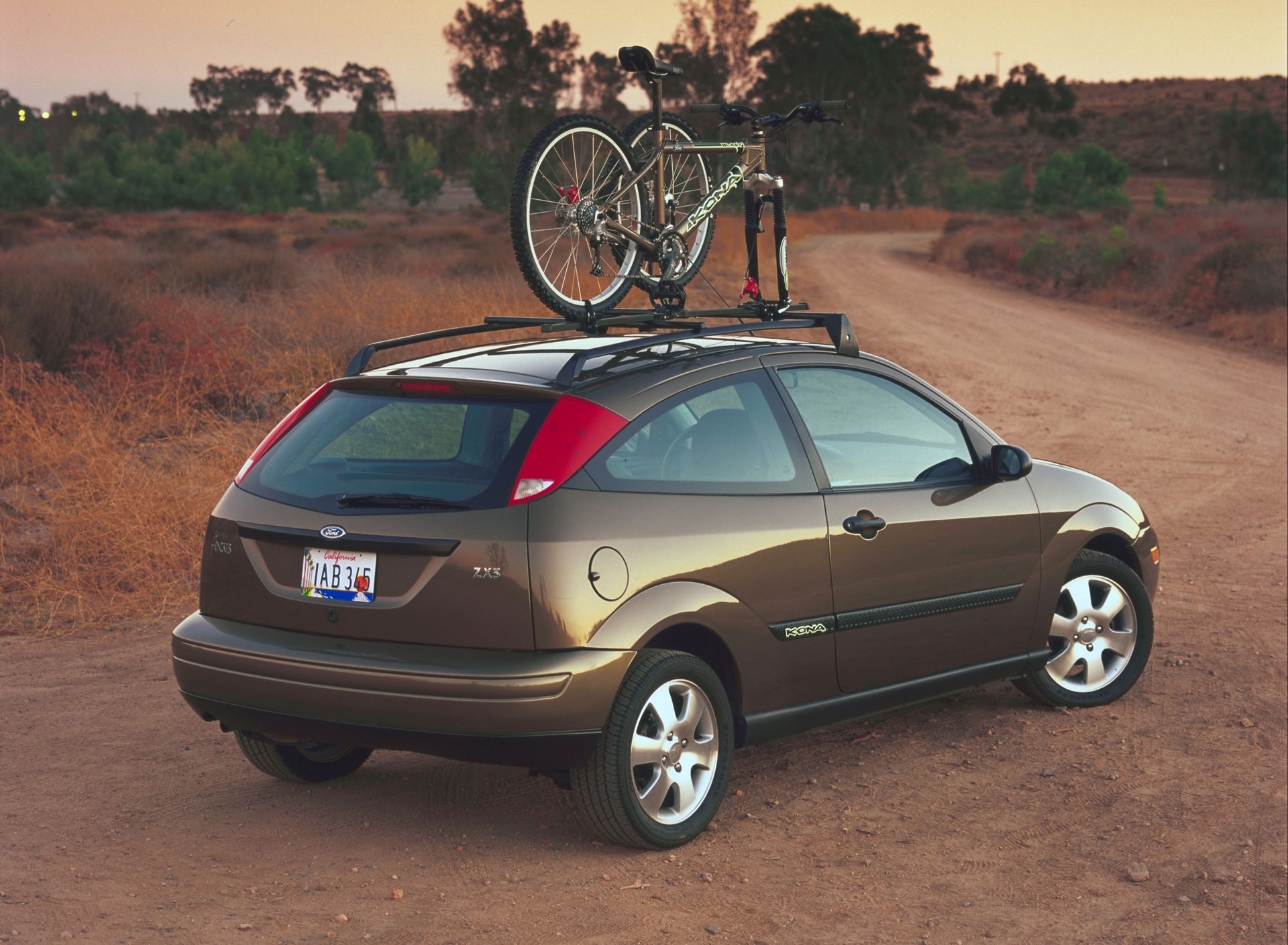
In addition to the bike, the car received special side moldings with a tread pattern resembling bicycle tires, unique seat covers, 16-inch wheels, branded floor mats, and an exclusive exterior color called Dirt, available only on the Kona Edition.
One amusing detail: the seat covers were removable and machine-washable. The logic was simple — after a day of mountain biking, the driver might return covered in mud.
Under the hood was a 2.0-liter four-cylinder engine producing 130 horsepower and 135 lb-ft of torque. Ford also highlighted a single-disc CD player, fog lights, optional all-wheel ABS, keyless entry, and a leather-wrapped steering wheel.
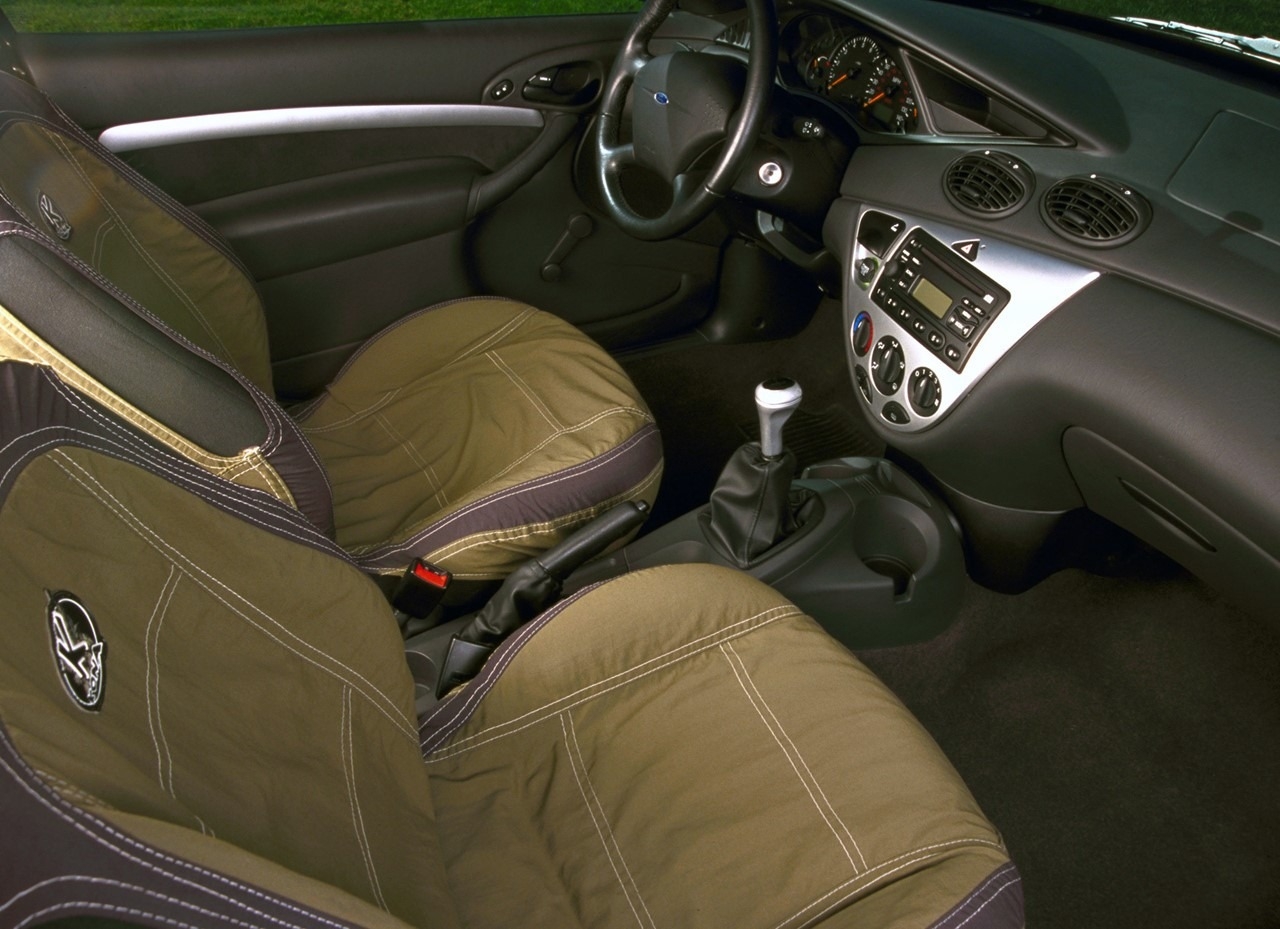
The 16-inch Kona cast-aluminum wheels were one inch larger than the standard Focus aluminum wheels. The Kona Blast bicycle itself was painted to match the car and equipped with a long-travel fork, Shimano drivetrain, and disc brakes on both wheels.
Ford built only 5,000 examples and sold them for just one year — aimed at buyers who wanted both a new Focus and a brand-new Kona mountain bike.
The Kona Mountain Bike Edition is also connected to a rather funny story. The car was subject to a recall campaign, but the problem had nothing to do with the vehicle itself. As reported by Automotive News in 2000, the recall concerned a potential defect in the connecting bolt on the Kona bicycle supplied with the car. Owners of the roughly 800 vehicles already sold were advised to take the bicycle to a Kona dealer for repair.
Cars that had not yet been delivered to customers were repaired directly at Ford dealerships. Automotive News noted the comic nature of the situation: bicycles were being fixed inside car dealership service bays.
It’s hardly surprising that finding one of these Focus models for sale today is almost impossible. As is often the case with rare versions of mass-market cars, most were simply driven hard, worn out over time, and eventually scrapped along with regular Focus models.