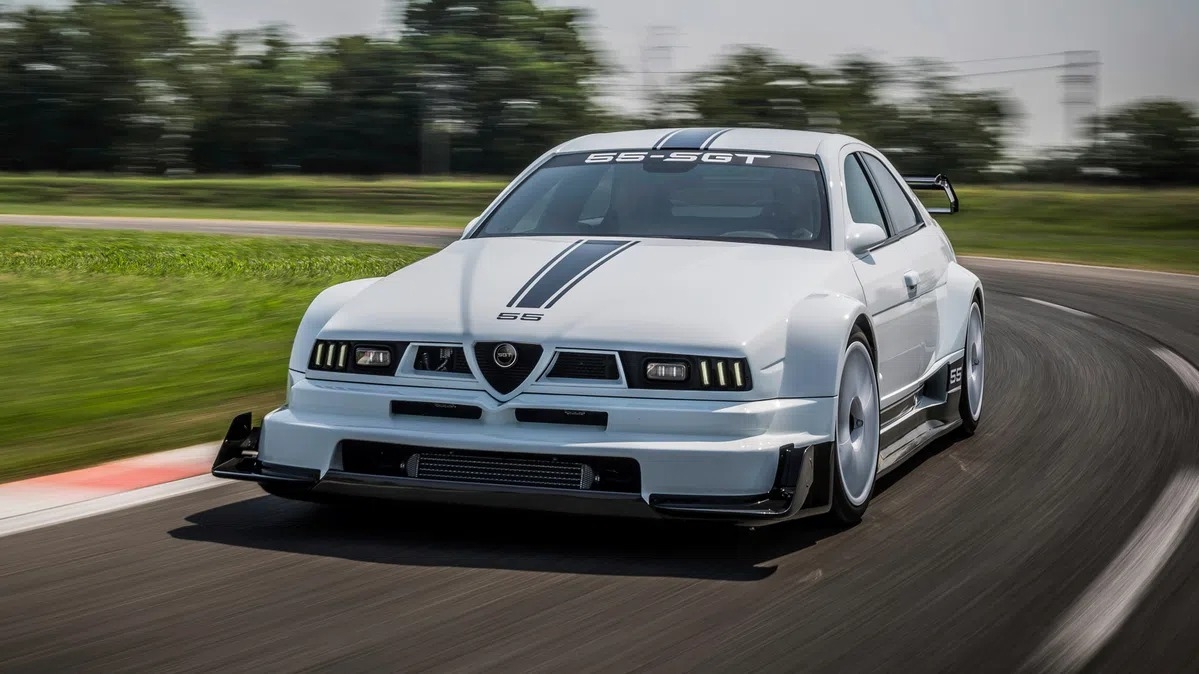
At first glance, the photos might suggest a heavily modified Alfa Romeo 155. In reality, beneath the retro bodywork lies a far more modern machine.
This is the 55-SGT from Italian company SGT Automobili. The car was first shown to the public last month, and its full technical specifications have now been released.
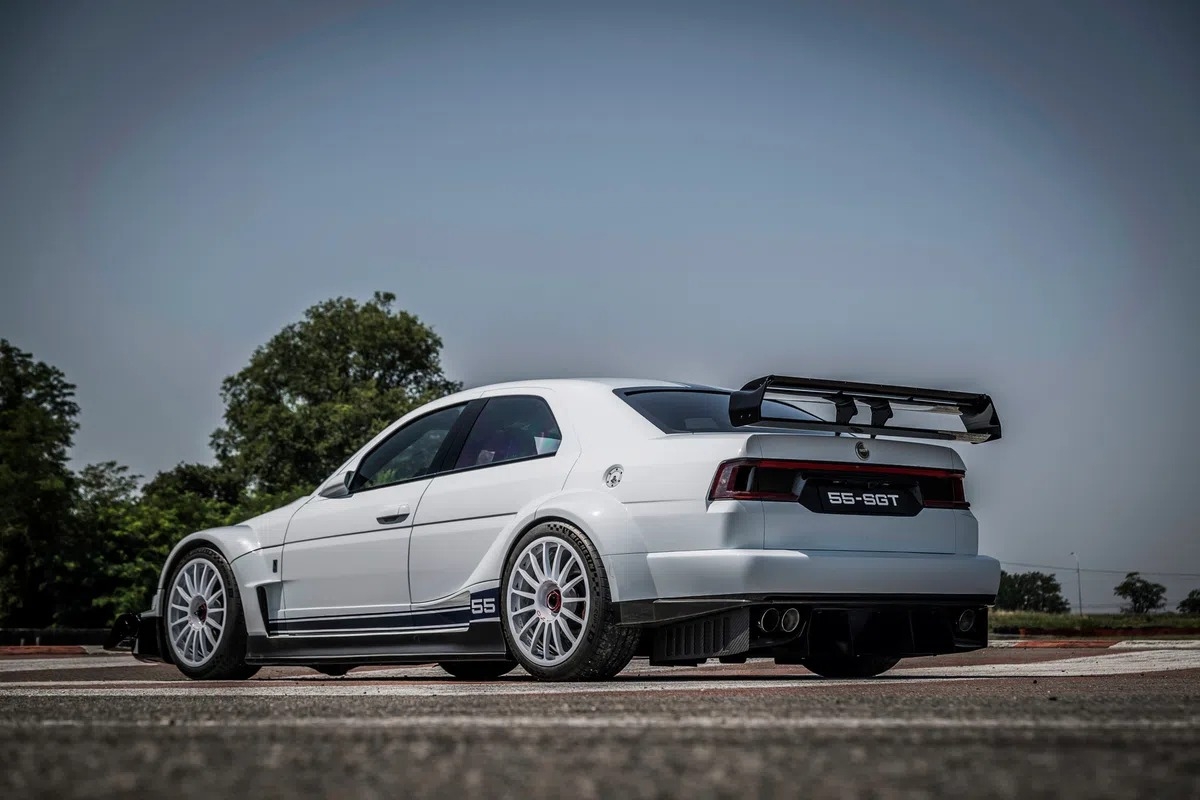
The project draws inspiration from the Alfa Romeo 155 that dominated the DTM championship in 1993. While not an exact replica of the legendary racer, the sharp angular lines, massive fender flares, and enormous rear wing make the 55-SGT instantly reminiscent of classic DTM machines.
Similar projects have appeared before. For example, Erre Erre Fuoriserie created a modern Alfa Romeo Giulia with retro bodywork. However, that car retained the original Giulia roofline and glasshouse while adding angular body kits, resulting in a somewhat controversial appearance.
SGT took the task far more seriously: the entire new body is crafted from carbon fiber, and virtually nothing of the modern Giulia remains visible from the outside.
The mechanical package, by contrast, is very familiar. Under the hood sits the 2.9-liter twin-turbo V6 from the Alfa Romeo Giulia Quadrifoglio. The key difference is drivetrain layout: while the standard Quadrifoglio is rear-wheel drive, the 55-SGT features an all-wheel-drive system.
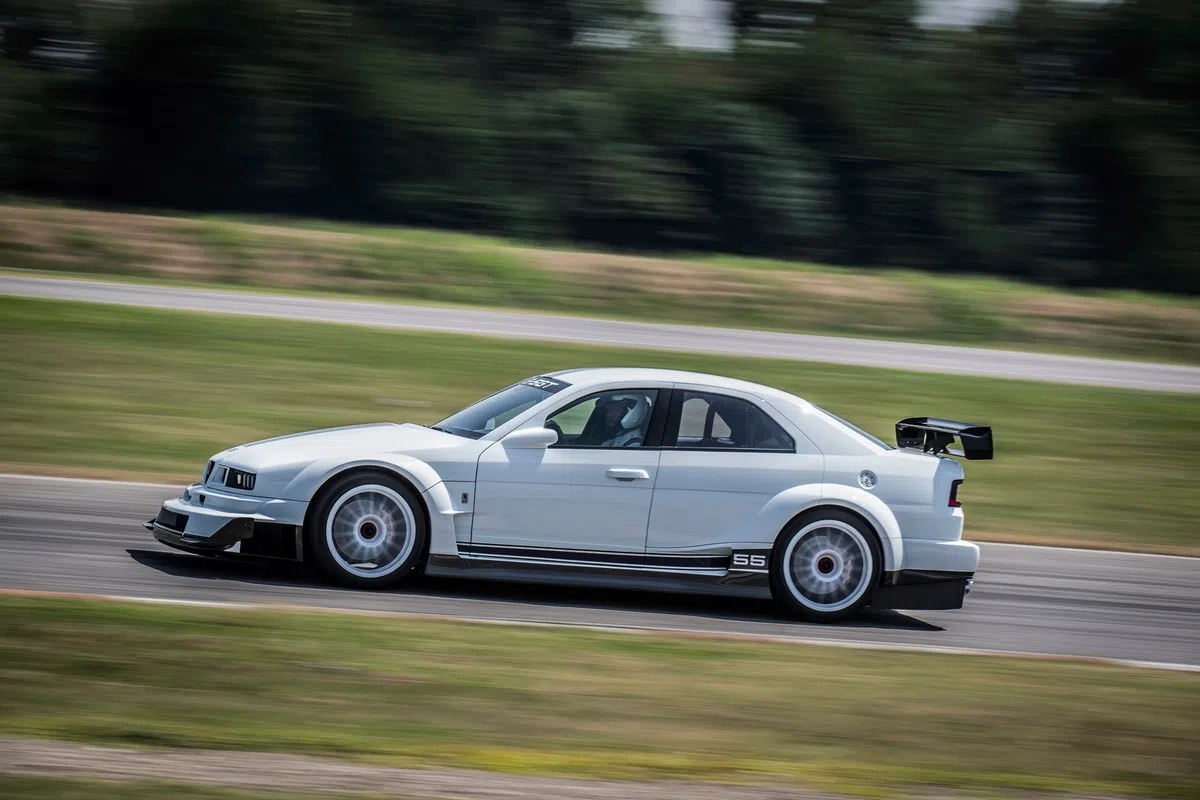
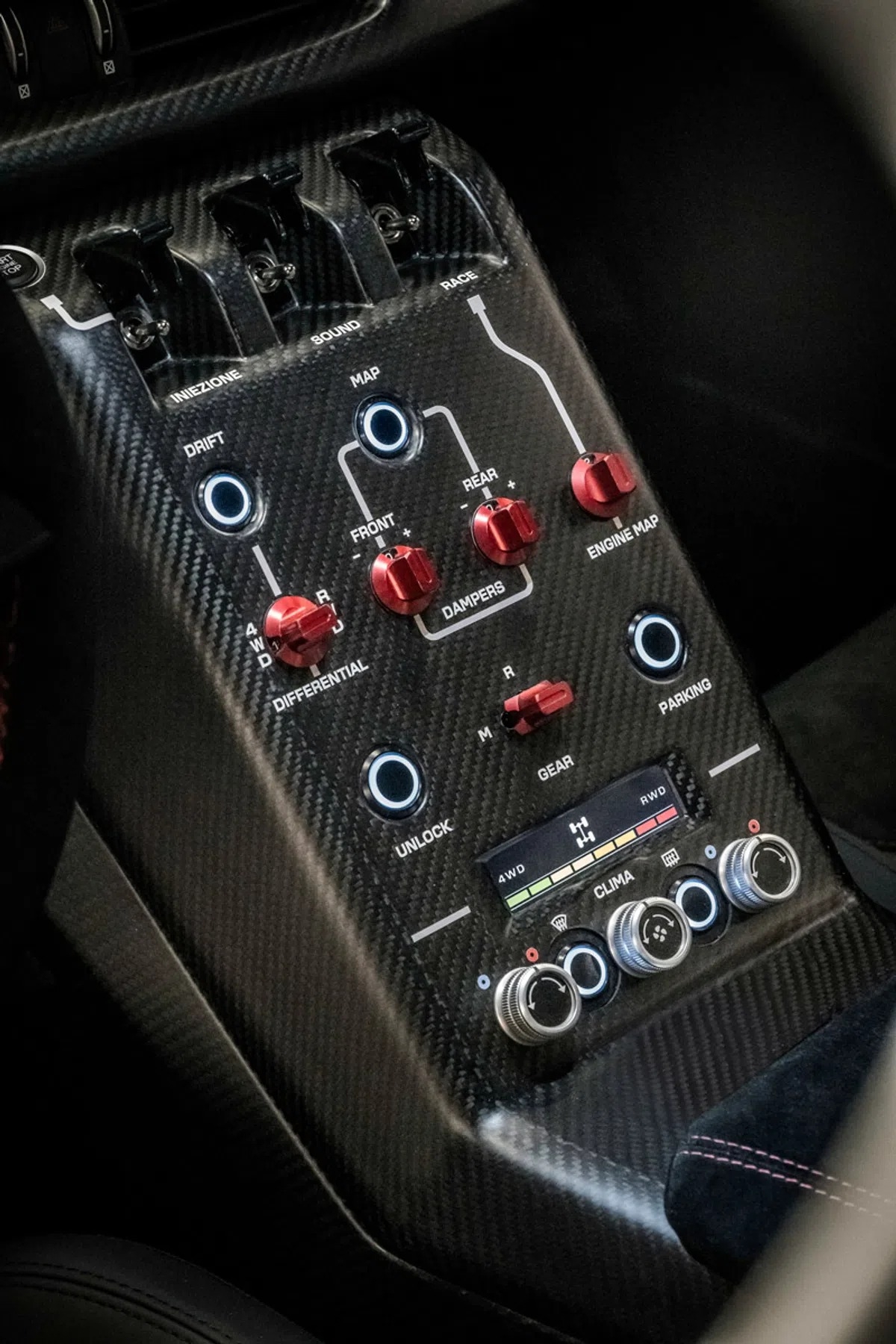
Moreover, the driver can manually adjust torque distribution between the front and rear axles — from a 50:50 split all the way to fully rear-wheel-drive mode.
The car will be offered in two versions: Stradale and Trofeo. The Stradale is fully road-legal, while the more extreme Trofeo, despite its track-focused setup, is also street-legal. Its calibration, however, is primarily oriented toward circuit use.
The Stradale produces 620 horsepower, while the Trofeo develops an impressive 750 horsepower. To extract maximum performance, the driver must select the appropriate powertrain mode, as the car features multiple drive modes.
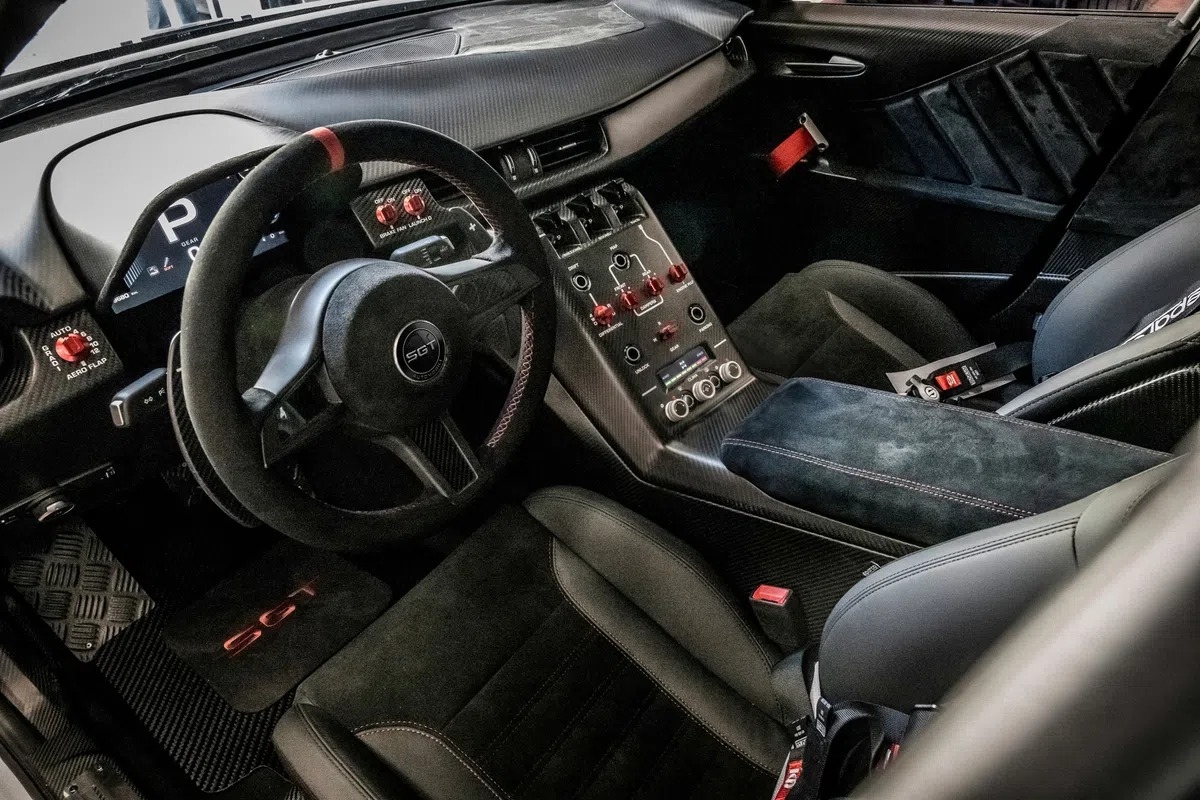
Mode selection is done via a control panel on the center console styled after racing cars. The same panel also allows adjustment of suspension stiffness and torque distribution between the axles.
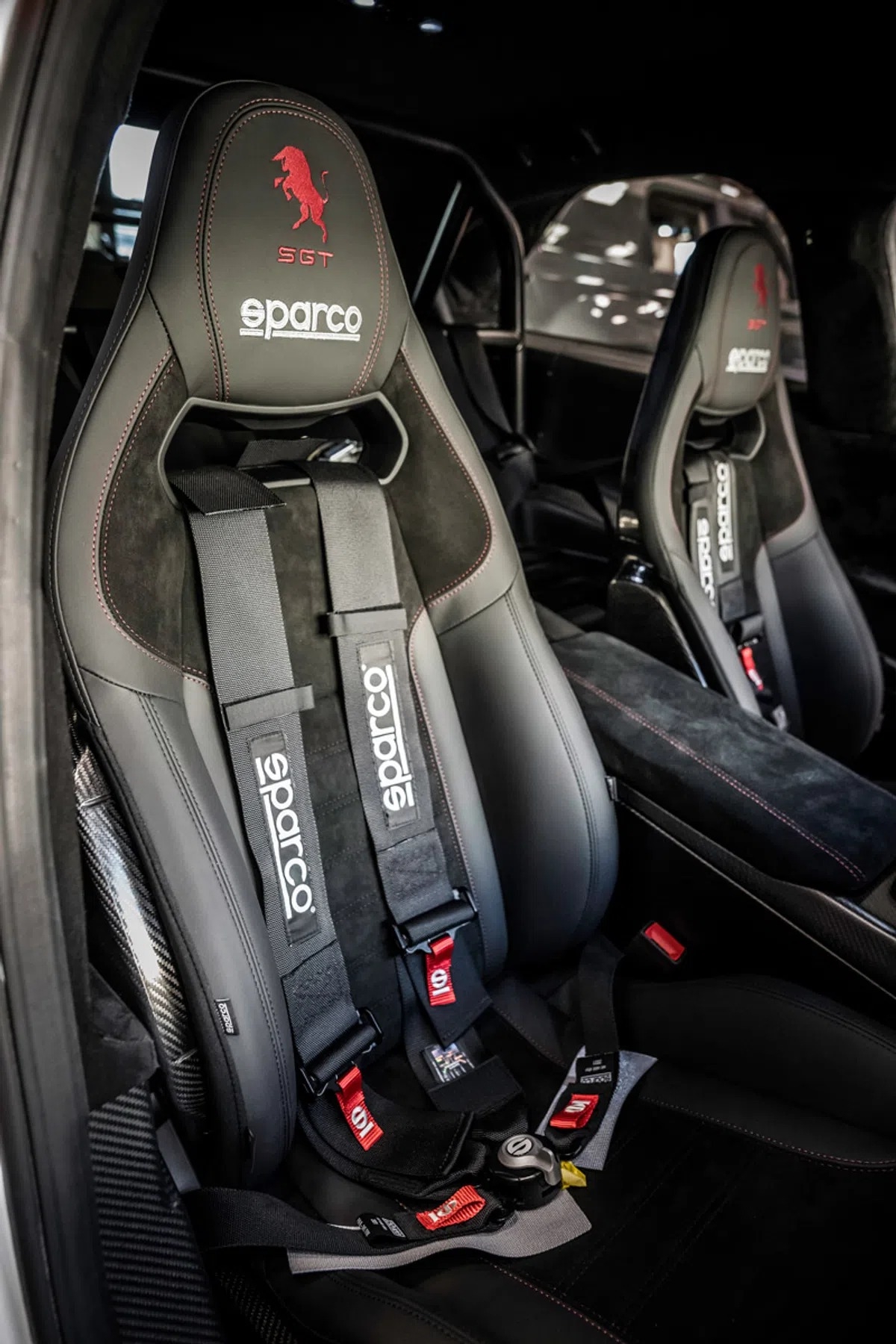
The interior has undergone a comprehensive redesign. While the cabin usually gives away a car’s origins, it is difficult to recognize the Giulia here. Almost nothing remains of the original dashboard. The new interior may not be universally considered more attractive, but it successfully delivers the atmosphere of a genuine racing machine.
There is no rear seat at all. This is why the rear doors have no exterior handles — they have been integrated into the new body design.
The price of the 55-SGT has not yet been announced, but it is safe to assume it will be extremely expensive. With a total production run limited to just 55 units, price is unlikely to be the deciding factor for the target clientele.