If you’ve ever looked at a late-1990s or early-2000s Chrysler sedan and thought, “Wow, that looks like a Lamborghini,” most people would have assumed you were mistaken. In reality, the opposite was true.
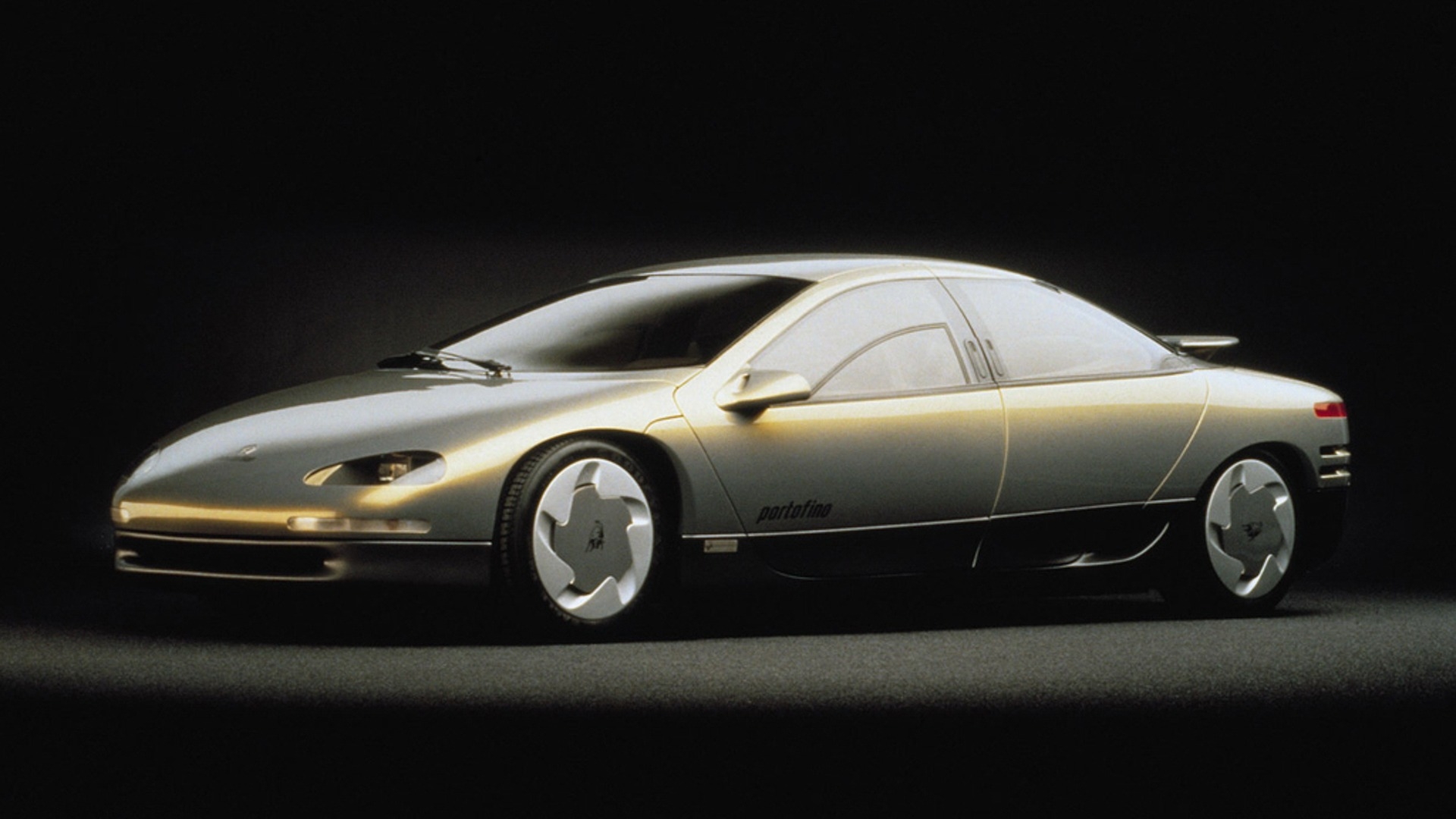
The cab-forward design language used on Chrysler’s LH-platform sedans — including the Chrysler Concorde, Dodge Intrepid, Eagle Vision, Chrysler New Yorker, and others — was directly inspired by the Lamborghini Portofino concept car.
It was Lamborghini that gave those mass-market American family sedans of the early 2000s their signature look. The story began in 1987 when designer Kevin Verduin took a clay model of the previous year’s Chrysler Navajo concept and transformed it into a new Lamborghini concept. The collaboration was made possible because Chrysler had acquired Lamborghini that same year.
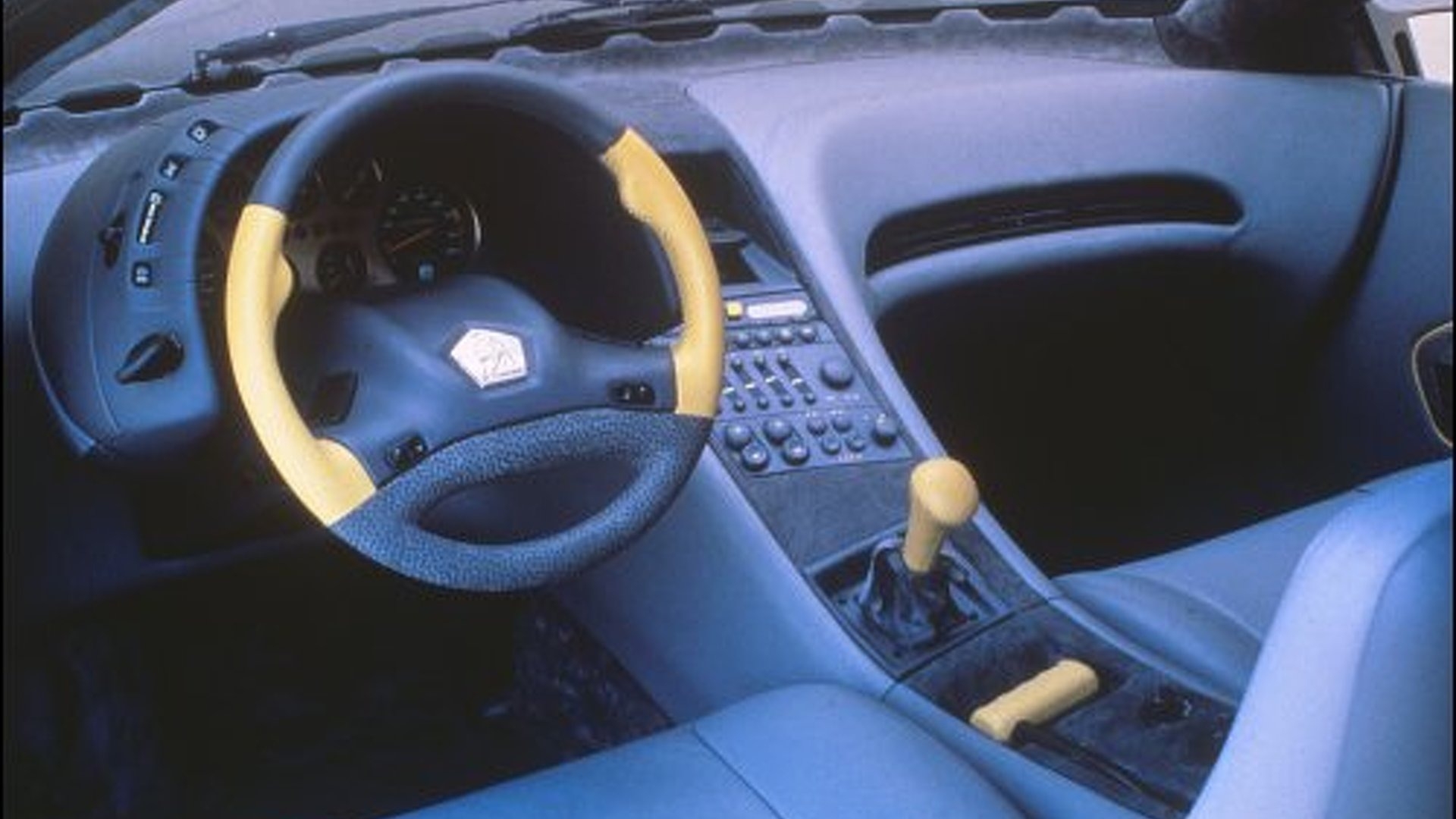
At the time, the Italian company was in serious financial trouble, and Chrysler was able to purchase it for a relatively modest sum. The Americans enthusiastically began exploring the potential of the legendary brand and, just months after the deal closed, unveiled a new concept that combined Lamborghini’s raging bull with Chrysler’s Pentastar logo. Even the steering wheel featured the Lamborghini emblem set inside Chrysler’s signature five-pointed star.
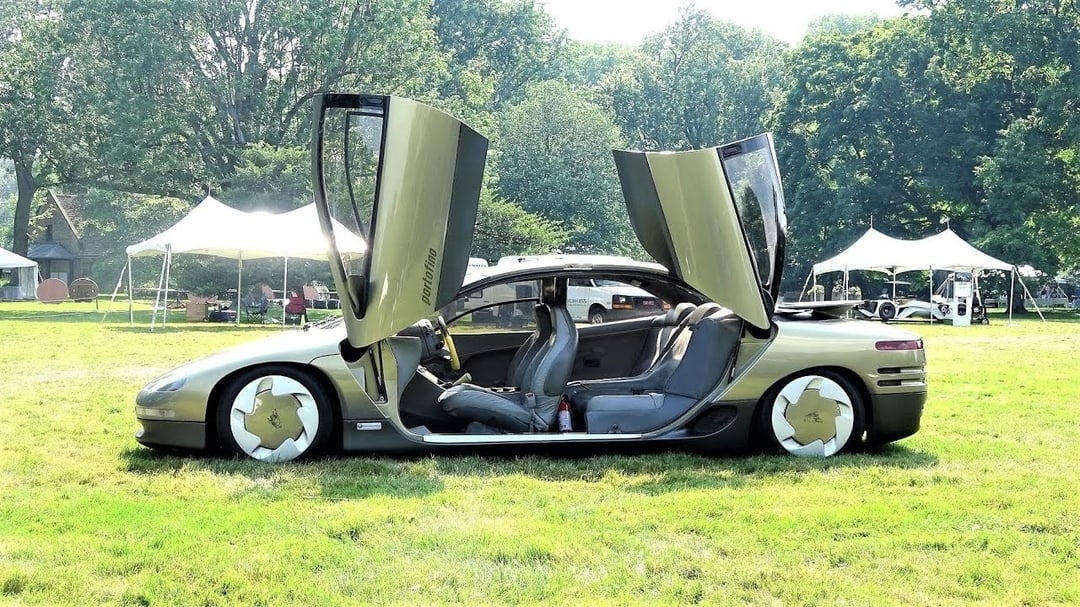
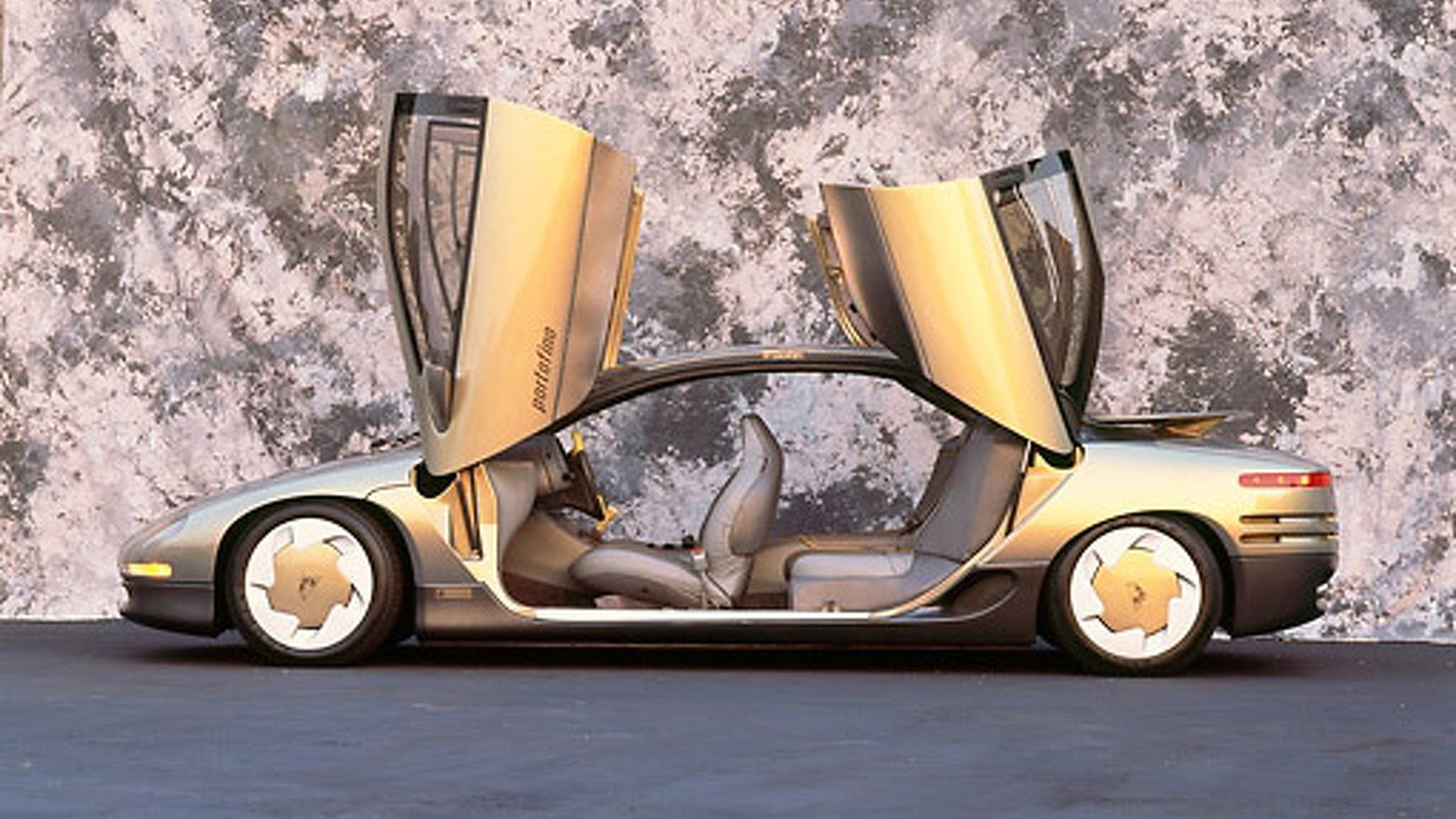
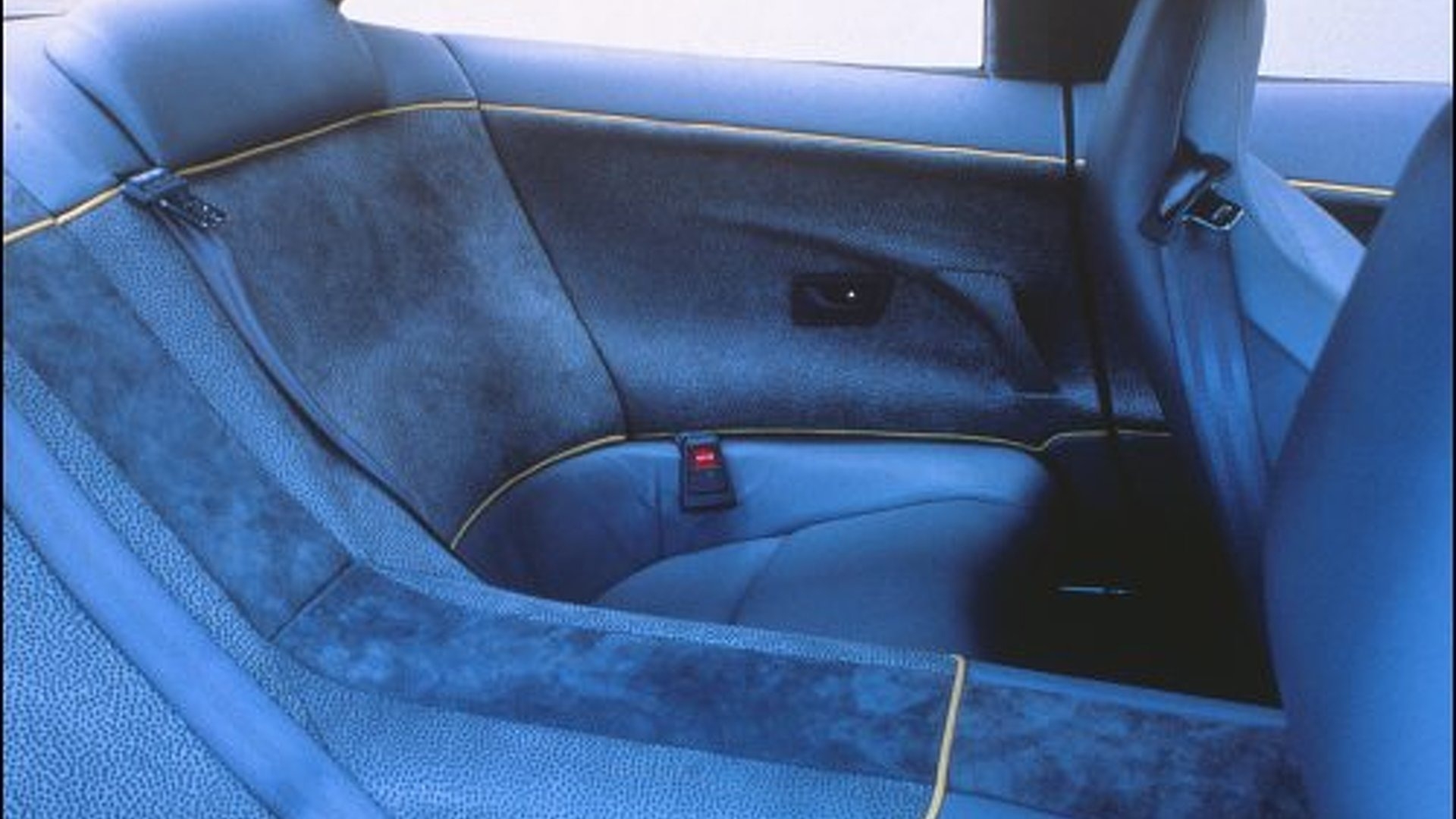
The Portofino itself was an extremely unusual vehicle, even by Lamborghini standards — primarily because it was a four-door supercar. All four doors opened upward (scissor-style), yet the car retained a mid-engine layout and a proper four-seat interior.
The concept was built on a stretched Lamborghini Jalpa chassis, making the Portofino one of the rarest mid-engined four-door sedans in automotive history. The car looked bold and dramatic. Particularly striking was the absence of a B-pillar; when the doors were open, it created a massive, uninterrupted opening between the front and rear of the cabin.
At first glance, one might wonder why Lamborghini couldn’t have a four-door model. After all, owners of such cars sometimes want to carry more than one passenger.
However, Lamborghini’s management showed little enthusiasm for the project. According to contemporaries, one executive even referred to the Portofino as a “big potato.” Chrysler, on the other hand, saw far more potential in the concept. They took its overall design philosophy and merged it with the highly successful Eagle Premier platform, developed in partnership with Renault. The result was the LH platform.
Naturally, numerous changes had to be made on the way to production. The most obvious was moving the engine from the middle of the car to the front. Even then, engineers avoided a conventional layout. The cars received front-wheel drive with the engine mounted longitudinally — a rather unusual solution previously seen on models such as the Cord, Citroën Traction Avant, and Oldsmobile Toronado.
What’s especially impressive is how faithfully the production cars retained the essence of the original concept. While the scissor doors were naturally dropped — arguably the biggest loss — many design elements carried over to the production models with almost no changes.
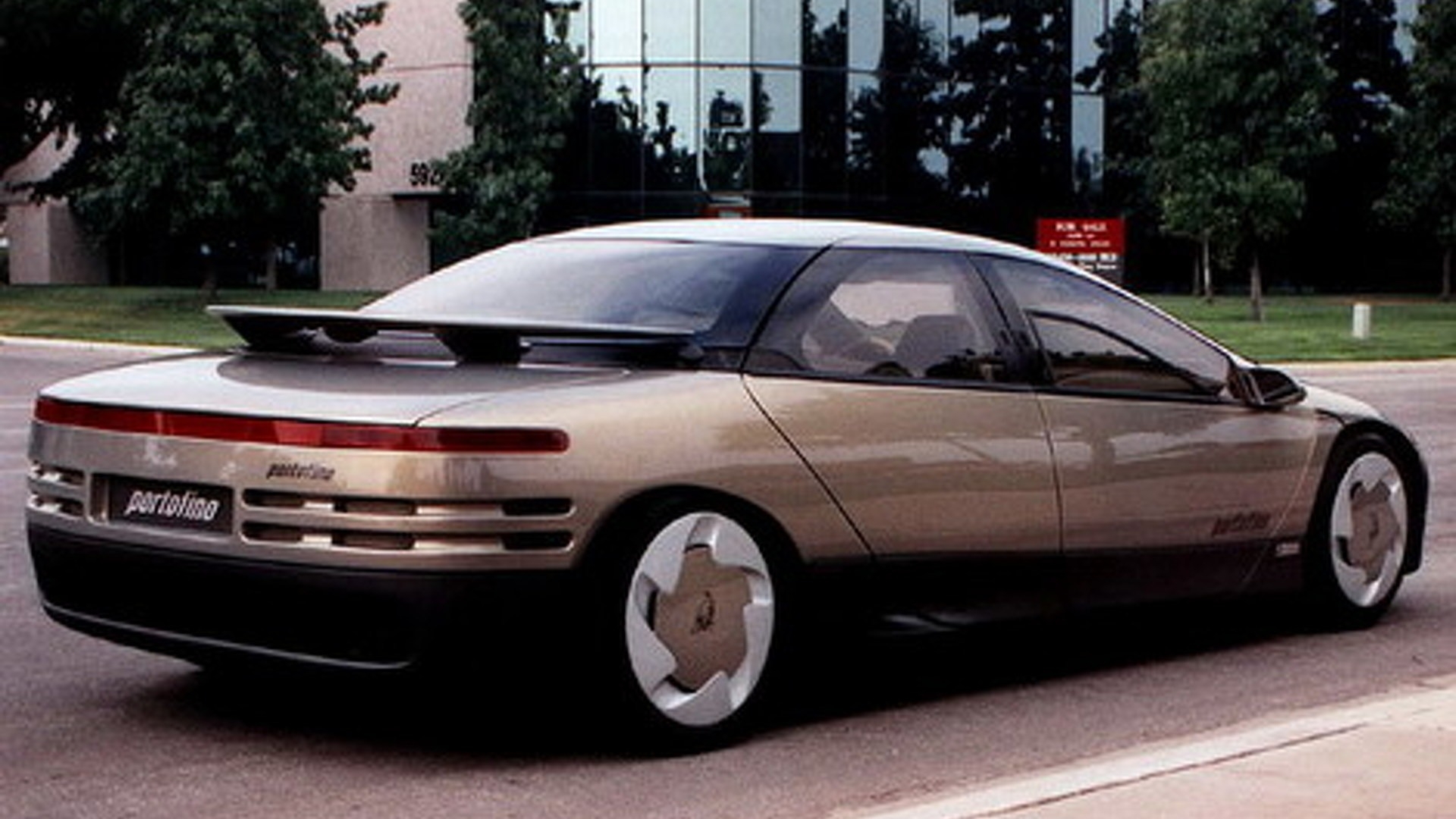
Just compare the rear end of the Lamborghini Portofino with that of the Dodge Intrepid. The shared styling language, blacked-out pillars, proportions, and the rear lighting treatment with its wide horizontal element between the taillights and distinctive elongated elements below are immediately obvious.
The LH-platform cars fully deserve future classic status. For their era, they were genuinely distinctive. Their designers prioritized the most spacious possible interior, pushed the wheels out to the corners of the body, and delivered excellent handling and high safety standards for a mainstream family sedan.
These cars looked like nothing else in their class, largely because their design was rooted in one of Lamborghini’s boldest concept cars.
In the end, this unusual Italian concept played a significant role in Chrysler’s revival at the end of the 20th century — a story so unlikely it would be hard to believe if it hadn’t actually happened.