Vehicles from the East German brand Multicar are still used by enthusiasts and some municipal services today.
The small Multicar trucks were known for their versatility and year-round usability. One of the most famous models was the single-seat M22: just a driver’s seat, a steering wheel, two gauges on the dashboard, and a top speed of less than 16 mph.
With its original 800-cc engine producing just 15 hp at first, there wasn’t much performance to expect — the Multicar was never intended to be fast. At just 53.5 inches wide, it could even be driven on sidewalks, yet it was capable of carrying up to 4,400 pounds of payload.

The Multicar 22 was produced for 11 years — from 1964 to 1975. Nearly 43,000 examples were built during that time. In 2026, the model received a modern reinterpretation from designer Rostislav Prokop.
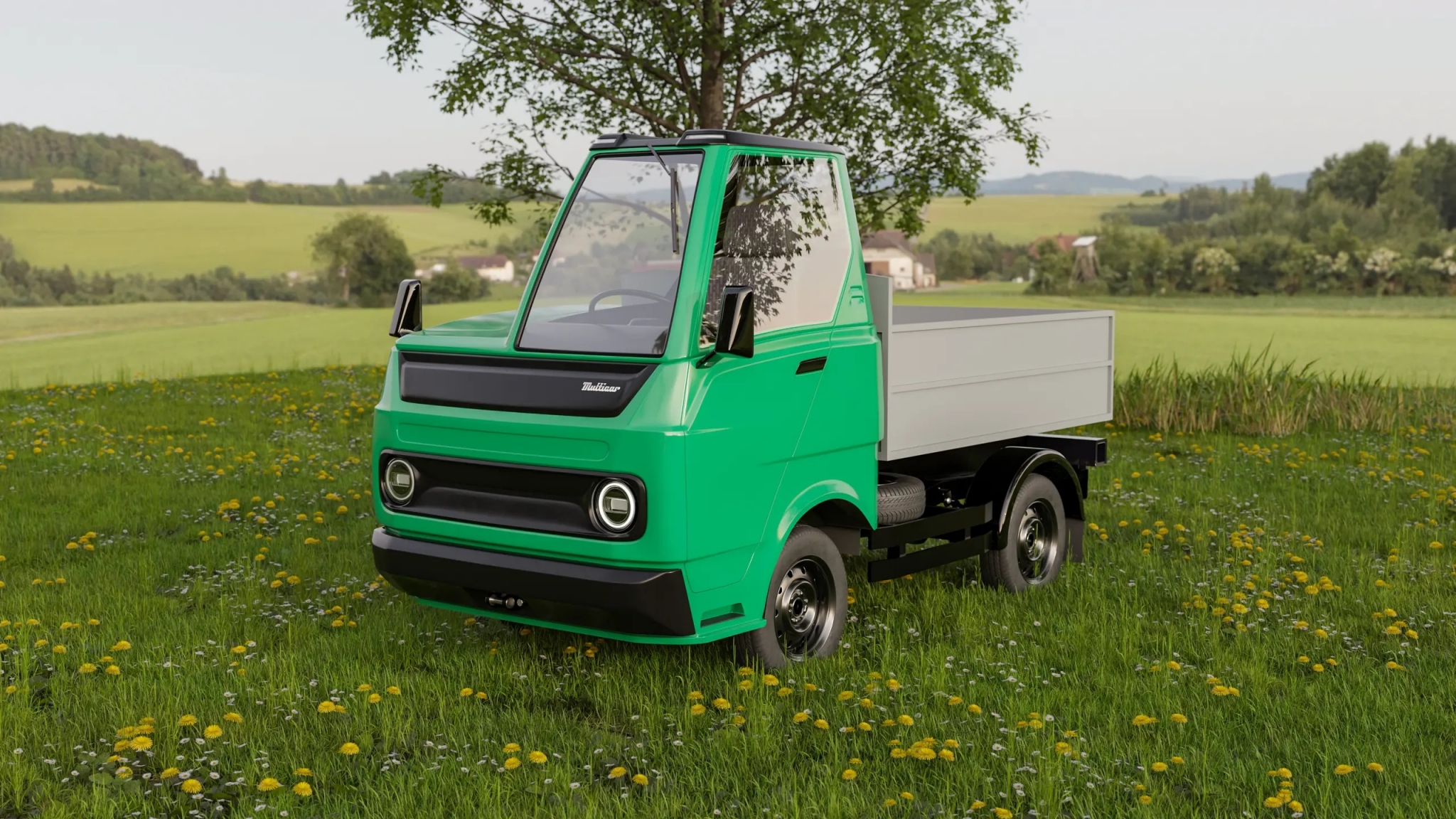
The new M22 retains the distinctive silhouette of the narrow single-seat cab but has become significantly more rounded. Visibility and rearward sightlines have been improved thanks to larger mirrors — some original M22s had no mirrors at all.
The design also preserves other recognizable details: the round headlights are now LED units with integrated turn signals.
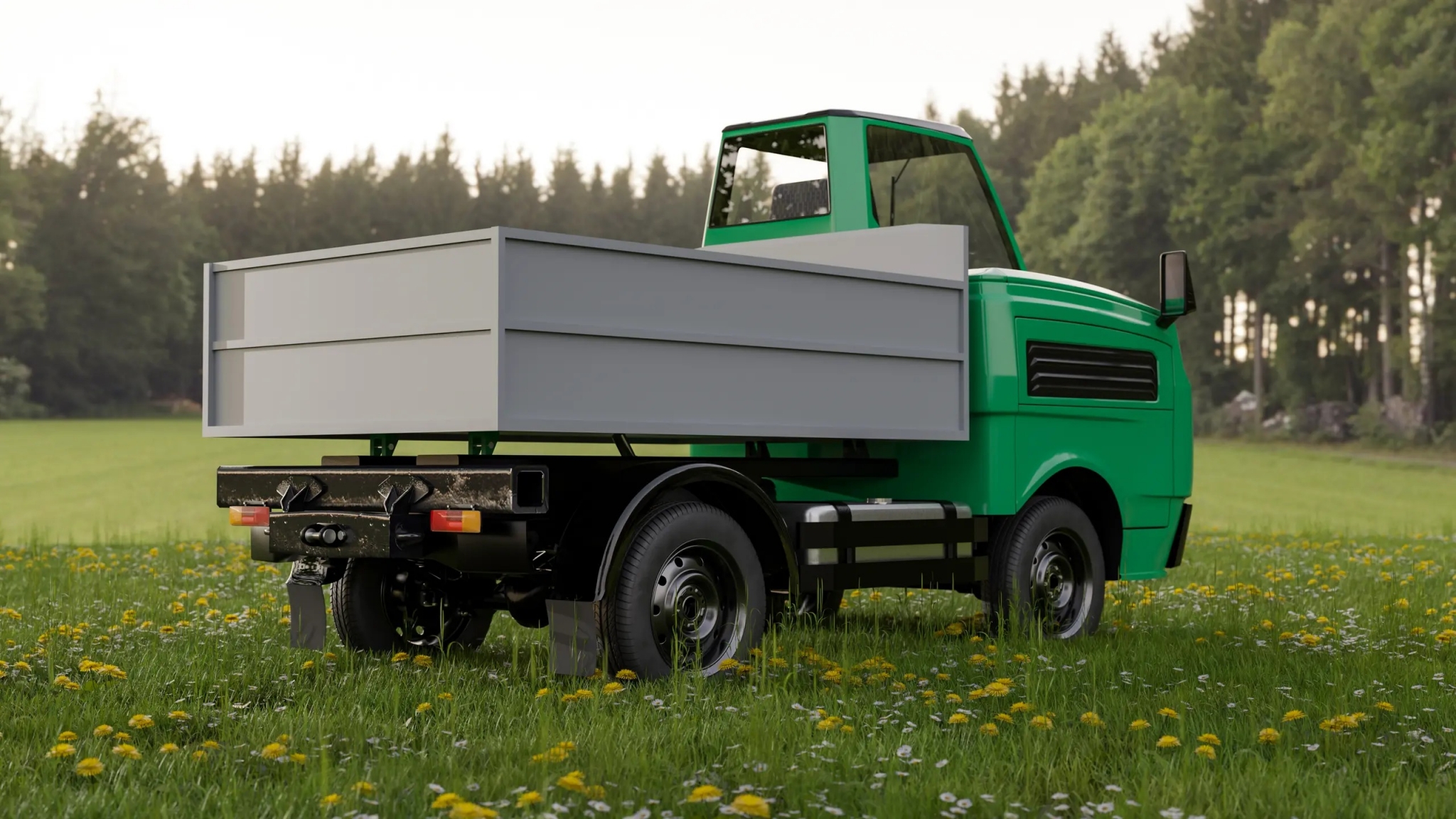
The vehicle is built on a ladder frame and features simple door handles, a massive steering wheel, underride protection, additional roof lighting, a windshield wiper, and black steel wheels fitted with all-season tires and a full-size spare.
The green “workhorse” is equipped with simple LED taillights, a tow hook, and a single-sided dump bed that can be swapped for other types of bodywork.
The internal combustion engine is mounted at the front next to the driver. Fuel comes from a tank mounted on the side, and torque is sent to the rear wheels through a mechanical differential.
Thus, the modern Multicar 22 is not just a concept work vehicle, but a designer’s contemporary and slightly whimsical reinterpretation of a 1960s model.